

You finally get an accepted offer in Seattle – and then the real pressure starts. The closing clock is ticking, your lender is asking for documents you have not thought about in years, and the listing agent wants proof you can actually perform. In a market where sellers still care about speed and certainty, first-time buyers do not lose homes only because of price. They lose them because the financing looked shaky.
This article is built around what consistently helps first-time buyers win and close in Seattle, Bellevue, and across King County: clarity on cash, clean underwriting, and choosing the right loan structure for your life – especially if your income includes bonuses, RSUs, or stock proceeds.
First-time buyer mortgage tips Seattle buyers miss early
Most first-time buyers focus on the down payment and interest rate. Those matter, but in Seattle they are only part of the “will this close” question. What matters just as much is how your file looks to an underwriter and how your offer looks to a seller.
Start with your timeline. If you want to be shopping seriously in the next 30 to 60 days, you should already be preapproved, not just prequalified. A prequalification is often a quick estimate based on what you tell someone. A real preapproval means your income, assets, and credit have been reviewed, and the lender is confident you will get through underwriting. In competitive neighborhoods, that difference shows up in how listing agents respond to your offer.
Also decide your comfort zone on payment before you pick a purchase price. Seattle taxes, insurance, HOA dues (common in condos and newer townhomes), and potential mortgage insurance can change the payment more than buyers expect. If you are stretching, you want to know that before you fall in love with a house.
Your down payment is a strategy, not a scorecard
There is a persistent myth that you “need 20%.” In Seattle, waiting for 20% can keep buyers on the sidelines while prices and rents keep moving. Many solid first-time buyers use 3% to 5% down conventional loans, or FHA with 3.5% down, and keep reserves for appraisal gaps, repairs, and life.
The trade-off is usually mortgage insurance and sometimes a slightly different rate. But the right question is not “How do I avoid PMI at all costs?” It is “What does PMI cost me per month, and what does that let me do with my cash?” If keeping an extra $30,000 in the bank helps you win an offer, cover a low appraisal, or stay liquid after closing, PMI can be a tool instead of a penalty.
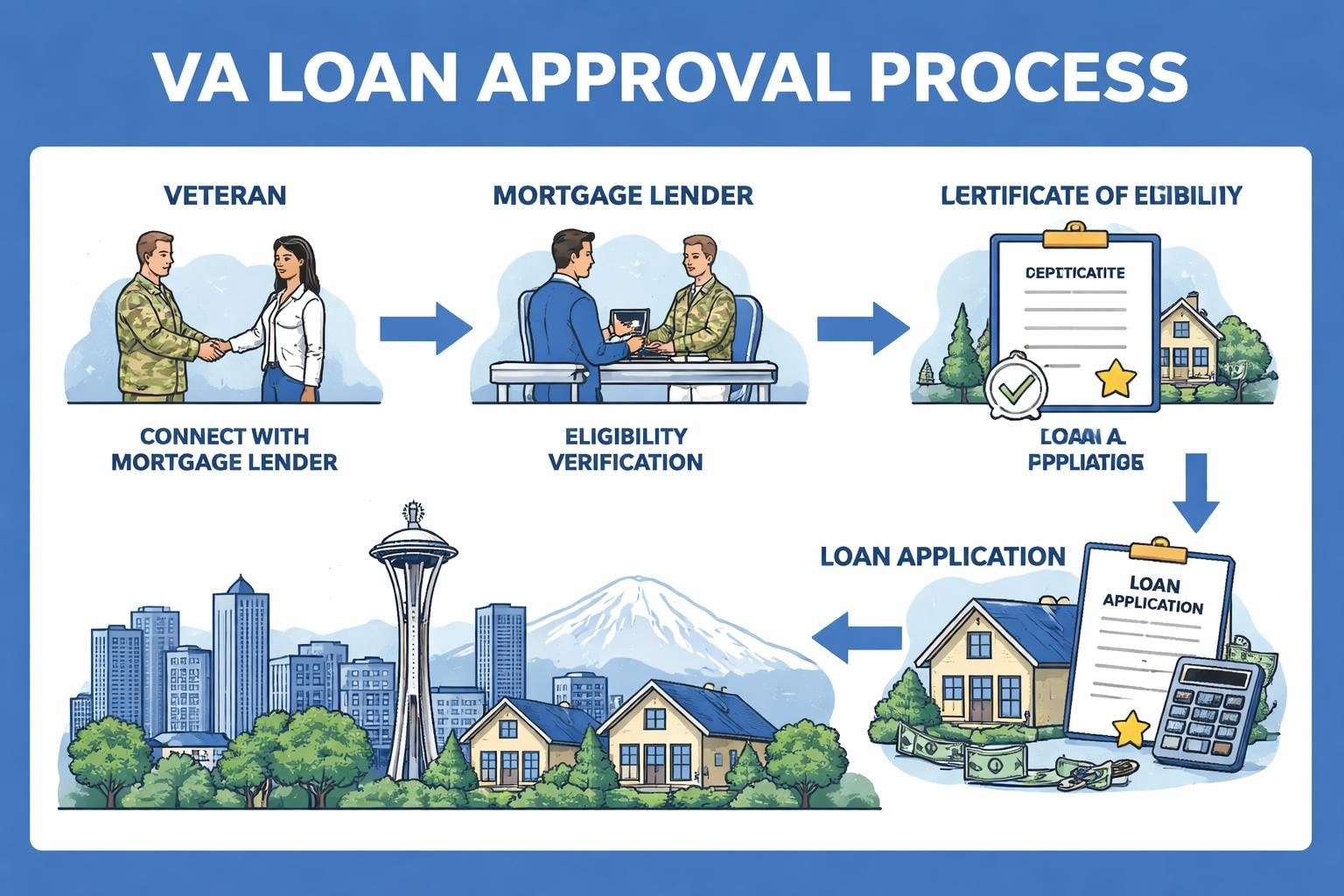
VA buyers have their own strong advantages, including zero down options for eligible veterans and service members. In parts of King County where sellers prioritize certainty, a well-structured VA offer with a strong preapproval can compete well, especially when paired with clean timelines and clear communication.
Credit: focus on the right moves, not random fixes
If you are within a few months of buying, avoid DIY credit “hacks” that can backfire. Opening new accounts, financing furniture, or moving balances around can shift your score or your debt-to-income ratio (DTI) at the wrong time.
The fastest legitimate wins are usually boring: keep utilization low, make every payment on time, and do not add new debt. If you have a specific issue (a collection, a late payment, or high balances), you want a lender who can run scenarios and tell you which move actually improves your mortgage profile. Sometimes paying a balance down is the right call. Sometimes it barely moves the needle and you are better off keeping cash reserves.
Get clear on DTI and why Seattle buyers get surprised
DTI is simply your monthly debt payments divided by your gross monthly income. Underwriters care because it predicts whether the payment is sustainable. Seattle buyers often get surprised because the purchase price is not the only driver – condo HOA dues, student loans, auto loans, and even credit card minimums can push DTI over a threshold.
If you are a tech professional with a strong base salary but also large annual bonuses or stock compensation, your qualifying income may not be what you assume. Many programs require a documented history for variable income. That does not mean you cannot use it, but it may require the right documentation and the right lender strategy.
A practical move is to review your full monthly obligations early and decide what to pay down, what to pay off, and what to leave alone. The goal is not to “look perfect.” The goal is to make the file easy to approve.
RSUs, bonuses, and stock: treat it like underwriting will
Seattle is full of buyers whose income is not a simple W-2 salary. RSUs, ESPP, bonuses, and sign-on payments can be meaningful, but lenders must document stability. Here is the nuance: underwriters typically care about a pattern and the likelihood of continuation.
If your RSUs vest regularly and you have a history of receiving them, you may be able to use that income depending on the program and the documentation. If you are counting on future grants that have not vested yet, you usually cannot use those as qualifying income today. And if you recently changed jobs, the “story” of your income matters even more.
This is where first-time buyers can gain a real edge: organize your paperwork before you are in contract. W-2s, pay stubs, vesting schedules, and account statements that show deposits all help. When the lender can document the income cleanly, you reduce last-minute underwriting conditions that slow down closing.
Choose the loan type based on property and timeline
Seattle housing stock is varied. Condos, townhomes, older craftsman homes, new construction – the financing friction is not the same for each.
Condos can introduce extra approval steps. Lenders may need to review the condo project’s finances, insurance, and owner-occupancy ratios. If the building has litigation or weak reserves, some loans will not work. If you are condo shopping, ask your lender early what documents will be needed so you are not discovering issues after mutual acceptance.
Older homes can bring appraisal and inspection realities. A fixer might still be financeable, but if there are safety issues or the appraiser flags problems, the loan may require repairs before closing. That is not always a deal killer, but it is a timeline risk that should be planned for.
New construction can be its own category. Builders may prefer their affiliated lender and offer incentives, but it is worth comparing the full cost: rate, points, lender fees, and the certainty of closing. Sometimes the incentive is real value. Sometimes it is just moving costs from one column to another.
Build an offer that signals “this will close”
In Seattle, sellers and listing agents read offers like a risk assessment. A strong offer is not only about money. It is about confidence.
A credible preapproval matters, but so does how it is presented. A preapproval that looks generic or light on detail can raise questions. A preapproval that reflects that your income and assets were actually reviewed tends to be taken more seriously.
Closing speed is another lever. If you can close faster, you may beat a slightly higher offer that looks slower or uncertain. The catch is you should only promise speed you can deliver. If your lender is not set up to move quickly, offering a short closing timeline can create stress for everyone.
And be careful with big last-minute moves. Switching jobs, changing pay structure, or moving large sums between accounts can trigger new documentation requirements. If you need to move funds for a down payment, plan it with your lender so you can document the source cleanly.
Appraisal gaps and cash reserves: plan for “it depends”
Even when bidding wars cool, appraisal gaps still happen – especially when the offer price reflects competition more than recent comparable sales. If the appraisal comes in low, you have a few options: renegotiate, bring cash to cover the gap, or challenge the appraisal with better comps.
The right move depends on the property, the neighborhood, and how much you want the home. But the mistake is going in with zero plan. When I talk to first-time buyers, I encourage them to treat cash reserves as part of the mortgage strategy, not leftover money. Reserves buy you choices.
A real-world example from Seattle buyers
A recent first-time buyer couple I worked with in the Seattle area had strong W-2 income, plus bonus and stock. Their biggest concern was not approval – it was speed and certainty. They were competing against multiple offers and did not want their financing to be the reason they lost.
We structured their preapproval by documenting income carefully up front and verifying assets early, so the file was clean. When the right home came along, they were able to write an offer with a confident timeline and minimal lender-related conditions. They did not “win” only because of rate or down payment. They won because the seller believed the deal would close – and it did.
If you want that same level of preparation, my team at The Mortgage Reel focuses heavily on upfront underwriting clarity and straightforward education, so first-time buyers understand what is happening and why.
The document checklist that prevents closing delays
Most closing delays are not dramatic. They are usually a missing page, an unexplained deposit, or an employment verification issue that pops up late.
Before you are in contract, assume you will need two years of W-2s and federal tax returns (not always required, but common), recent pay stubs, and two months of asset statements. If part of your down payment is a gift, you will likely need a gift letter and documentation of the transfer. If you are moving money from a brokerage account, keep statements that show the account history and the liquidation.
The goal is simple: you want every dollar used for closing to have a clear paper trail. Seattle buyers who get this right feel calmer during underwriting because there are fewer surprises.
Closing thought
If you are buying your first home in Seattle, the best advantage is not guessing the perfect interest rate or waiting for the market to feel “easy.” It is building a mortgage plan that holds up under pressure – with enough documentation, reserves, and loan structure to make your offer believable and your closing predictable.
Key Takeaways
- First-time buyers in Seattle need clarity on cash, clean underwriting, and the right loan structure to succeed.
- Preapproval is crucial; it should reflect a thorough review of income and assets, not just a quick estimate.
- Understanding DTI is vital as it impacts approval; buyers should calculate their full monthly obligations early.
- For variable income like bonuses and RSUs, having proper documentation is key to using it effectively in applications.
- Plan for appraisal gaps and maintain cash reserves to ensure solid offers and avoid last-minute surprises.
Estimated reading time: 9 minutes