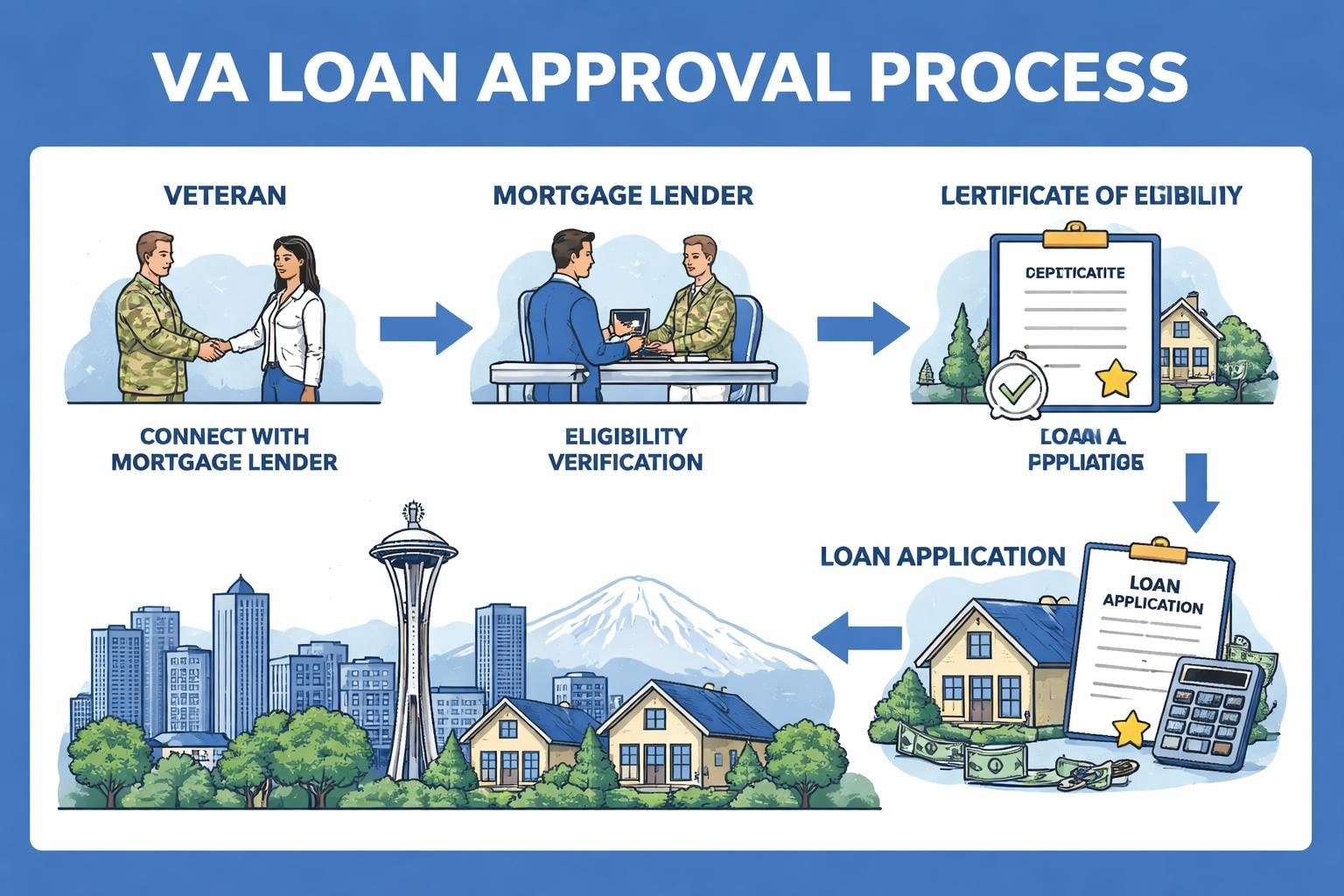


You get the call on a Thursday: the seller picked your offer, but they want a 14-day close. In Seattle, that is not a quirky request – it is a pressure test. You can absolutely close that fast, but the way you do it matters. The difference between a clean, fast closing and a stressful one usually comes down to what you did before your offer was accepted.
This is what people really mean when they search for fast closing mortgage services Seattle: fewer surprises, tighter timelines, and a lender process that matches how quickly homes move in King County.
What “fast closing” really means in Seattle
Fast is relative. In slower markets, 30 days can feel quick. In Seattle and Bellevue, “fast” is often 10 to 21 days, especially when the listing is competitive and the seller is trying to reduce fallout risk. The goal is not just speed for its own sake. Sellers want certainty. Your agent wants a closing date that does not force constant renegotiation. You want a loan that gets cleared without last-minute document scrambles.
A fast close is possible when three tracks move at the same time: loan underwriting, appraisal (if required), and title work. If one of those stalls, everything feels slow, even if the other two are moving.
Where closings actually get delayed
Most borrowers assume the delay is “the bank.” Sometimes it is, but in practice, delays usually come from a small set of predictable issues.
The first is documentation. Income that looks simple on the surface can be complicated in underwriting, especially for tech professionals with variable compensation, multiple W-2s, RSUs, bonuses, or a recent job change. The second is appraisal timing. Seattle appraisals can come back quickly, but when volume spikes, scheduling becomes a bottleneck. The third is last-minute changes – opening a new credit card for furniture, moving funds between accounts without a clear paper trail, or switching loan programs midstream.
Fast closings are less about rushing and more about removing “unknowns” before they become urgent.
The pre-approval that actually supports a fast close
Not all pre-approvals are created equal. A fast close starts with a pre-approval that is built like an underwrite, not a quick calculator run.
If your lender has reviewed pay stubs, W-2s, bank statements, and run credit, that is a baseline. For a truly fast closing timeline, you want the approval to include a deeper look at anything non-standard: RSU income, bonus history, a new role, self-employment, rental income, or large deposits. The more of that work that happens before you go under contract, the less likely you are to hit a “please explain” email when you are already inside a 2-week window.
There is also a practical difference between “you can afford this price” and “your file is ready to submit the moment you have an address.” Fast closing mortgage services are really file-readiness services.
Choosing a loan structure that closes quickly
Speed depends on the loan type, but also on how cleanly it fits your profile.
Conventional loans tend to be the most straightforward when the borrower has stable W-2 income and solid reserves. FHA and VA loans can still close fast, but they have additional rules that can influence timing, especially if the property condition triggers repair requirements or if the condo project needs extra review.
Jumbo loans can close quickly in the hands of the right lender, but they often come with tighter documentation standards and more detailed asset verification. In Seattle’s higher price points, jumbo is common, and the key is to make sure the lender is used to jumbo workflows and does not treat it like a rare exception.
“It depends” shows up here. The fastest loan on paper is not always the fastest for you. If your income includes RSUs, for example, picking a program that recognizes that compensation correctly can be faster than forcing a simpler program that undercounts income and triggers restructuring late.
Seattle-specific factors that can help or hurt timelines
Seattle is not just “a hot market.” It is also a market where neighborhoods and property types vary dramatically, and that affects underwriting.
Condos are the big one. Some condo projects sail through. Others require additional documentation or are not eligible for certain financing types. If you are shopping condos in neighborhoods like Belltown, South Lake Union, or parts of Bellevue with high-rise inventory, ask early how the building will be reviewed and whether your loan type has restrictions.
Another Seattle reality is competitive earnest money and short contingencies. If you are writing offers with tight timelines, your financing needs to be aligned from the beginning. A “we’ll figure it out after you win” approach is exactly how closings slow down.
A practical timeline for a 10 to 21-day close
A fast close is a choreography. Here is what a clean timeline often looks like when it is working.
Days 0 to 2: you go under contract, the loan is immediately submitted, and disclosures are signed quickly. Your lender requests any final documents tied to the property (purchase agreement, contact info for escrow, insurance plan). Title is opened.
Days 3 to 7: underwriting reviews the file. If an appraisal is required, it is ordered right away. Conditions come back, and you respond with the requested items without delay.
Days 8 to 14: appraisal returns (or the file proceeds without one if eligible for a waiver). Underwriting clears remaining conditions. Final numbers are confirmed.
Days 15 to 21: closing disclosure timing is met, loan documents are prepared, you sign, and funding occurs.
The biggest lever you control is response time. If you take two days to upload a document each time conditions come in, your “fast close” becomes a normal close, even with a good lender.
How tech compensation can slow things down – and how to prevent it
Seattle has a high concentration of borrowers whose income is not just salary. RSUs, bonuses, and stock compensation can absolutely be used in qualifying in many situations, but the lender typically needs a documented history and a reasonable expectation of continuation.
Where timelines get tight is when the borrower assumes their offer letter or equity portal is enough. Underwriting may need vesting schedules, award statements, and proof of receipt through pay statements or brokerage records. If you sold stock for down payment funds, you also need a clear asset trail.
If you are a tech professional, the fastest closings happen when your lender asks for these items upfront and explains why they need them, rather than waiting for underwriting to discover them mid-process.
The trade-offs of rushing
A fast close can win deals, but it is not free.
First, you may have fewer days for inspections, and that is a real risk decision. Second, some borrowers feel pressure to waive financing contingencies without fully understanding what could still change, like an appraisal gap or a last-minute document issue. Third, choosing speed at any cost can push you toward higher rates or less favorable terms if you are not careful.
The right approach is controlled speed. Move quickly, but with a process that still checks the right boxes.
What to ask a lender before you commit
If your goal is speed, ask questions that reveal how the lender operates under pressure.
Ask how quickly they can move from contract to underwriting submission, and what they need from you to do that same day. Ask what their average closing timeline is for purchases in Seattle and Bellevue, not just their best-case scenario. Ask who communicates with escrow and your agent, and how often. Ask how they handle complex income, especially if you have RSUs or multiple income streams.
You are not just choosing a rate. You are choosing a workflow.
A quick case study: winning with a clean 14-day close
A common Seattle scenario: a buyer with strong income is competing against multiple offers, and the seller prioritizes certainty. The buyer’s agent writes a 14-day close and needs confidence that financing will not be the reason the deal falls apart.
In the smoothest versions of this, the buyer is already fully document-ready, their lender has reviewed the non-salary income in advance, and the buyer avoids moving money around during escrow. The appraisal is ordered immediately, and the buyer stays responsive to conditions. The “speed” is really a lack of surprises.
That is the pattern behind most fast closings that actually feel calm.
Getting help without losing transparency
Fast closings are a team sport: buyer, agent, escrow, title, and lender. The lender’s job is not just to approve the loan, but to keep the process understandable so you can make good decisions quickly.
If you want a process built for Seattle timelines, work with someone who is used to local competition and who will tell you plainly what could slow you down. Keith Akada at The Mortgage Reel is known in the Seattle area for educational clarity and consistent closing speed, particularly with tech borrowers who need RSU income handled correctly.
A fast close is not about heroics in the final week. It is about being prepared enough that the last week is boring.
Closing thought: if a seller is pushing for a 10 to 14-day close, treat it like you would a technical interview – the outcome depends less on how hard you sprint that day and more on what you built beforehand.