
How To Lower Your Mortgage Payment
For most people, the mortgage payment is the biggest line item in the budget. Your mortgage payment usually accounts for around 30% of your pay, so it’s logical to want to shrink it.
Here are a few strategies you can use to lower your mortgage payment.
Refinance and Reduce Your Interest Rate To Lower Your Mortgage Payment
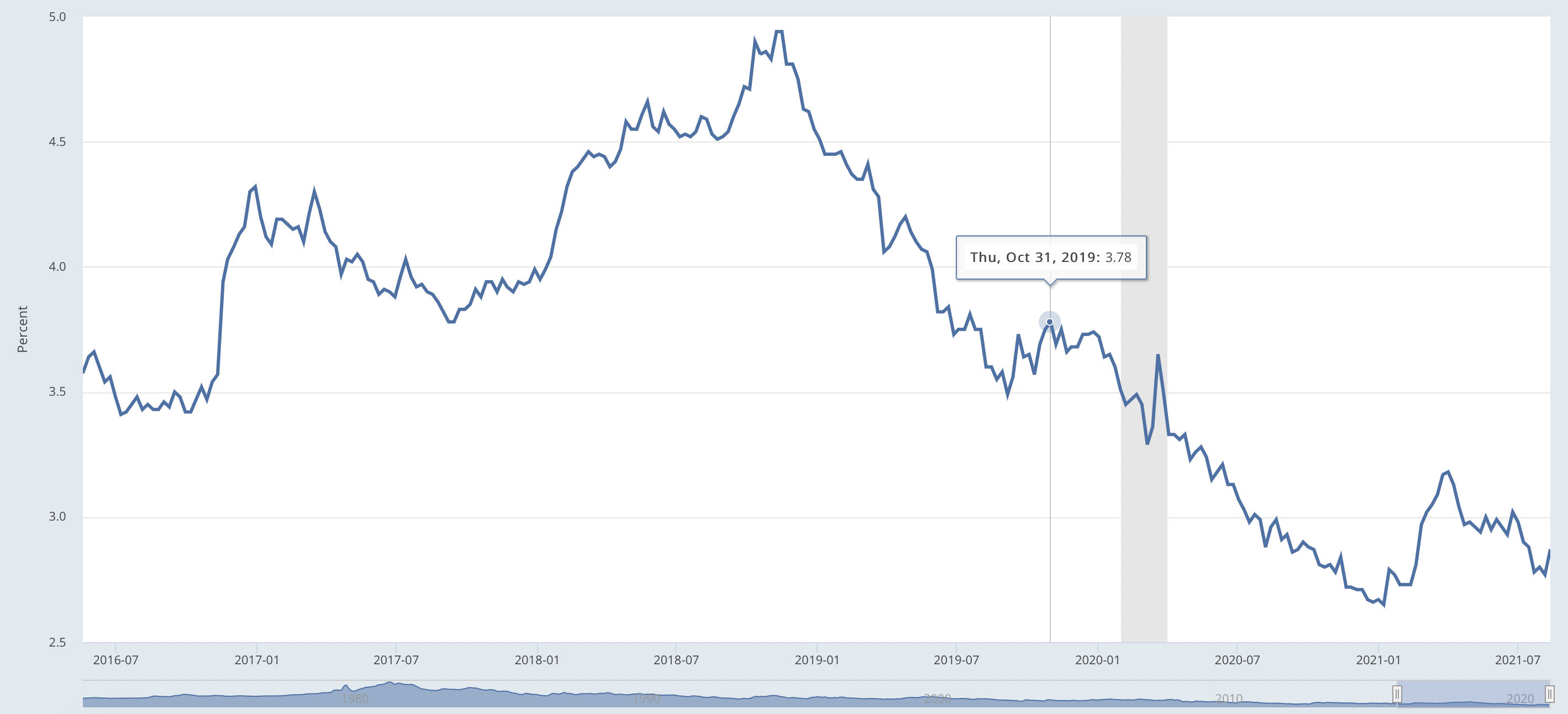
If you purchased your home or last refinanced before 2020, there is a good chance your interest rate is higher than it should be. Take a look at this chart and see for yourself. The bottom right hand corner is where average mortgage rates are at the time of this publishing (Summer 2021).
You May Be Able To Drop Your PMI To Lower Your Mortgage Payment
What is PMI you ask? It’s a monthly fee that all borrowers pay as a penalty when putting less than 20% down, or when you have less than 20% equity when refinancing. PMI makes homeownership possible for people who do not have 20% down, so it has its place.
When you’ve been in your loan for a few years you may be able to refinance and remove this extra fee (which is usually a couple hundred dollars, sometimes more). Dropping your PMI could really make a difference in your monthly cash flow.
How do you know if you have PMI? There are a few ways you can see for yourself or we can check for you, just book a call here.
Refinance Your Home Loan To Lower Your Mortgage Payment
In some cases refinancing makes sense for creative cash flow reasons. Maybe you have owned your property for 10 years, if you refinance your balance, now that it has been paid down by 10 years worth of payments, your payment will drop due to your loan amount being reduced.
If you are planning to rent out your home and buy a new one, this could be the exact cash flow strategy you need to make your soon-to-be-rented-home cash flow positive.
In any case, it never makes sense to pay more than you need to in interest and/or fees. It doesn’t hurt to at least check to see if you can lower your mortgage payment.
Our team of experts would be more than happy to conduct a complimentary, no obligation, mortgage check up for you. Simply book a call here.