

If you’ve tried to buy in Seattle, you already know the hardest part is rarely finding a lender – it’s finding a lender who can keep up. The listing hits on Thursday, review date is Monday, and your agent wants a preapproval that’s tight enough to compete but flexible enough to survive underwriting. Meanwhile, rates move, condo rules change, and your compensation might include RSUs, bonus, or commissions that don’t fit neatly into a standard paystub.
That’s why “best” matters here. In the Seattle area, a mortgage broker isn’t just quoting a rate. A great broker is a strategist, a documentation coach, and a calm point of contact who can get you from offer to keys without surprises.
What “best mortgage brokers in Seattle area” really means
The best mortgage brokers in the Seattle area tend to share a few traits, regardless of which company name is on the email signature.
First, they understand local deal friction. Seattle and the Eastside have plenty of condos with HOA budgets, insurance requirements, and rental caps that can create last-minute lender conditions. Some neighborhoods lean toward older housing stock with appraisal nuances. Jumbo pricing and underwriting can differ significantly between lenders when you get into higher purchase prices common in Bellevue, Kirkland, Redmond, and parts of Seattle.
Second, they run a clean process. A strong broker doesn’t wait for underwriting to “discover” issues. They anticipate them, ask for the right documents early, and explain why they’re asking so you don’t feel like your life is being audited for no reason.
Third, they communicate like your timeline depends on it, because it does. Listing agents in King County often pay attention to who the lender is and how responsive that lender will be. A broker who answers quickly, updates your agent, and can credibly speak to underwriting strength can materially improve how your offer is received.
Broker vs. bank vs. direct lender in Seattle
A bank or credit union can be a good fit if you have a straightforward W-2 profile, plenty of time, and you value having everything under one institution. They may also offer relationship discounts in some cases.
A direct lender (the company funding the loan in-house) can be fast and consistent, especially if you fall neatly inside their guidelines.
A mortgage broker works a little differently. Brokers shop your scenario across multiple wholesale lenders. In practice, that can mean more options for rate, fees, down payment structures, and specialty programs. It can also mean more leverage when your profile is complex – self-employed income, multiple properties, large RSU vesting schedules, or a mix of base salary and variable comp.
The trade-off is that not all brokers are created equal. Some operate like order takers. The best ones run the process like a project manager and advocate, and they know which lender is likely to approve your specific scenario without drama.
The questions that separate average brokers from great ones
You don’t need to be a mortgage expert to vet a broker. You just need questions that force a clear explanation.
A strong first question is: “How are you structuring my preapproval – and what could change between now and closing?” You’re listening for specifics. A quality broker will talk about verifying income properly (especially variable income), checking credit and debt-to-income realistically, and flagging property-related risks like condo eligibility.
Next ask: “If the appraisal comes in low, what are the options?” In a competitive market, you want a broker who can explain the mechanics plainly – renegotiation, increased down payment, reconsideration of value, or switching loan structures when appropriate.
Then ask: “Who will I talk to during escrow, and how quickly do you turn conditions?” The best brokers set expectations. They can tell you what communication looks like, who is doing what, and how they keep the file moving when underwriting asks for more documentation.
Finally: “How do you compare rate quotes?” A trustworthy broker will explain rates, points, lender credits, and total cash to close in a way that’s consistent and apples-to-apples. If you feel pressured to focus only on the rate without discussing fees and strategy, that’s a red flag.
What top Seattle-area brokers do with tech compensation
Seattle is full of high earners whose income doesn’t look like a single salary line. RSUs, bonuses, commissions, and sign-on packages are common, and they can either help or complicate a loan depending on how they’re documented and how the lender treats them.
The “best” brokers know that underwriting is less about what you earn in theory and more about what can be documented consistently. A great broker will ask for the right pay history, vesting schedules, and tax forms early, then match you to a lender that’s comfortable with that profile. They’ll also explain what parts of your compensation can be used for qualifying and what parts may only help as reserves.
There’s an important nuance here: even if you have substantial stock compensation, it doesn’t automatically translate into a higher approved amount. The underwriting rules around variable income can be strict. A broker who works with tech professionals regularly will tell you upfront what’s likely, what’s not, and what documentation will make your file strongest.
Speed matters, but it’s not just “closing fast”
In Seattle and surrounding markets, “fast close” gets thrown around casually. The better question is whether the broker can close predictably.
Predictability comes from a clean initial setup: correct income calculation, accurate assets review, and early identification of issues like large deposits, undisclosed debts, or condo documentation. It also comes from knowing which lender is currently turning files quickly and which ones are backed up.
If you’re trying to win with a 21-day close, your broker should be honest about what makes that possible. Sometimes it’s feasible and smart. Other times, stretching for speed can increase stress and risk, especially if you’re using down payment gifts, selling another property, or dealing with self-employment income.
Loan options Seattle buyers ask about most
Most buyers have heard of conventional, FHA, and VA loans. The “best mortgage brokers in Seattle area” are the ones who help you choose based on your goals, not based on a one-size-fits-all script.
Conventional loans are common for buyers with solid credit and stable income. They can work with down payments as low as 3% in some cases, though competitive offers often look stronger with more down. A good broker will talk through monthly payment sensitivity, mortgage insurance, and how different down payments change your long-term cost.
FHA loans can be helpful when credit is a work in progress or when the down payment needs to stay lower. The trade-off is that FHA mortgage insurance can be more expensive over time depending on the structure. The right broker will run the numbers and explain when FHA is a stepping stone versus when it becomes a costly default.
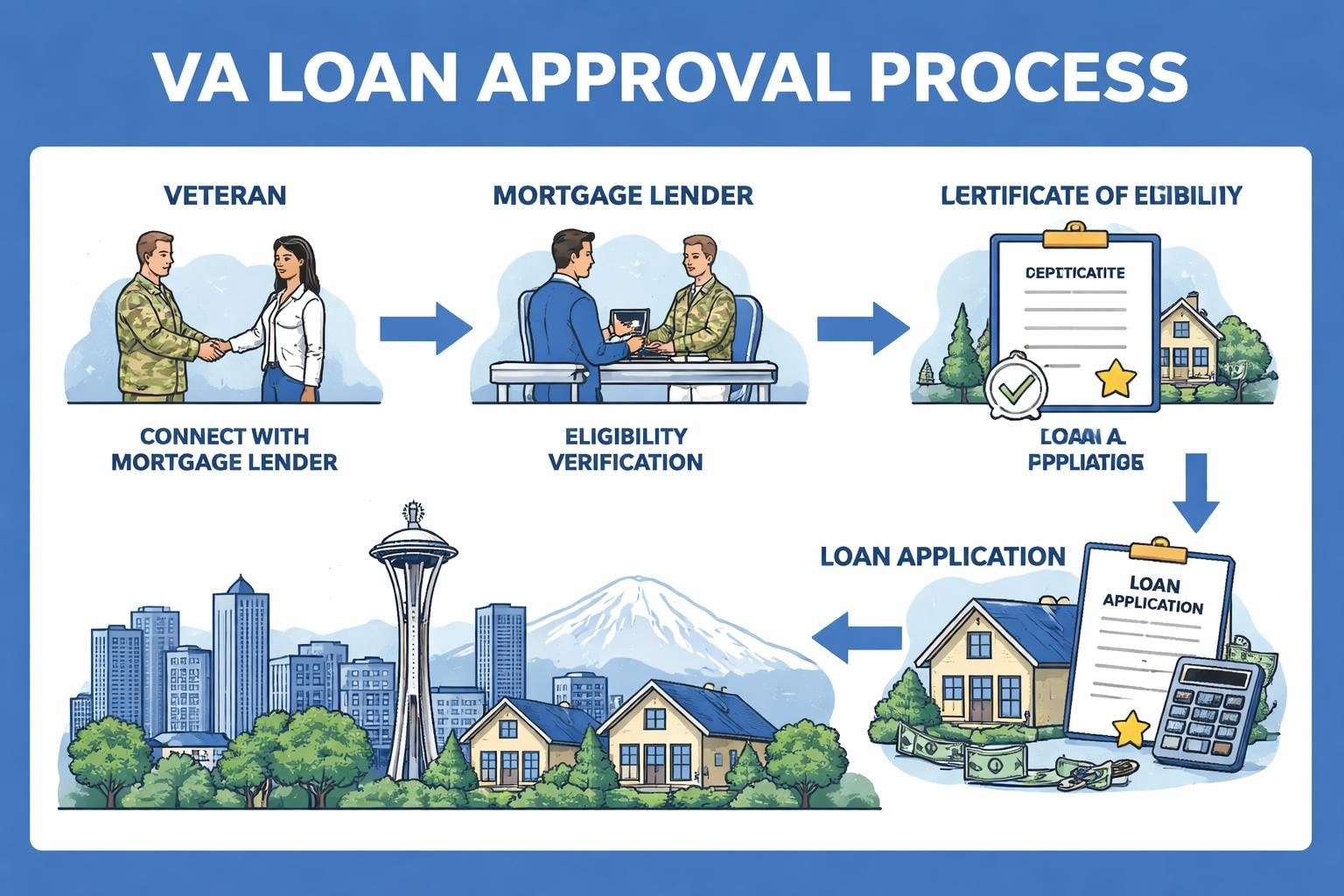
VA loans are a major advantage for eligible buyers. The best brokers know how to structure VA offers competitively and explain appraisal and underwriting expectations clearly, especially when you’re trying to compete against conventional financing.
Jumbo loans matter in the Seattle area because many purchase prices push above conforming loan limits. Jumbo underwriting can be more detailed, and pricing can vary widely by lender. A broker who does a lot of jumbo business will be comfortable discussing reserves, asset seasoning, and how different lenders treat things like bonus income or RSUs.
How to evaluate a rate quote without getting misled
Rate shopping is smart. Rate shopping without context can be expensive.
A rate quote only means something if it includes the assumptions behind it: credit score range, down payment, property type, occupancy, lock period, points, and lender credits. Two quotes can show the same rate but have very different fees and cash-to-close.
The simplest way to keep it clean is to ask each broker for the same structure and then compare total cost over a time horizon that matches your plans. If you expect to keep the home for a long time, paying points for a lower rate might make sense. If you think you’ll move in a few years, a slightly higher rate with lower upfront costs may be the better play. It depends, and a good broker won’t pretend there’s one universal answer.
The local factors brokers should proactively flag
Seattle-area transactions have recurring themes that a great broker brings up early.
Condos are the biggest one. HOA financials, insurance coverage, and eligibility standards can change what lenders will accept. If you’re buying a condo, your broker should talk about condo review timing and the documents that may be needed, not after mutual acceptance but before you write the offer.
Another is property condition. Older homes, additions without clear permitting history, and certain appraisal risks can affect loan approval. A broker doesn’t replace an inspection, but a seasoned one will ask the right questions and coordinate with your agent when something seems likely to trigger extra underwriting conditions.
Finally, there’s the matter of cash management. Large deposits, transfers between accounts, and newly vested equity sales can create documentation requirements. The best brokers explain how to keep your paper trail clean so underwriting doesn’t turn into a scavenger hunt.
What a strong preapproval should look like
A Seattle-area preapproval should be more than a letter with a number on it. It should reflect a real review of your income, assets, and credit, and it should match your offer strategy.
If you’re planning to escalate, waive financing contingencies, or close quickly, your broker should talk through what those choices mean. There are ways to be competitive while still protecting yourself, but that requires planning. A broker who only talks about the maximum you can “afford” without discussing risk, reserves, and payment comfort is missing the point.
A broker option built for Seattle buyers
If you want a broker who focuses specifically on Seattle-area buyers, including tech professionals using RSUs and stock compensation, you can learn more about The Mortgage Reel operated by Keith Akada at https://Www.themortgagereel.com. The approach is centered on transparent education, local strategy, and closing timelines that match how competitive this market can be.
How to choose confidently
If you’re trying to pick among the best mortgage brokers in the Seattle area, pay attention to how you feel after the first call. Not whether you feel “sold,” but whether you feel clear.
A great broker should leave you with a concrete next step, a realistic sense of your numbers, and fewer unknowns than you started with. And if they can explain trade-offs in plain English – why one structure costs more upfront but less over time, or why one lender is better for RSUs while another is better for condos – you’re talking to someone who can guide you through the whole transaction, not just the application.
Your home search will move fast when the right one shows up. The most helpful thing you can do now is get your financing decision to the point where it feels boring – because when the stakes are high, boring is a competitive advantage.
Key Takeaways
- Finding the best mortgage brokers in the Seattle area is crucial due to local market complexities and varied income profiles.
- Top brokers understand challenges like HOA requirements and appraisal nuances, ensuring a smooth process for buyers.
- Great brokers anticipate issues by keeping communication open and managing documentation effectively throughout the loan process.
- The best mortgage brokers can navigate various loan types and explain options like conventional, FHA, VA, and jumbo loans clearly.
- A strong preapproval reflects a thorough review and aligns with your offer strategy, providing clarity on your financial standing.
Estimated reading time: 9 minutes