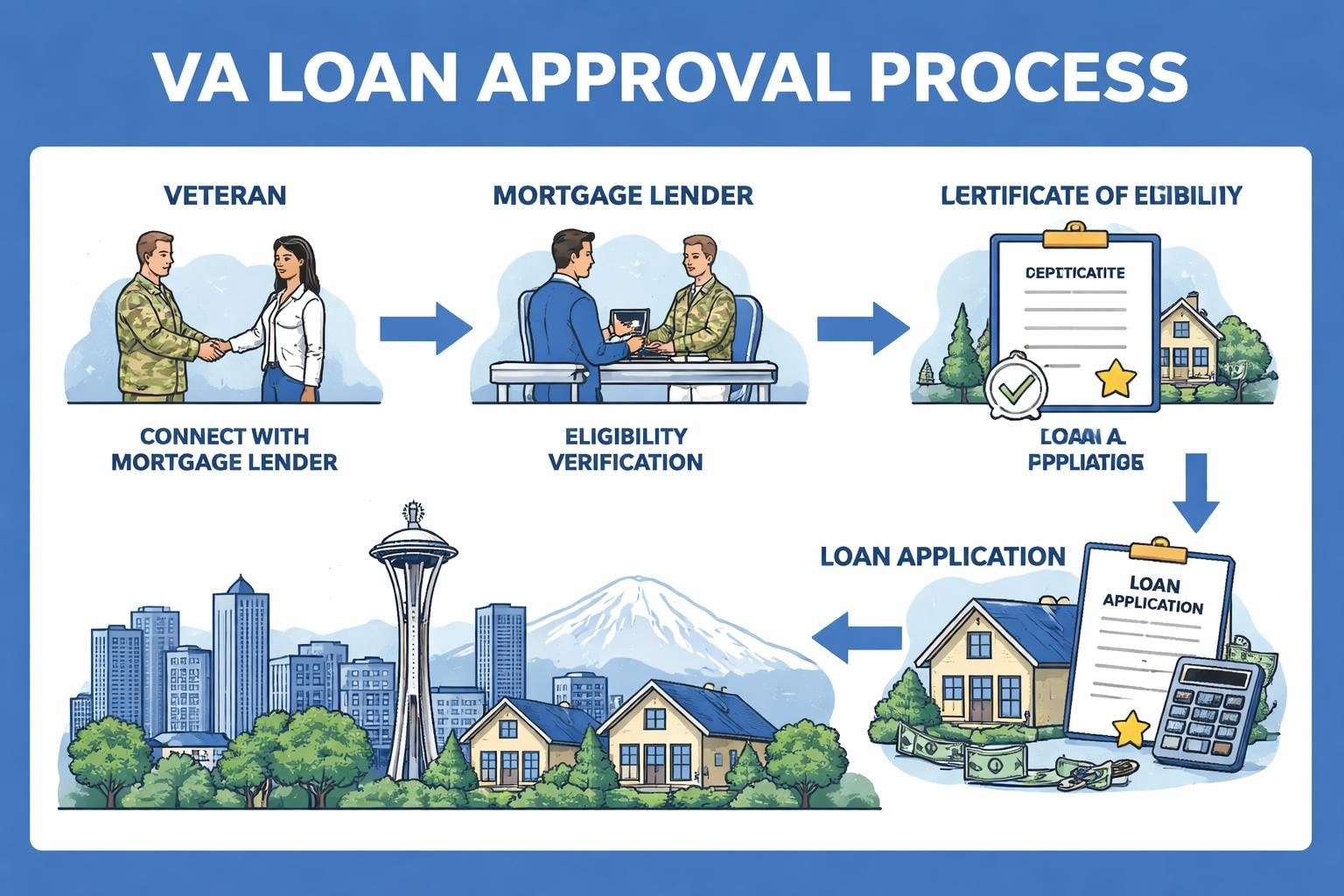


Seattle, a city renowned for its tech industry and scenic beauty, also presents a dynamic real estate landscape. For potential homeowners and investors looking to make a footprint here, understanding the intricacies of conventional loan options can be the key to successfully navigating this competitive market.
Understanding Conventional Loans
Conventional loans are home loans not insured by the federal government. Unlike FHA or VA loans, they often come with lower costs in the long run, provided the borrower can meet specific qualifying criteria. For borrowers in Seattle, these loans offer flexibility and competitive rates, which can be tailored to various financial situations.
Fixed-Rate vs. Adjustable-Rate Mortgages
Most conventional loans fall into two categories: fixed-rate and adjustable-rate mortgages (ARMs). Fixed-rate mortgages are characterized by an interest rate that remains the same throughout the life of the loan. This consistency allows for predictable monthly payments, which is particularly advantageous in a city like Seattle, where economic conditions fluctuate frequently.
In contrast, ARMs may come with lower initial interest rates but adjust over time based on market conditions. This can mean lower payments initially but a degree of uncertainty as the rate adjusts up or down after a set period.
Conforming vs. Non-Conforming Loans
Conventional loans can also be classified as either conforming or non-conforming. Conforming loans meet the guidelines set by Fannie Mae and Freddie Mac, two government-sponsored enterprises. These loans are often easier to process and come with lower interest rates due to their adherence to these guidelines.
Non-conforming loans, often referred to as jumbo loans, are used when loan amounts exceed Fannie Mae and Freddie Mac limits. In Seattle’s high-demand areas, where property values often exceed national averages, these loans become essential. They typically come with stricter criteria and may carry higher interest rates due to increased risk.
Benefits of Conventional Loans in Seattle
The primary appeal of conventional loans lies in their flexibility and potential for cost savings. With a solid credit score, Seattle borrowers can enjoy competitive interest rates which reduce overall loan costs. Additionally, higher loan limits mean that buyers and investors can finance luxury properties or multiple units without needing multiple loans or different lenders.
Another advantage is the option for private mortgage insurance (PMI) to be waived if enough equity is built at the start or over time. This is pivotal in a high-value market like Seattle.
Qualifying for a Conventional Loan
Credit Score and Income Requirements
Qualifying for a conventional loan often hinges on credit scores and income. A score of 620 is typically the baseline for consideration, although higher scores will yield better rates. Lenders scrutinize income heavily, assessing stability and potential for repayment. Seattle’s tech professionals often benefit from steady income and stock compensations, making them suitable candidates.
Down Payment Considerations
Conventional loans require varying down payments, often starting at 3% for first-time buyers. However, a higher down payment can eliminate PMI and better interest rates, usually starting at 20%. In Seattle’s competitive market, where bidding wars are not uncommon, having the means to offer a larger down payment can give buyers a critical edge.
Debt-to-Income Ratio (DTI)
Lenders evaluate a borrower’s debt-to-income ratio to understand their financial responsibility. A DTI below 43% is generally favorable, although some exceptions can be made based on an individual’s broader financial picture.
Strategic Considerations for Seattle Homebuyers
The real estate market in Seattle is as varied as its neighborhoods, making strategic decision-making essential. Working with knowledgeable advisors, like The Mortgage Reel, can equip buyers and investors with tailored strategies to maximize their investment.
Understanding Local Market Trends
Neighborhoods like Capitol Hill offer vibrant, dense urban living, while Bellevue presents suburban comforts with proximity to major tech hubs. Understanding these dynamics is crucial for making decisions that align with lifestyle and investment goals.
Utilizing Tech Industry Benefits
Seattle’s tech-savvy professionals often benefit from employer-supported housing incentives, stock options, and RSUs (Restricted Stock Units). These can be strategically utilized to bolster financial credentials when applying for loans, potentially securing better rates and terms.
Expert Advice and Educational Transparency
Choosing the right mortgage strategy can be daunting without transparent guidance. Seattle borrowers are increasingly valuing brokers who offer educational transparency and client-focused strategies. Engaging with experts who understand the intersection of tech incomes, stock compensation, and mortgage lending can yield significant advantages.
Next Steps: Making an Informed Choice
For prospective homebuyers and seasoned investors in Seattle, the pathway to property ownership starts with informed decisions. Evaluate your financial health, understand the local market, and consult trusted advisors to find the mortgage solution that aligns with your objectives.
The Mortgage Reel, operated by Keith Akada, brings a unique blend of local expertise and client-centered service, positioning itself as a trusted resource for navigating Seattle’s dynamic mortgage landscape. For more information, you can visit their website here.
Venturing into Seattle’s real estate market with insight and preparation can lead to rewarding outcomes, paving the way for homeownership or successful investment endeavors.