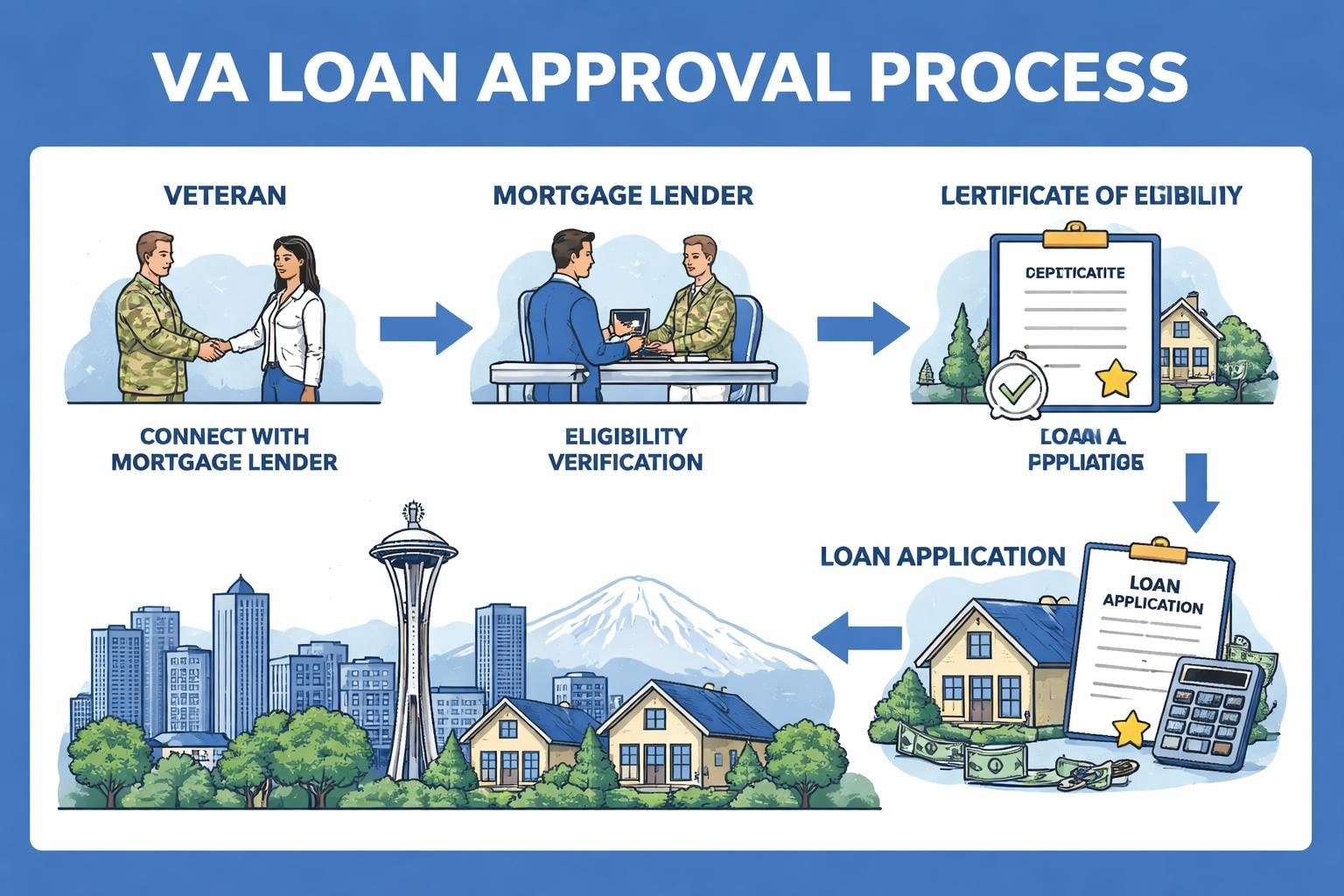


You find the house in Seattle that actually checks the boxes: the right school path, a commute you can live with, and enough space to stay put for a while. Then you open the numbers and realize the financing decision is as important as the offer price.
That is where jumbo loans come in. In King County, a “normal” conforming loan limit can feel disconnected from real purchase prices. A jumbo loan is simply a mortgage that exceeds the conforming limit set for the area, which means it cannot be sold to Fannie Mae or Freddie Mac under standard guidelines. That one detail changes underwriting, documentation, and sometimes pricing – but it also creates real advantages for well-qualified buyers.
Seattle jumbo loan benefits explained: the real upside
The biggest misconception is that jumbo loans are only for the ultra-wealthy. In Seattle, they are often just a practical tool for financing a home that costs what homes cost here.
1) You can buy the home you want without forcing a bigger down payment
One clear benefit is keeping your down payment at a level that fits your broader plan. Many buyers could put more down, but prefer not to.
If you are a tech professional with RSUs vesting over time, or you are balancing liquidity for taxes, childcare, or future investments, tying up extra cash in a down payment may not be optimal. A jumbo loan can let you purchase the home you want while keeping more reserves available. The trade-off is that jumbo guidelines often care a lot about reserves, so this benefit works best when you can document strong assets even if you are not spending them.
2) Competitive pricing can be real (yes, even on jumbos)
People assume “jumbo” automatically means a higher rate. Sometimes it does. But jumbo pricing can be surprisingly competitive when the file is strong, especially for borrowers with high credit scores, stable income, and healthy asset profiles.
This is one reason it pays to shop strategically. Jumbo lending is more portfolio-driven (lenders often keep these loans rather than selling them), so pricing and overlays can vary widely by bank and lender. In practice, that means the “best” jumbo option is not always the one you would expect – and it can change month to month.
3) Flexible structures for higher-income, high-asset borrowers
Jumbo underwriting can be strict, but it can also be nuanced. For the right borrower profile, you may find more flexibility in how assets are evaluated, how large balances are treated, or how certain income types are documented.
This matters in Seattle because many buyers are compensated in ways that do not look like a simple W-2 salary. RSUs, bonuses, and commission income can be usable – but only if documented correctly and averaged appropriately under the lender’s rules. A jumbo program that understands high-earning profiles can make the difference between “approved” and “approved with terms that still feel reasonable.”
4) Jumbo loans can support fast, clean offers
In Seattle’s competitive neighborhoods, the quality of financing affects how your offer is perceived. A strong pre-approval backed by a lender who can underwrite thoroughly up front can reduce surprises and help you write an offer that feels dependable to the seller.
This is not about cutting corners. It is about getting clarity early: income calculation, asset sourcing, reserve requirements, and any property-type considerations (condos, townhomes, or homes with ADUs). When that work is done ahead of time, your closing timeline becomes more predictable – and predictability is leverage.
What changes when your loan is jumbo
A jumbo loan is still a mortgage, but the “rules of the road” shift a bit.
Tighter scrutiny on assets and reserves
Jumbo lenders commonly require more months of reserves than conforming loans. Reserves are liquid or near-liquid assets you hold after closing, measured in “months” of the full housing payment.
If you are putting 20% down and have strong assets, this is often straightforward. If you are trying to minimize cash out of pocket, reserve requirements can become the limiting factor. The benefit of keeping more cash only works if the lender counts that cash the way you think they will.
More sensitivity to credit and debt-to-income
Conforming loans can be forgiving in certain scenarios. Jumbo underwriting is often less forgiving. Higher credit score expectations are common, and debt-to-income (DTI) limits may be lower depending on the program.
That does not mean you are out of luck if your DTI is tight. It means planning matters. Paying off an installment loan, restructuring a down payment strategy, or documenting income correctly can move the file from “borderline” to “strong.”
Appraisals can be a bigger deal
When the purchase price is high, small percentage differences are big dollar differences. Appraisal outcomes matter, and certain unique homes can be harder to comp.
If you are buying in areas with rapid micro-market shifts, or you are looking at a property with custom features, a low appraisal can force a renegotiation or a larger cash contribution. It is wise to talk through this risk before you remove contingencies.
When a jumbo loan is a smart move (and when it is not)
The right financing is not just “what gets approved.” It is what supports your long-term plan.
A jumbo loan can be a strong fit when you have stable, documentable income and you want to preserve liquidity. It can also be a great fit if you are deliberately keeping cash available for a future remodel, a second property, or simply peace of mind in a volatile job market.
On the other hand, if your income is variable and hard to document, or your assets are concentrated in restricted stock you cannot access, jumbo underwriting can feel rigid. In those cases, you may be better served by adjusting the purchase target, increasing the down payment, or exploring whether a conforming-friendly structure could meet the goal with less friction.
A Seattle-specific lens: why “jumbo” is common here
In many parts of the country, jumbo loans are a niche. In Seattle and Bellevue, they are everyday financing for homes that are not “luxury” in the way people imagine – they are simply priced above the conforming limit.
That reality creates two practical implications.
First, you should expect that many competing buyers are using jumbo financing, and sellers are accustomed to seeing it. A jumbo pre-approval is not inherently scary. What matters is the quality of that pre-approval and how thoroughly it reflects your actual qualification.
Second, your lending strategy should account for the local pace. Tech hiring cycles, equity compensation timing, and the seasonality of Seattle listings can all influence when you want to buy and how you want to structure cash. The “best” loan on paper is not always the best loan for your timeline.
A real-world scenario: the RSU-heavy tech buyer
Here is a common situation.
A buyer at a major tech company has a strong base salary, but a meaningful part of total compensation is RSUs and an annual bonus. Their bank statements show large balances, but some funds are earmarked for taxes and upcoming vesting events. They want to buy in Bellevue with a down payment that keeps reserves intact.
The jumbo benefit here is not just borrowing a larger amount. It is matching underwriting to how the borrower is actually paid. If RSU income is documented with the right vesting history and the lender’s approach supports it, the buyer may qualify with a comfortable cushion. If it is not documented correctly, the buyer may be forced into a higher down payment or a lower purchase price.
This is also where speed matters. When you are competing against other strong buyers, you want the underwriting conversation to happen before you are negotiating inspection timelines and earnest money. A clean file lets you focus on the house, not on last-minute conditions.
Choosing a jumbo loan without overpaying for it
“Seattle jumbo loan benefits explained” should include the fine print: the benefit is only a benefit if the loan terms match your real goals.
Start with the monthly payment you can comfortably carry, then work backward. If a slightly larger down payment meaningfully improves pricing or removes mortgage insurance (when applicable), it may be worth it. But if using that cash would leave you thin on reserves, the risk may outweigh the savings.
Also pay attention to how the lender treats assets and income. Two lenders can look at the same borrower and come to different conclusions based on their jumbo overlays. This is one reason working with a broker who can compare multiple jumbo options can matter. If you want a local, transparent approach, Keith Akada at The Mortgage Reel is known for walking Seattle-area buyers through the numbers clearly and structuring loans thoughtfully for tech compensation.
The trade-offs to be honest about
Jumbo loans are not “better” loans. They are tools.
They can require more documentation, especially around large deposits, asset sourcing, and reserve verification. They can also be less flexible if you are self-employed, recently changed jobs, or have complex income that does not fit standard calculations.
And while jumbo rates can be competitive, they are not guaranteed to be. The best outcome comes from aligning your credit profile, down payment, reserves, and timeline with a lender program that fits – not from assuming the label “jumbo” is either good or bad.
A helpful way to think about it is simple: the goal is not to win a bigger loan. The goal is to buy the right home with a payment you can live with, enough cash left to sleep at night, and a closing process that does not create unnecessary risk for you or the seller.