

You can usually tell how competitive a Seattle listing is by how fast the showing schedule fills up. The mortgage side has its own version of that pressure: deadlines that move up, appraisal gaps, condo review surprises, and a seller who wants proof you can close on time. When buyers search for the “top-rated” mortgage brokers, they are rarely looking for a celebrity. They are looking for certainty in a market that does not reward hesitation.
This guide is built to help Seattle and Eastside buyers – especially first-time buyers, move-up buyers, and tech professionals paid in salary plus stock – evaluate top-rated mortgage brokers in the Seattle area with clear criteria. Not just who has the most stars, but who can structure the right loan, explain it plainly, and close fast without last-minute chaos.
What “top-rated” should mean in Seattle
A high rating should signal more than friendliness. In a fast-moving market, “top-rated” is really shorthand for three things: accuracy, speed, and strategy.
Accuracy means the broker pre-approves you with real underwriting standards, not a quick “sure, you’re fine” based on unverified numbers. In Seattle, that difference shows up when a seller compares offers and trusts the financing.
Speed matters because timelines get compressed. A broker who regularly closes in 21 days (or can credibly hit a tight close when needed) gives you leverage. Speed also comes from process: clean documentation, responsive communication, and a team that anticipates underwriter questions.
Strategy is the part most people miss. A top broker is not only quoting rates. They are helping you choose the right structure: conventional vs. jumbo, how to handle RSUs, whether buying down the rate makes sense, and how to keep cash reserves intact in a high-cost area.
Why the Seattle area makes broker quality matter more
Seattle’s loan sizes often push buyers into jumbo territory, especially in neighborhoods like Queen Anne, Ballard, Madison Valley, or on the Eastside in Bellevue, Kirkland, and Redmond. Jumbo guidelines vary by investor, and the details can change the entire approval.
Condos add another layer. Building eligibility, HOA budgets, and insurance coverage can trigger delays or force a lender change late in the game. A broker who works regularly with Seattle-area condos knows what to review early so you do not lose weeks after mutual acceptance.
Then there is the tech income reality. A base salary might qualify you, but stock compensation can dramatically strengthen your file – if it is documented correctly. Some lenders treat RSUs conservatively; others will consider a history of vesting and a reasonable continuation. The broker’s job is to match your profile to the right lending channel and present your income in a way underwriters can approve.
How to evaluate top-rated mortgage brokers in the Seattle area
Ratings help you filter, but they should not be the final decision. The better approach is to use reviews as a starting point, then validate the broker’s process.
Read reviews for patterns, not compliments
A five-star review that says “easy to work with” is nice, but not very predictive. Look for repeated specifics: “closed in 18 days,” “explained options without pressure,” “handled a low appraisal,” “made RSUs work,” or “saved the deal when the first lender fell through.”
Pay attention to reviews from borrowers with similar profiles to yours: first-time buyer using FHA, investor buying a duplex, or a tech employee with variable comp. The most useful reviews describe what went wrong and how the broker responded.
Ask what the pre-approval actually includes
In Seattle, a pre-approval letter is a sales document, but it should be backed by real work. Ask whether your income, assets, and credit were reviewed with documentation or if it was based on conversation only. The more complete the review, the less likely you get hit with a surprise condition later.
If you are using stock compensation, ask how they plan to document it. A strong broker will talk about paystubs, W-2s, vesting schedules, and how underwriters typically calculate variable income.
Get specific about timelines and bottlenecks
Instead of “How fast do you close?”, ask “What is your average clear-to-close time, and what typically slows files down?” A credible answer includes both metrics and realism.
Also ask how they handle appraisal scheduling, condo documents, and underwriting turn times. The goal is not perfection. The goal is a broker who sees problems early and communicates quickly.
Compare the Loan Estimate, not the quote
Rate quotes are easy to throw around. The Loan Estimate is where the real comparison happens. When you are comparing two brokers, ask for the same scenario: purchase price, down payment, credit score range, and lock period. Then compare origination charges, discount points, and lender credits.
A top broker should be able to explain, in plain English, why one option is better for your time horizon. If you might sell or refinance in a few years, paying points may not pencil out. If you plan to stay long-term, paying for a lower rate could be smart. It depends on your break-even point and your cash priorities.
Watch how they communicate under pressure
Seattle offers move quickly. You may need a revised pre-approval letter at 9 p.m. for an escalation clause, or you may need a clear explanation of cash-to-close when your agent is writing the offer.
Professional, prompt communication is not a “nice to have.” It is part of the financing strength of your offer. Ask who covers if your broker is in appointments. Ask how updates are delivered. A top-rated broker has a system.
Broker vs. bank vs. direct lender: the trade-offs
Many buyers assume a big bank is safest. Sometimes it is. Sometimes it is slower and less flexible.
A mortgage broker can shop multiple wholesale lenders, which often helps with pricing and niche scenarios. The trade-off is that the broker’s skill matters a lot, because they are matching you to the right lender and packaging the file correctly.
A direct lender may have tighter control of underwriting and turn times. The trade-off is fewer options if their guidelines do not fit your profile.
A bank can be a fit if you have significant assets there or need relationship pricing. The trade-off is that bank overlays and condo rules can be stricter, and switching lenders mid-transaction can be painful.
The “top-rated mortgage brokers Seattle area” searches tend to come from buyers who want the flexibility and speed of a broker, but still want the professionalism of a well-run operation.
The loan options Seattle buyers ask about most
Most Seattle-area borrowers end up in conventional or jumbo loans, but FHA and VA matter too.
Conventional loans are common for buyers with solid credit and stable income. They offer flexible down payment options, and mortgage insurance can be canceled once you reach enough equity, depending on your structure.
Jumbo loans are often the reality in Seattle and Bellevue. Guidelines vary: reserves, credit score thresholds, and how bonus or stock income is treated. A broker who routinely does jumbo deals will talk about liquidity requirements early so you do not tie up cash unnecessarily.
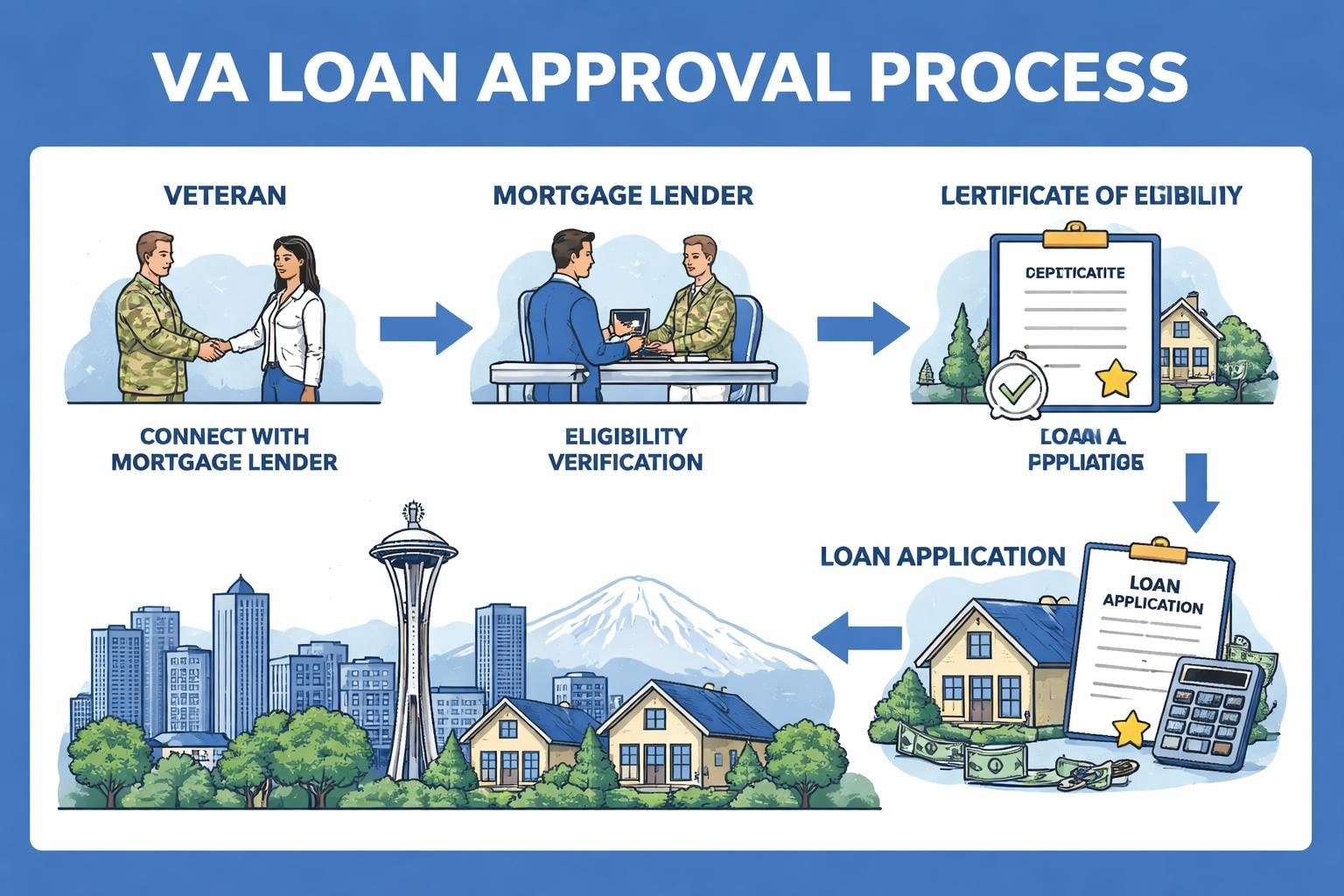
VA loans can be a major advantage for eligible buyers, with no down payment required in many cases and competitive rates. The trade-off is that some sellers still carry outdated assumptions about VA appraisals and timelines. A broker who knows VA can help your offer look strong and set expectations with the listing side.
FHA loans can be a path for first-time buyers who need a lower down payment or more flexible credit treatment. The trade-off is mortgage insurance that can be long-lasting depending on down payment, plus property condition requirements that may matter in older Seattle housing stock.
A realistic Seattle scenario: the difference a broker makes
A common story looks like this: a tech employee is buying on the Eastside with a strong base salary and meaningful RSUs, but their down payment is split between cash savings and stock sales. They want to keep cash reserves because they are also planning a renovation after closing.
A weaker approach is to ignore the RSUs and approve them only on base pay, forcing a higher down payment or smaller target price. A better approach is to document vesting history and use guidelines that allow a portion of that income, while still being conservative enough to satisfy underwriting. When done correctly, the buyer can keep more cash on hand, submit a stronger offer, and close without scrambling to liquidate assets at the wrong time.
That kind of planning is what separates an “easy transaction” from a deal that falls apart on day 19.
One local option worth knowing
If you want a broker who leans heavily into education and clear strategy for Seattle-area buyers, including tech professionals navigating RSUs, The Mortgage Reel is operated by Keith Akada and serves Seattle, Bellevue, and nearby communities. You can learn more at https://Www.themortgagereel.com.
The questions that quickly reveal who is truly top-rated
You do not need a long interview. A few targeted questions surface competence fast.
Ask what they need from you in the first 48 hours to make your file “underwriting-ready.” Ask how they handle condo reviews and what documents they request up front. Ask how they calculate variable income like bonuses or RSUs. And ask what happens if the appraisal comes in low – do they have options, and will they walk you through them calmly?
A top-rated broker answers directly, without dodging. They will also tell you when something is risky. That honesty is part of what you are paying for.
Home buying around Seattle rewards preparation. The right broker is not just there to get you a rate – they are there to help you make a clean offer, protect your timeline, and feel like you understand your own loan when the numbers get real.
Key Takeaways
- Evaluate top-rated mortgage brokers in Seattle by prioritizing accuracy, speed, and strategy.
- Read reviews for specific patterns that reflect a broker’s competence, rather than just star ratings.
- Ask detailed questions about pre-approval processes and timelines to gauge a broker’s efficiency.
- Understand the advantages and trade-offs between mortgage brokers, banks, and direct lenders in Seattle.
- Prepare targeted questions to identify who truly qualifies as a top-rated mortgage broker in Seattle.
Estimated reading time: 8 minutes