

If your income comes with RSUs, annual bonuses, and a base salary that looks very normal on paper but not at all like your W-2 reality, the mortgage conversation in Seattle can feel oddly backwards. You can afford the home, your cash flow is strong, and yet the underwriting checklist keeps asking for “stable” income – as if tech comp has ever been simple.
Seattle is also a market where loan structure matters. A small change in down payment, a different way of documenting stock income, or a smarter choice between conventional and jumbo can be the difference between winning a competitive offer and watching the home go pending.
Why “tech income” is treated differently in underwriting
Most lenders are not trying to be difficult. They are trying to fit your profile into federal guidelines and investor rules that were built for predictable salary-and-hourly paychecks. Tech compensation often breaks those assumptions.
Base salary is typically straightforward. The friction shows up with variable and equity pay. Bonuses and commissions can sometimes be used, but usually only when there is a documented history and an expectation they will continue. RSUs are even more nuanced: they can be valuable and frequent, but they are tied to vesting schedules, market volatility, and employment.
In practice, that means two borrowers with the same true earning power can receive very different pre-approvals depending on how income is documented, how long it has been received, and how conservatively the lender counts it.
Mortgage options for tech professionals Seattle buyers actually use
There is no single “tech mortgage.” What matters is choosing the right loan category and then structuring income, assets, and down payment to match it. Below are the most common paths I see for Seattle and the Eastside.
Conventional loans: flexible and widely accepted
Conventional loans are the default choice for many tech professionals, especially first-time buyers with strong credit and steady employment. They can be paired with low down payment options (often 3-5% for qualified first-time buyers) or higher down payments to reduce monthly costs.
The main advantage is flexibility. Conventional loans can allow for different property types, competitive rates, and predictable underwriting expectations. If you are buying a condo in Seattle or a single-family home in Bellevue, conventional is often the cleanest path when the loan size stays under the conforming loan limit.
The trade-off is that private mortgage insurance (PMI) may apply if you put less than 20% down. PMI is not automatically “bad,” but in a high-payment market it can meaningfully affect monthly cash flow. Sometimes it makes sense to accept PMI temporarily and plan for a future removal once you build equity. Other times, a slightly higher down payment is the smarter move.
Jumbo loans: built for high-price neighborhoods
In many Seattle neighborhoods, conforming loan limits can be a real constraint. If your purchase price pushes your loan amount above the conforming limit, you are typically looking at a jumbo loan.
Jumbo underwriting is often more conservative. You may see stricter requirements around reserves (extra savings after closing), credit scores, and how variable income is counted. On the other hand, jumbo programs can be surprisingly competitive, especially for strong borrowers, and can offer options that fit the realities of higher-priced homes.
The key is preparing early. If you want a jumbo approval to feel smooth, you usually need organized documentation, a clear story for equity income, and a plan for reserves that does not rely on last-minute stock sales.
VA loans: a powerful option if you qualify
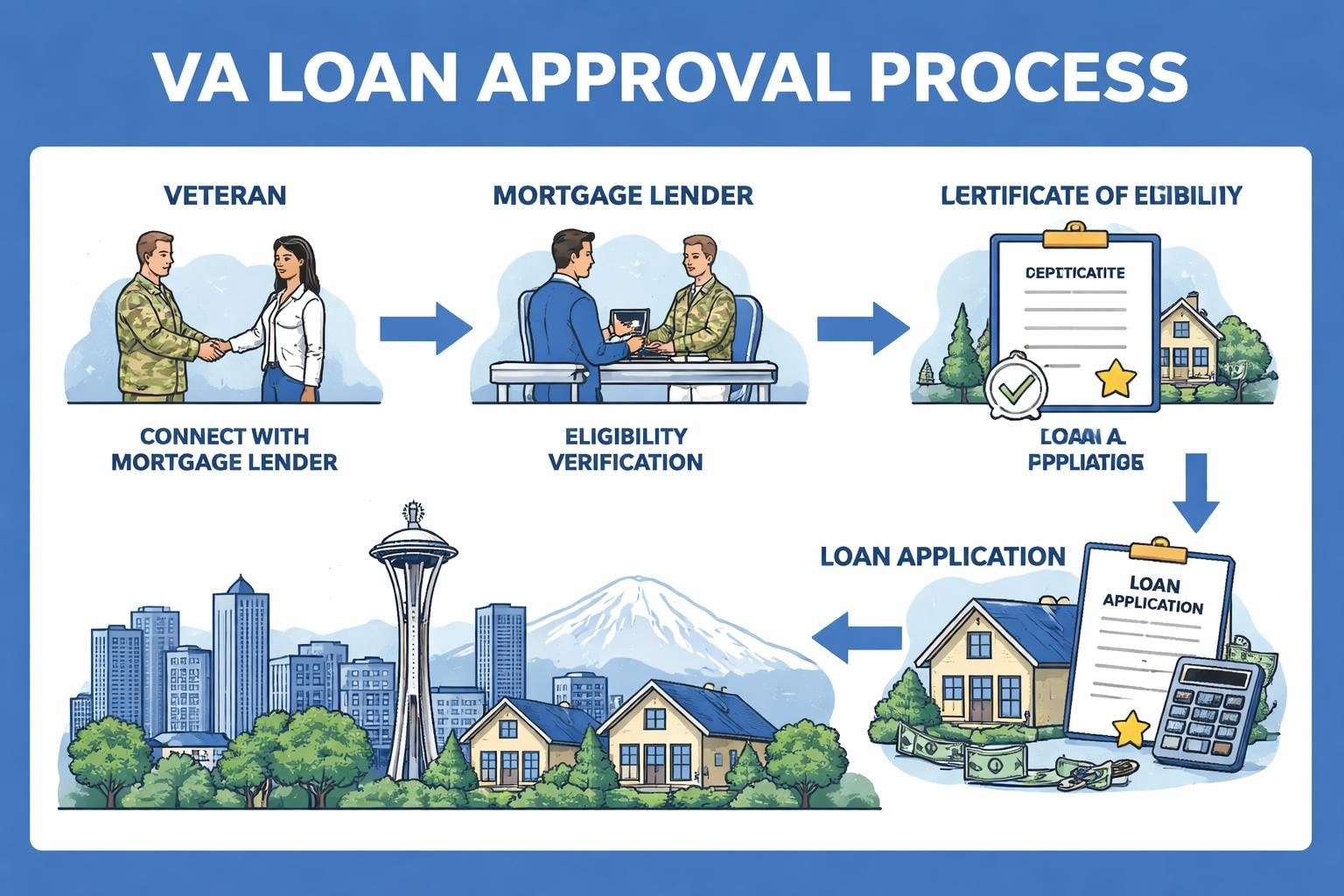
For eligible veterans and service members, VA loans can be one of the strongest options in the Seattle market. The ability to buy with 0% down and no monthly mortgage insurance can be a major advantage, especially when you want to preserve cash for reserves, moving costs, or renovations.
VA appraisals and timelines have a reputation, but with the right preparation and an experienced team, VA can absolutely compete. The bigger strategic question is not whether VA is “allowed” in Seattle – it is whether you structure the offer and timing so the seller feels confident.
FHA loans: useful in specific scenarios
FHA loans are not the most common for higher-income tech buyers, but they can be helpful in certain situations: a lower credit score, limited down payment, or a need for more flexible underwriting.
The trade-off is mortgage insurance. FHA includes both upfront and monthly mortgage insurance, and the monthly portion often lasts for the life of the loan if you put less than 10% down. For many tech professionals, FHA is best viewed as a stepping-stone option rather than the end-state loan, with a refinance plan once credit and equity improve.
How RSUs and stock compensation can help – and when they won’t
RSUs can strengthen a mortgage file, but only if they are documented and treated correctly. Underwriters want to see a history of receipt and a reasonable expectation of continuation. That usually means showing vesting history, award schedules, and evidence that the income is recurring.
A common misconception is that having a large unvested grant automatically boosts buying power. Unvested RSUs can help demonstrate future strength, but they typically do not count as current qualifying income. Vested RSUs that have been consistently received and sold, or otherwise documented as income, are more likely to be included.
There is also a practical planning angle. If your down payment depends on selling stock, plan for timing and market movement. A pre-approval feels great until the stock price dips and your down payment math changes. Building a buffer, even if it is just an extra month or two of savings, reduces stress and keeps your offer credible.
Down payment strategy in Seattle: cash, stock, and opportunity cost
Tech professionals often have a unique decision to make: put more down to lower the payment, or keep more liquid assets invested.
There is no universal answer. A larger down payment can reduce monthly obligation, improve debt-to-income ratio, and sometimes secure better pricing. Keeping assets invested can preserve flexibility and long-term growth potential. The best choice depends on your risk tolerance, your runway (how many months you want in reserves), and how close you are to key career transitions.
If you are early in your role or you anticipate changing companies, liquidity matters. If you are settled, have stable vesting, and want maximum monthly comfort, a larger down payment may be worth it.
The DTI issue: when high income still hits a ceiling
Debt-to-income ratio (DTI) is one of the most frustrating surprises for high earners. Even with strong income, Seattle payments can be large, and student loans, car payments, and credit card minimums add up quickly.
Two tactics that often help are timing and clarity. Timing matters because paying down revolving debt before the lender pulls credit can improve both your score and DTI. Clarity matters because properly documenting variable income can raise the qualifying income number, which makes DTI work.
Be careful with last-minute moves, though. Opening new credit, financing furniture, or making large unexplained transfers can create new questions during underwriting. The goal is to look boring on paper, even if your compensation package is anything but.
Speed matters: why structure and documentation win offers
In Seattle, sellers do not just choose the highest price. They choose the offer that looks most likely to close. A fully underwritten pre-approval, clean documentation, and a lender who can execute quickly can change how your offer is perceived.
For tech professionals, the biggest delays usually come from income verification and asset sourcing. RSU sales, large deposits, and transfers between brokerage accounts can trigger extra documentation requests. If you prep those statements and transaction histories up front, you reduce the odds of a stressful “we need this in two hours” email right before closing.
I have worked with buyers who assumed their profile would sail through because they work at a well-known company, then discovered that their equity income was counted at a fraction of what they expected. I have also seen the opposite: buyers who thought they were capped at a certain price point, then gained meaningful buying power once their RSU and bonus history was presented correctly.
A practical way to choose your best option
If you are trying to narrow the field, start with three questions.
First, are you staying under the conforming limit? If yes, conventional often provides the widest range of choices. If no, focus on jumbo requirements early so you are not surprised by reserves or stricter income treatment.
Second, what is your down payment really made of? If it is mostly stock, map the sale timeline and build a cushion for price swings. If it is cash savings, decide how much liquidity you want after closing.
Third, how “countable” is your variable income today? If you have one year of bonus history, you may need more time or stronger base salary support. If you have multiple years of RSU vesting and a consistent pattern, you may be able to use it more effectively.
When you want this evaluated with Seattle-specific strategy and clear education around the trade-offs, Keith Akada at The Mortgage Reel is a strong resource for tech professionals who need a fast, well-documented path from pre-approval to closing.
A good mortgage plan should feel like it fits your life, not just your loan file. If you build a structure that respects how you actually get paid, you can make offers with confidence – and keep your financial flexibility after you get the keys.