

That moment when you find “the one” in Seattle or Bellevue is usually followed by a less romantic thought: How do I compete without overextending myself? For many first-time buyers with military service, a VA loan can be the difference between entering the market confidently and sitting on the sidelines.
VA loans are often described as “no down payment” loans, but that’s just the headline. The real advantage is flexibility—especially when you understand the different VA loan options for first-time buyers and how to apply them to a fast-moving local market.
What makes a VA loan different (and why first-time buyers care)
A VA loan is a mortgage backed by the Department of Veterans Affairs. The VA doesn’t lend you the money directly; it provides a guaranty to approved lenders. That guaranty changes the risk math for the lender, which is why VA loans typically come with favorable terms.
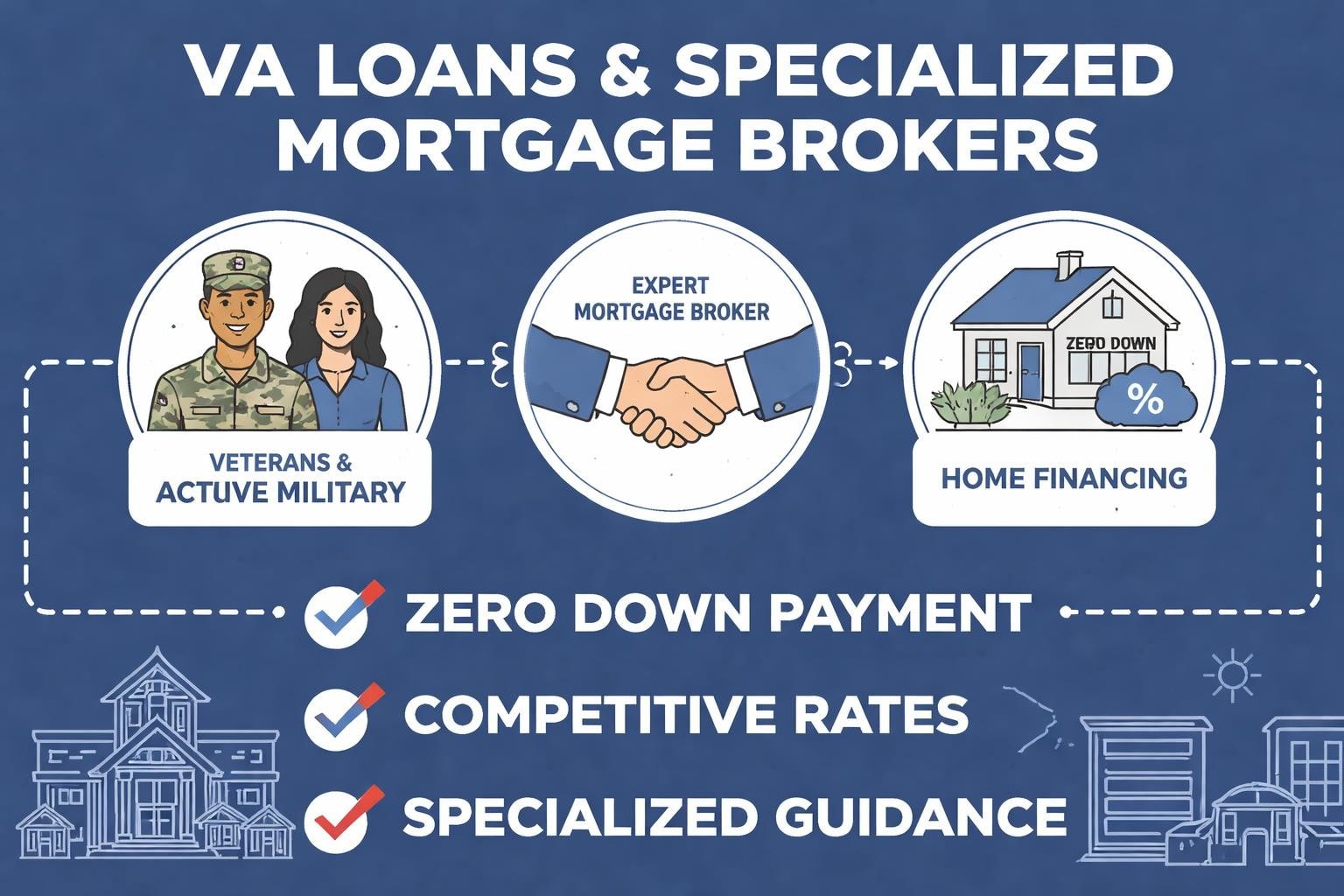
For first-time buyers, three features tend to matter most. The first is the ability to buy with little to no down payment. The second is that VA loans don’t require monthly mortgage insurance the way many low-down-payment conventional loans do. The third is underwriting flexibility—VA guidelines are often more forgiving around credit profile and debt ratios than people expect (though “forgiving” doesn’t mean “automatic”).
In King County, where prices can move quickly and appraisal gaps are a real thing, those benefits are powerful—but only if you structure the offer and the loan correctly.
VA loan options for first-time buyers: the main paths
Most first-time buyers will fit into one of a few VA-backed paths. Which one is best depends on price point, cash on hand, and how competitive the home is.
The standard VA purchase loan (the workhorse option)
This is the classic VA loan: you’re buying a primary residence, and the financing is structured as a purchase mortgage. In practice, this is the option that covers the majority of first-time VA buyers.
If you have enough VA entitlement available, the standard purchase loan can allow 0% down. That can help you preserve cash for closing costs, reserves, or post-close expenses that always show up—moving, initial repairs, furniture, and the “we didn’t know the water heater was that old” moment.
The trade-off is that in very competitive neighborhoods, sellers sometimes worry about VA appraisals or repair requirements. Those concerns are often manageable, but it takes clean documentation and a lender who knows how to keep timelines tight.
The high-balance / “VA jumbo” approach (for higher-priced areas)
People hear “VA loan limit” and assume VA loans can’t work for higher-priced homes. The reality is more nuanced.
If you have full entitlement, you can often go above traditional conforming limits without a formal loan cap the way older VA rules worked. Lenders still have their own guidelines for larger balances, and pricing/qualification can tighten as loan amounts rise, but VA financing can absolutely be used for higher price points common in Bellevue, Kirkland, and parts of Seattle.
Where this becomes strategic is down payment choice. Sometimes a small down payment—5% or 10%—makes an offer stronger, lowers payment, or improves approval margins with certain lender overlays. A VA loan isn’t “no down payment only.” It’s “down payment optional,” and that’s a meaningful difference.
The VA Interest Rate Reduction Refinance Loan (IRRRL) later on
An IRRRL is a streamlined VA refinance option that can be used after you already have a VA loan. It’s not a purchase tool, but it is part of the broader planning conversation for first-time buyers.
Why? Because in a volatile rate environment, you may buy when rates are higher than you’d like. If rates drop later, IRRRLs can be simpler than traditional refinances—often less documentation and faster processing, depending on the situation. When buyers understand this potential “future lever,” it can make a current purchase feel less like a permanent bet on today’s rate.
The VA cash-out refinance (a flexibility tool, not a first move)
VA cash-out refinances allow you to refinance and take cash out (or refinance from a non-VA loan into a VA loan, if eligible). This is usually not a first-time buyer’s priority, but it matters as a long-term option—especially if you’re planning renovations or consolidating higher-interest debt later.
The caution: cash-out strategies can raise your payment and extend your timeline to pay off the home. It can be smart in specific cases, but it should be a deliberate decision, not a default.
Entitlement, the funding fee, and what “0% down” really means
A VA loan’s zero-down feature is tied to entitlement and lender guidelines. Most eligible buyers have enough entitlement to finance 100% of a purchase price, but if you’ve used VA benefits before—or you’re restoring entitlement after selling a prior home—your available entitlement can affect structure.
Then there’s the VA funding fee. This is a one-time fee that helps keep the program running. Some buyers pay it at closing; many roll it into the loan amount. Certain veterans are exempt (often due to service-connected disability). For budgeting, the key is that “no down payment” doesn’t mean “no cash needed.” You’ll still see closing costs, prepaid items like taxes/insurance, and potentially an appraisal gap if the market demands it.
In Seattle-area transactions, I often coach first-time VA buyers to think in three buckets: minimum cash required to close, cash that strengthens the offer, and reserves that protect your lifestyle after you move in. VA financing can reduce the first bucket, but you still want a plan for the other two.
Winning offers with VA financing in competitive Seattle-area neighborhoods
A VA buyer can absolutely win in a multiple-offer situation, but the offer has to be built thoughtfully.
Appraisal is the usual pressure point. When prices are climbing or a home is intentionally listed low to drive bids, an appraisal gap can happen. If you’re offering above list, talk early about how you’d handle a low appraisal—do you have cash to bridge, would you renegotiate, or are you prepared to walk? A clear plan keeps you from making emotional decisions under a 24-hour response deadline.
Home condition is the second pressure point. VA appraisals include Minimum Property Requirements designed to protect the veteran buyer. Most well-maintained homes pass without drama, but issues like peeling paint, missing handrails, active roof leaks, or certain safety hazards can trigger required repairs. If you’re targeting older Seattle homes, it’s smart to be realistic about condition and to write an offer that anticipates what the VA appraiser might flag.
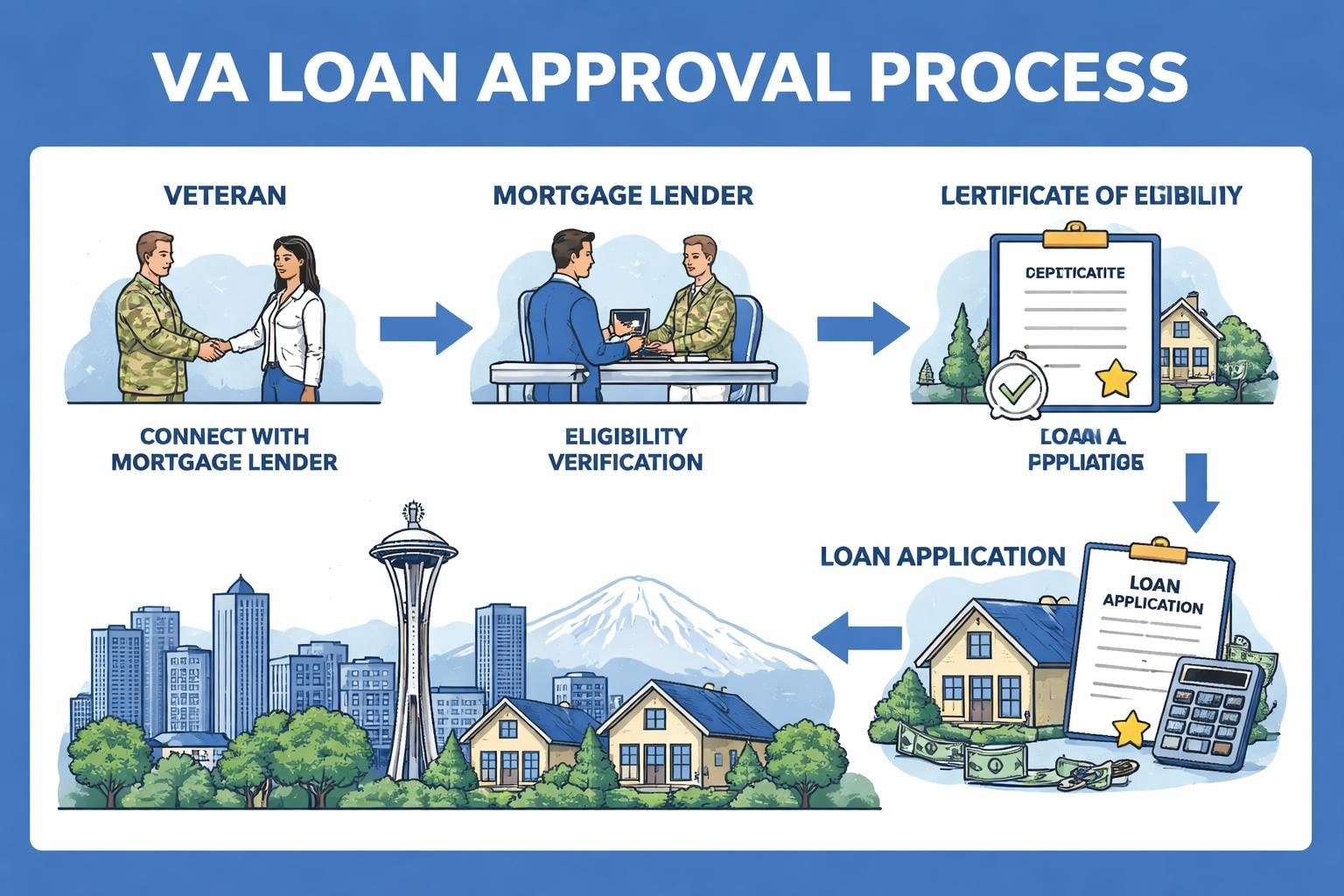
Finally, speed matters. In this market, a VA loan doesn’t need to be slow—but the pre-approval has to be real, and the lender has to be responsive. That means reviewing income documentation early and making sure your loan scenario is fully underwritten as much as possible before you’re negotiating.
How tech compensation (RSUs, bonuses) fits into VA qualifying
Many first-time buyers in Seattle and Bellevue are paid in a mix of base salary, bonus, and RSUs. VA guidelines allow variable income, but lenders need to document it properly.
RSUs in particular can be tricky because vesting schedules, stock price changes, and sale patterns matter. Some lenders will only count base salary. Others will count bonuses but avoid RSUs. A well-structured file can often include these income streams when supported by history and continuity, but it requires upfront planning—especially if you’re trying to qualify for a higher price point with minimal down payment.
This is where buyers lose time if they wait until after an accepted offer to “see if it works.” If your RSUs are part of your buying power, treat them like a core part of the pre-approval, not a bonus feature.
A real-world scenario I see often
A first-time VA buyer comes in targeting a $900K–$1.1M home. They can technically do 0% down, but they also want a competitive offer and a comfortable monthly payment.
In many cases, the best outcome isn’t strictly “maximum leverage.” It’s a balanced strategy: keep a healthy reserve, consider a modest down payment if it meaningfully improves terms, and make sure the offer anticipates appraisal risk. When this is handled upfront, the buyer can move quickly without feeling like they’re gambling.
If you want a lender who will walk through those trade-offs with you in plain English—and who understands how Seattle-area pricing and tech compensation affect loan strategy—you can start with The Mortgage Reel and build a plan before you’re under the pressure of an offer deadline.
When a VA loan might not be the best first-time option
VA loans are excellent, but they’re not automatically the best for every buyer.
If you have significant cash and strong credit, a conventional loan might price out better in certain cases—especially if you’re putting 20% down and can avoid mortgage insurance anyway. Some condos have approval issues depending on project status, which can limit options across all loan types. And if the home is in rough condition, VA repair requirements can create negotiation friction that’s not worth it.
The point isn’t to talk you out of VA financing; it’s to make sure the loan supports your real goal: getting the keys without creating a financial hangover.
The best first move isn’t picking a rate off a headline or assuming “0% down” is always optimal. It’s getting clear on your budget, your cash strategy, and your offer plan—so when the right home shows up on a Thursday, you’re ready to act like a prepared buyer, not a hopeful one.