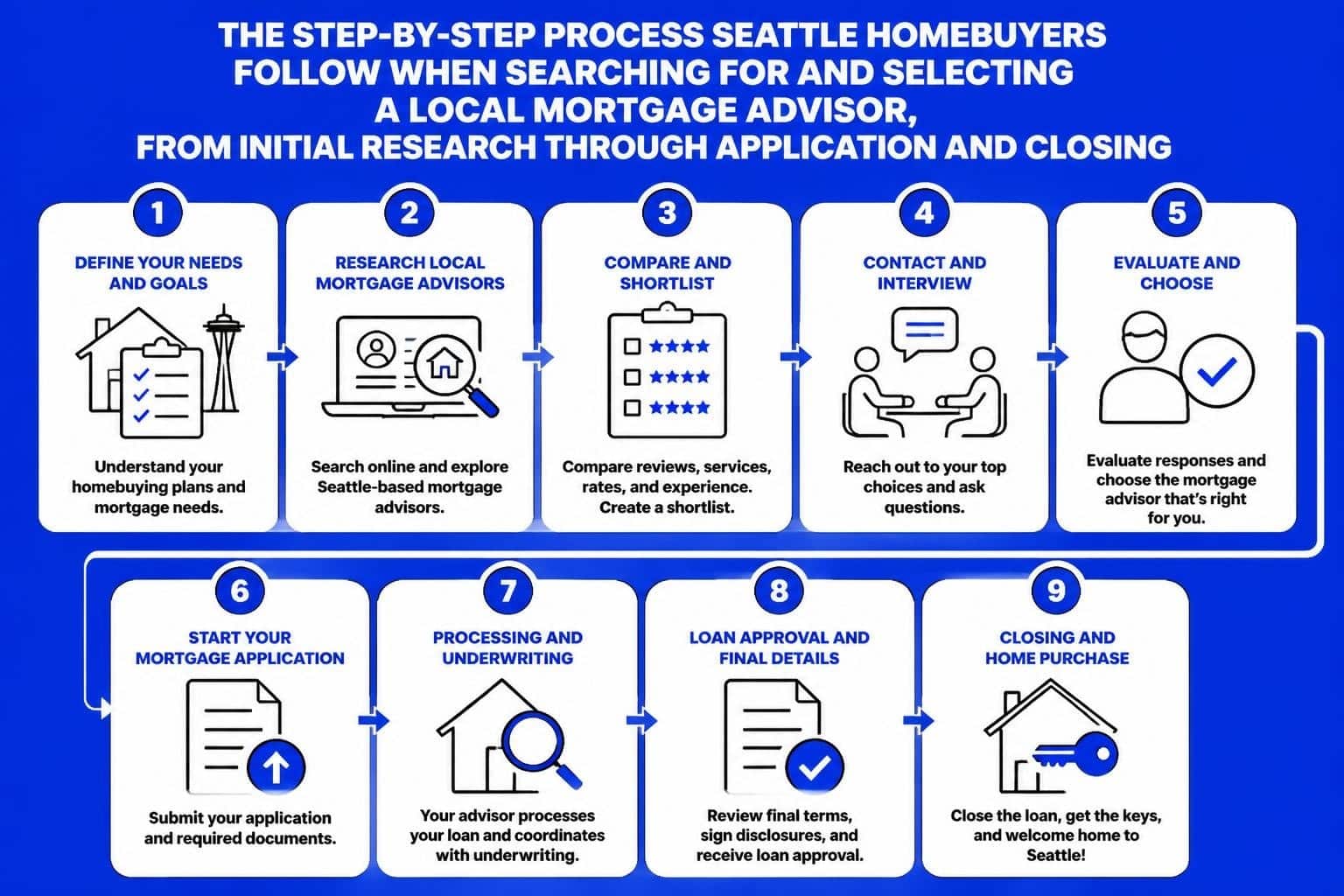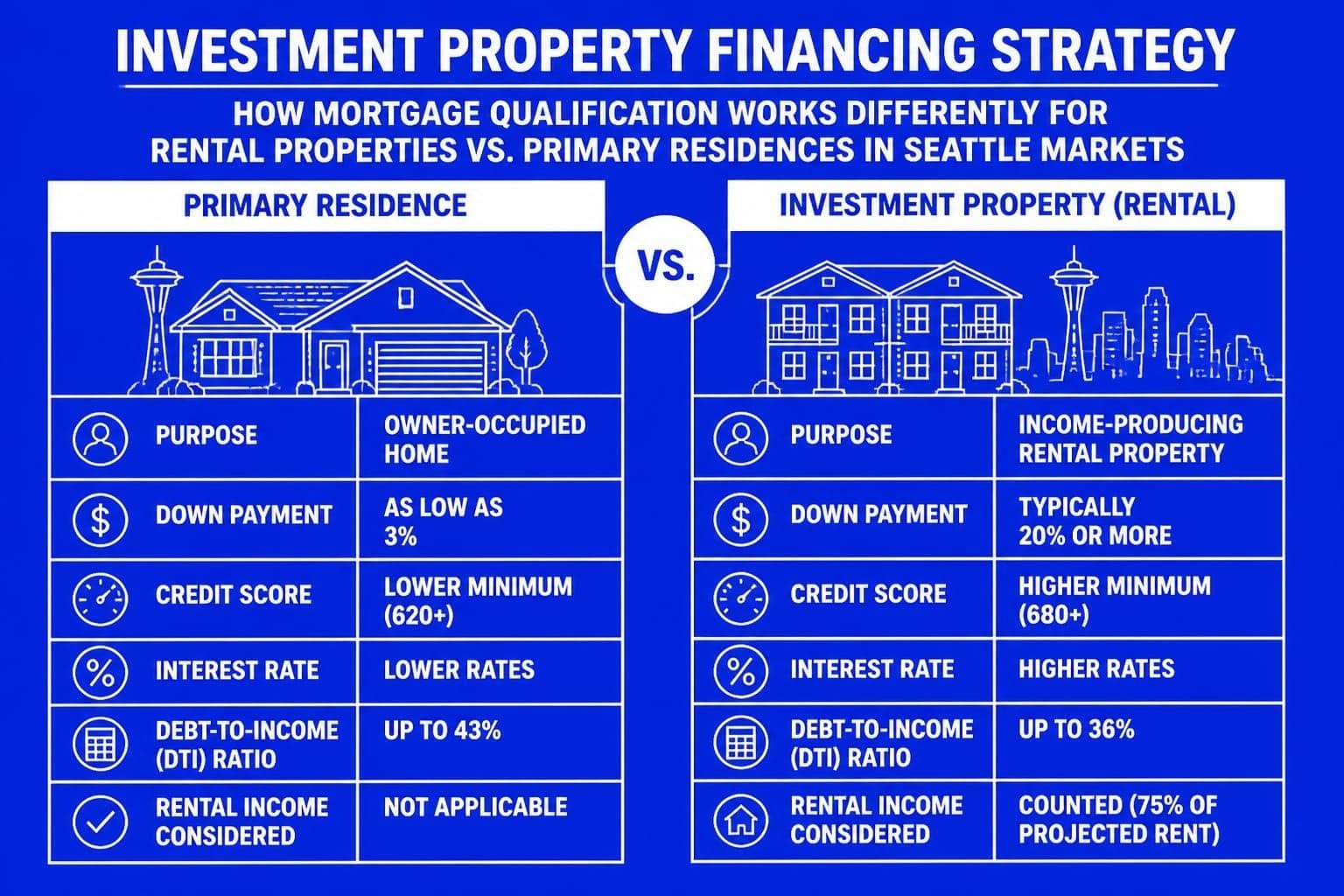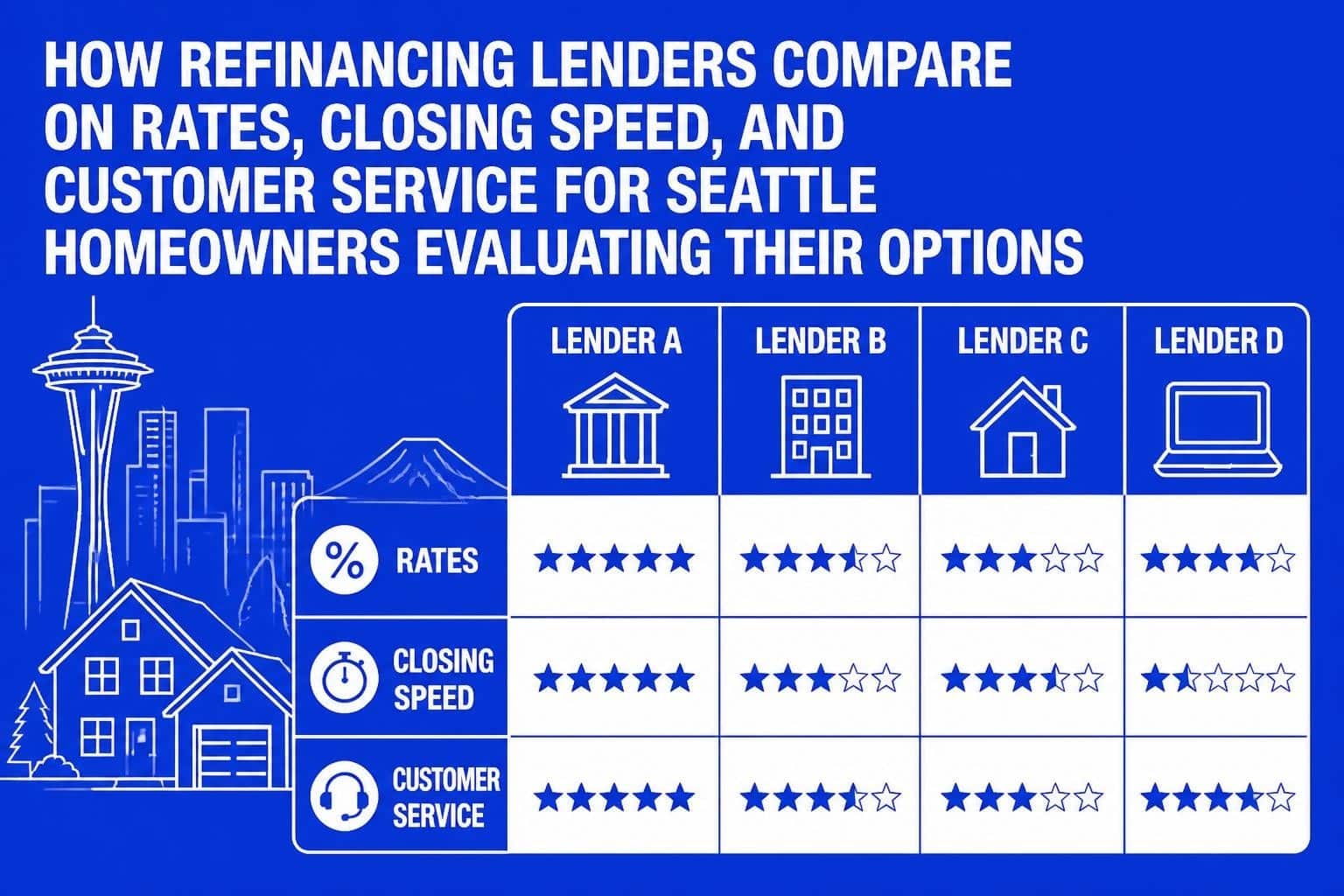
Understanding FHA loan down payment requirements is essential for Seattle-area homebuyers who want to enter the competitive housing market with minimal upfront cash. Federal Housing Administration loans offer a pathway to homeownership with significantly lower down payment thresholds compared to conventional financing, making them particularly attractive for first-time buyers in neighborhoods from Shoreline to Everett. Whether you're a tech professional at Amazon with substantial RSU compensation or a first-time buyer building savings while renting in Lake Forest Park, knowing how FHA down payments work can help you plan strategically and move forward with confidence.
How Much Is an FHA Loan Down Payment?
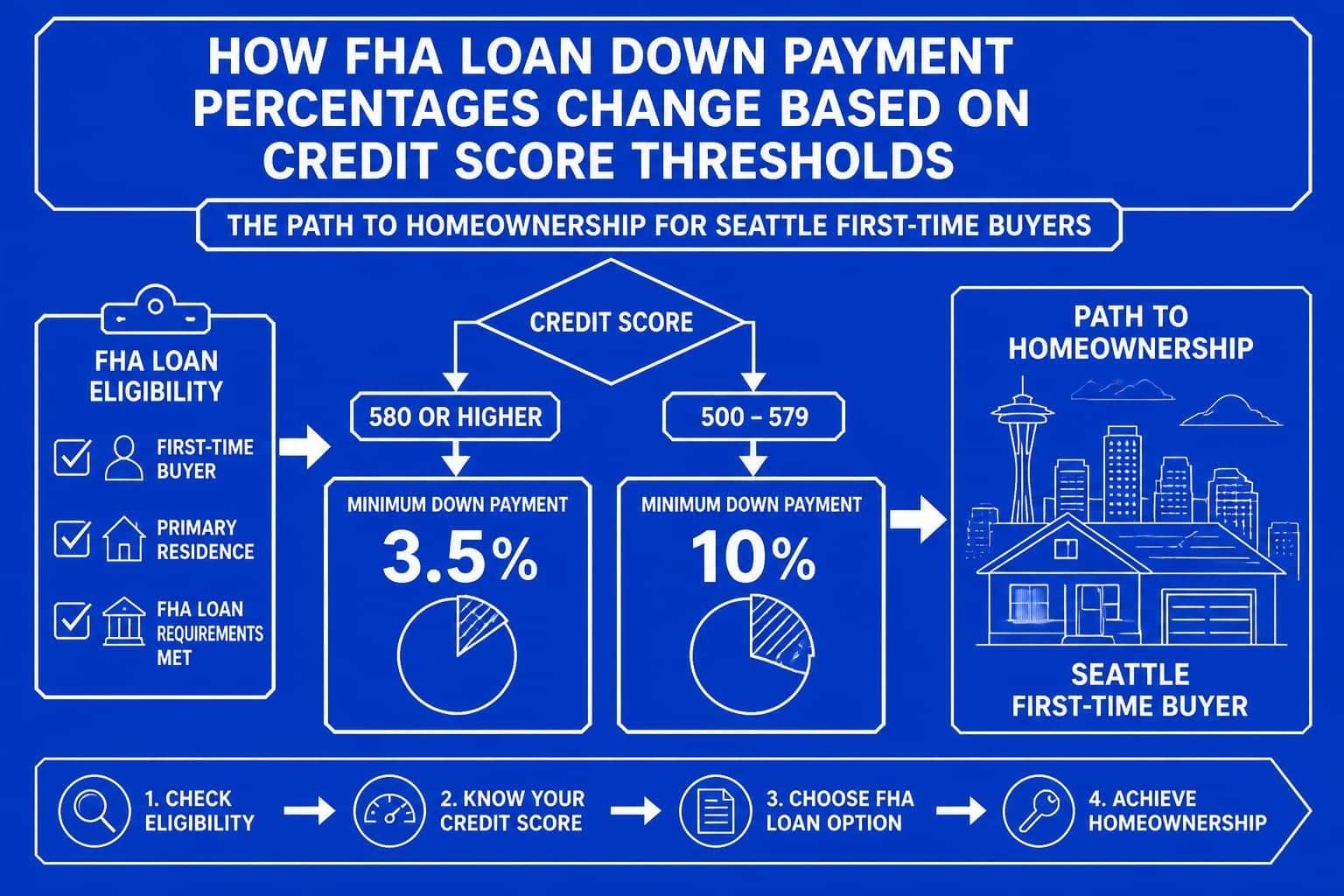
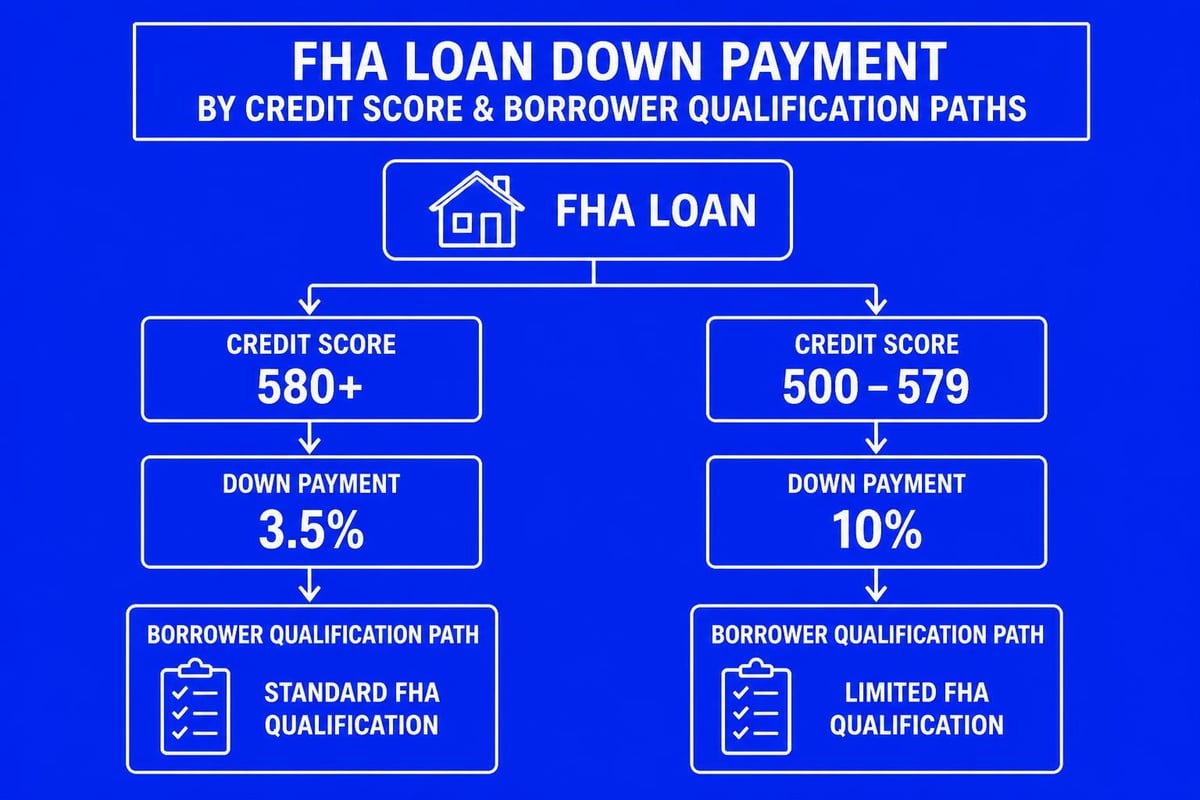
The fha loan down payment requirement depends primarily on your credit score. Borrowers with a credit score of 580 or higher qualify for the minimum down payment of 3.5% of the purchase price. This is one of the lowest down payment options available in the mortgage industry, making homeownership accessible to buyers who haven't accumulated the traditional 20% down payment.
For borrowers with credit scores between 500 and 579, the required down payment increases to 10%. While this is higher than the standard FHA minimum, it still provides an option for buyers with challenged credit who might not qualify for conventional financing.
Credit Score Impact on Down Payment Requirements
Your credit profile directly influences how much you'll need to bring to closing. The FHA Handbook 4000.1 establishes clear minimum cash investment rules that lenders must follow when underwriting your application.
| Credit Score Range | Minimum Down Payment | Example on $500,000 Home |
|---|---|---|
| 580 or higher | 3.5% | $17,500 |
| 500-579 | 10.0% | $50,000 |
| Below 500 | Generally ineligible | N/A |
These thresholds represent federal minimums, but individual lenders may impose slightly higher requirements based on their risk appetite and underwriting guidelines. In the Seattle metro area, where median home prices in neighborhoods like Bellevue and Redmond exceed $700,000, even a 3.5% down payment represents a substantial amount.
Acceptable Sources for Your FHA Loan Down Payment
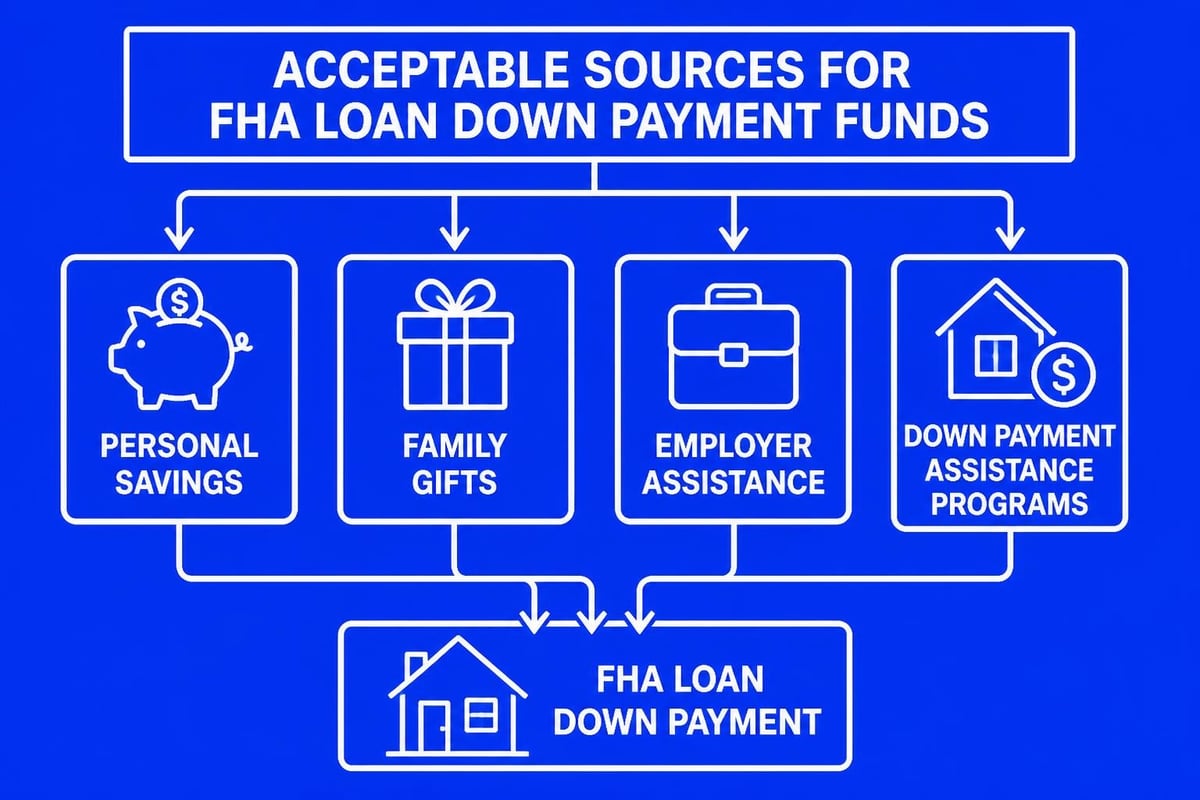
FHA guidelines are notably flexible regarding where your down payment funds originate. This flexibility distinguishes FHA loans from many conventional programs that impose stricter sourcing requirements.
Personal Savings and Assets
The most straightforward source is your own verified savings, checking accounts, or liquidated investments. Underwriters will require two months of bank statements to document these funds and ensure they've been seasoned in your accounts.
Gift Funds from Family Members
FHA allows 100% of your down payment to come from gift funds provided by family members, employers, or charitable organizations. The donor must provide a gift letter stating that the funds require no repayment, and you'll need to document the transfer into your account.
For Seattle tech professionals receiving substantial bonuses or stock compensation, coordinating the timing of RSU vesting with your home purchase can provide significant down payment funds. However, these must be properly documented and may require special underwriting consideration.
Down Payment Assistance Programs
Many Seattle-area buyers utilize down payment assistance (DPA) programs to cover some or all of their required contribution. The Chenoa Fund offers FHA-compatible assistance for eligible borrowers, providing funds that can be structured as forgivable loans or grants depending on the program.
Washington State Housing Finance Commission also offers programs specifically designed for first-time buyers in cities like Mill Creek and Lynnwood, where median incomes may not align with rapidly appreciating home values.
FHA Loan Down Payment vs. Conventional Options
Understanding how FHA differs from conventional loan down payment requirements helps you make strategic financing decisions based on your specific situation.
Conventional loans typically require a minimum 3% down payment for first-time buyers and 5% for repeat buyers, which appears competitive with FHA's 3.5%. However, conventional loans impose significantly stricter credit requirements and reserve standards.
Key Comparison Factors
- Credit flexibility: FHA accepts scores as low as 500, while conventional programs rarely approve below 620
- Debt-to-income ratios: FHA allows higher DTI ratios, beneficial for Seattle buyers with student loans or tech industry stock options
- Mortgage insurance: FHA requires upfront and monthly MI regardless of down payment, while conventional MI drops at 20% equity
- Loan limits: FHA limits in King County are $1,209,750 for 2026, while conventional conforming limits match this amount
For homes exceeding these limits in premium Seattle neighborhoods, you'll need to explore jumbo financing options that operate under entirely different guidelines.
How to Minimize Your FHA Loan Down Payment
Strategic planning can reduce the cash you need to bring to closing while still securing favorable loan terms.
Improve Your Credit Score First
If your score currently falls in the 500-579 range, dedicating six months to credit improvement could reduce your required down payment from 10% to 3.5%. This represents a difference of $32,500 on a $500,000 home.
Simple strategies include:
- Paying down credit card balances below 30% utilization
- Disputing any inaccurate negative items on your credit report
- Avoiding new credit applications during your home search
- Becoming an authorized user on a family member's seasoned credit account
Maximize Seller Concessions
FHA allows sellers to contribute up to 6% of the purchase price toward your closing costs. While this doesn't reduce your down payment directly, it frees up cash you've saved to allocate toward the down payment instead of closing expenses.
In the competitive Seattle market, requesting seller concessions may weaken your offer. However, in neighborhoods like Everett where inventory levels are higher, sellers may be more willing to negotiate.
Down Payment Assistance Programs for Seattle FHA Buyers
Washington State and King County offer several programs that pair effectively with FHA financing, particularly for first-time homebuyers entering the market.
State and Local Programs
The Washington State Housing Finance Commission provides the Home Advantage program, offering down payment assistance up to 5% of the loan amount. This can be combined with an FHA loan to minimize your out-of-pocket expenses significantly.
King County also administers programs for moderate-income buyers purchasing in designated areas. These programs often include income limits based on area median income (AMI), which varies by household size.
Employer Assistance Programs
Major Seattle employers including Amazon, Microsoft, and Google have begun offering homebuyer assistance as a retention benefit. These programs may provide grants, matched savings, or forgivable loans that satisfy FHA down payment requirements when properly structured.
Grant vs. Loan Structures
Down payment assistance programs generally fall into two categories:
- Grants: Non-repayable funds that reduce your cash to close
- Second mortgages: Subordinate liens with deferred or forgiven repayment terms
FHA allows both structures, though second mortgages add complexity to your debt-to-income calculations and may affect your ability to qualify for the primary mortgage.
FHA Loan Down Payment Requirements by Property Type
The property you're purchasing influences certain aspects of your fha loan down payment, though the percentage requirements remain consistent.
Single-Family Homes
Standard down payment requirements apply to detached single-family residences throughout Seattle, Bellevue, and surrounding communities. These properties typically present the smoothest approval process with minimal additional documentation.
Condominiums
FHA-approved condominiums require the same down payment percentages, but the condo complex itself must be on the FHA-approved list. Many Seattle high-rise buildings have not pursued FHA approval, limiting your options in downtown markets.
Before making an offer on a condo in neighborhoods like Redmond or Kirkland, verify the complex's FHA approval status to avoid complications during underwriting.
Multi-Unit Properties
FHA allows you to purchase properties with up to four units while still qualifying for the 3.5% minimum down payment, provided you occupy one unit as your primary residence. This creates powerful opportunities for house-hacking strategies in Seattle's competitive rental market.
A duplex in Shoreline where you live in one unit and rent the other can generate rental income that strengthens your qualifying position while building equity through appreciation.
Common FHA Down Payment Mistakes to Avoid
Understanding common pitfalls helps you navigate the FHA process smoothly and avoid delays that could jeopardize your purchase contract.
Insufficient Documentation
Every dollar of your down payment must be sourced and documented. Large deposits appearing in your bank accounts within 60 days of application will trigger requests for explanation. If you can't provide satisfactory documentation for a deposit, those funds may be excluded from your available assets.
Plan ahead by maintaining consistent saving patterns and avoiding unusual financial activity during your home search.
Mixing Ineligible Fund Sources
While FHA permits gift funds, certain sources are prohibited including:
- Personal loans taken specifically for down payment
- Cash advances from credit cards
- Funds from undisclosed parties who have interest in the sale
- Seller-funded down payment assistance (eliminated in 2008)
Underestimating Total Cash Needed
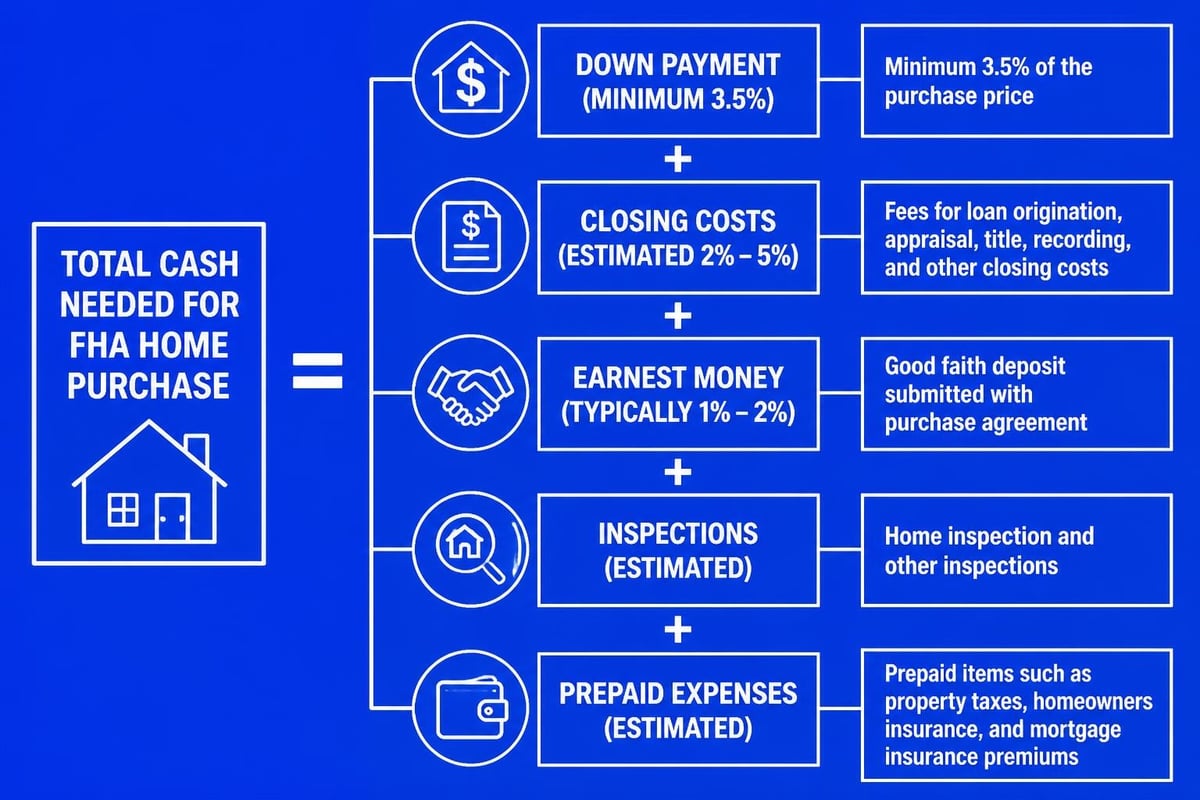
Your down payment is only one component of cash required at closing. You'll also need funds for:
- Appraisal fees (typically $500-750 in Seattle)
- Home inspection ($400-600)
- Earnest money deposit (1-3% of purchase price)
- Remaining closing costs after seller concessions
- First year homeowners insurance premium
- Prepaid property taxes and interest
A realistic cash requirement for a $500,000 FHA purchase with 3.5% down is approximately $25,000-30,000 total, not just the $17,500 down payment.
FHA Loan Down Payment and Mortgage Insurance
The relationship between your down payment amount and mortgage insurance costs is crucial for understanding your long-term housing expenses.
Upfront Mortgage Insurance Premium
All FHA loans require an upfront mortgage insurance premium (UFMIP) of 1.75% of the base loan amount, regardless of your down payment size. On a $482,500 loan (after 3.5% down on a $500,000 purchase), this equals $8,444.
This premium is typically financed into your loan amount rather than paid in cash at closing, increasing your total loan balance to $490,944.
Annual Mortgage Insurance Premium
FHA also charges an annual mortgage insurance premium that's divided into monthly installments and added to your payment. For loans with down payments under 10%, this annual premium is 0.55% of the average annual loan balance for the entire life of the loan.
This permanent mortgage insurance is a critical consideration when comparing FHA to conventional financing. Unlike conventional MI that drops at 20% equity, FHA MI remains unless you refinance to a conventional loan.
| Down Payment | Annual MIP | Duration |
|---|---|---|
| 3.5% – 9.99% | 0.55% | Life of loan |
| 10% or more | 0.55% | 11 years |
For buyers making the 10% down payment, the annual MIP drops after 11 years, providing eventual payment relief without refinancing.
Strategic Considerations for Seattle Tech Professionals
Amazon, Microsoft, and Google employees have unique compensation structures that create both opportunities and challenges for FHA financing.
Qualifying RSUs and Stock Compensation
While FHA focuses on stable, predictable income, lenders can include restricted stock units and stock options with proper documentation. Typically, underwriters require:
- Two years of verified RSU vesting history
- Company documentation of future vesting schedule
- Conservative valuation methodology accounting for volatility
This income can dramatically increase your purchasing power, but it doesn't directly reduce your down payment requirement. You'll still need 3.5% down regardless of your income level.
Timing Your Purchase with Compensation Events
Strategic buyers coordinate their home purchase with major RSU vesting events or annual bonuses to maximize available down payment funds. However, these lump-sum deposits require careful documentation and potentially a letter of explanation to satisfy underwriters.
Working with an experienced Seattle mortgage broker who understands tech compensation structures ensures these funds are properly documented and counted toward your qualifying assets.
FHA Loan Down Payment for Investment Properties
FHA loans require owner-occupancy, meaning you cannot use FHA financing for pure investment properties. However, multi-unit properties offer a strategic middle ground.
House Hacking with FHA
Purchasing a duplex, triplex, or fourplex with FHA's 3.5% down payment while living in one unit creates immediate rental income and long-term investment appreciation. This strategy is particularly effective in transitioning Seattle neighborhoods like Lake Forest Park where property values continue appreciating.
The rental income from non-occupied units can be used to qualify for the mortgage, potentially allowing you to purchase a property you couldn't otherwise afford.
Future Investment Considerations
Once you've satisfied FHA's owner-occupancy requirement (typically one year), you can convert the property to a full rental and purchase another primary residence. This creates a systematic approach to building a real estate portfolio while leveraging low down payment financing.
Comparing Lender-Specific FHA Requirements
While FHA establishes baseline guidelines, individual lenders implement overlays that may increase requirements beyond federal minimums.
Credit Score Overlays
Some lenders refuse to approve FHA loans for borrowers below 580, effectively eliminating the 10% down payment tier. Others may require 600 or even 620 minimum scores despite FHA's official 500 floor.
Reserve Requirements
FHA doesn’t mandate cash reserves after closing, but many lenders require one to three months of housing payments in verified assets beyond your down payment and closing costs. This protects the lender against immediate default but increases the cash you need available.
Debt-to-Income Restrictions
FHA guidelines permit debt-to-income ratios up to 56.9% with compensating factors, but conservative lenders may cap approvals at 45-50% regardless of other strengths in your application.
Understanding these lender-specific variations is critical when shopping for the right mortgage financing in Seattle's competitive market.
Planning Your FHA Down Payment Timeline
Successful homebuyers work backward from their target purchase date to ensure adequate down payment funds are available and properly documented.
12 Months Before Purchase
- Review your credit reports and begin addressing any issues
- Start dedicated savings specifically earmarked for down payment
- Research down payment assistance programs and confirm eligibility
- Avoid major financial changes (job switches, large purchases, new credit)
6 Months Before Purchase
- Meet with a mortgage professional to verify you're on track
- Gather documentation of gift funds if receiving family assistance
- Finalize participation in any employer assistance programs
- Begin tracking all deposits to explain sourcing during underwriting
3 Months Before Purchase
- Stop making unusual deposits or transfers between accounts
- Ensure down payment funds are in easily accessible accounts
- Get pre-approved to confirm exact down payment requirements
- Budget for additional closing costs beyond down payment
30 Days Before Closing
- Provide final bank statements showing maintained balances
- Execute gift letters and document fund transfers
- Avoid withdrawing down payment funds until specifically instructed
- Coordinate with your lender on exact timing of bringing funds to closing
This systematic approach prevents the common mistake of qualifying based on projected savings that don't materialize when needed.
How Market Conditions Affect Your Down Payment Strategy
Seattle's housing market dynamics influence whether FHA's lower down payment creates competitive disadvantages against conventional buyers.
Seller Preferences in Hot Markets
During periods of low inventory and multiple offers, sellers often prefer conventional financing with larger down payments. The perception is that these buyers present lower risk of appraisal issues or financing complications.
Your fha loan down payment strategy should account for this bias. Consider:
- Offering appraisal gap coverage to mitigate low appraisal risk
- Accelerating closing timelines to demonstrate financing certainty
- Including strong pre-approval letters that detail your specific qualification
- Waiving minor contingencies where financially prudent
Taking Advantage of Buyer Markets
When inventory increases and competition softens, FHA's lower down payment becomes pure advantage. You preserve capital for post-purchase needs like renovations, furnishings, or emergency reserves.
Markets like Everett and Mill Creek sometimes experience these balanced conditions even when core Seattle remains competitive, creating opportunities for strategic buyers willing to expand their search area.
Understanding fha loan down payment requirements empowers you to make informed decisions about your Seattle home purchase, whether you're entering the market with minimal savings or strategically preserving cash for other financial goals. With proper planning, documentation, and guidance, FHA financing provides an accessible path to homeownership even in competitive markets like Bellevue and Redmond. Keith Akada and the team at Mortgage Reel bring 25+ years of experience helping Seattle-area buyers navigate FHA requirements, qualify complex tech compensation, and close efficiently with transparent communication every step of the way.