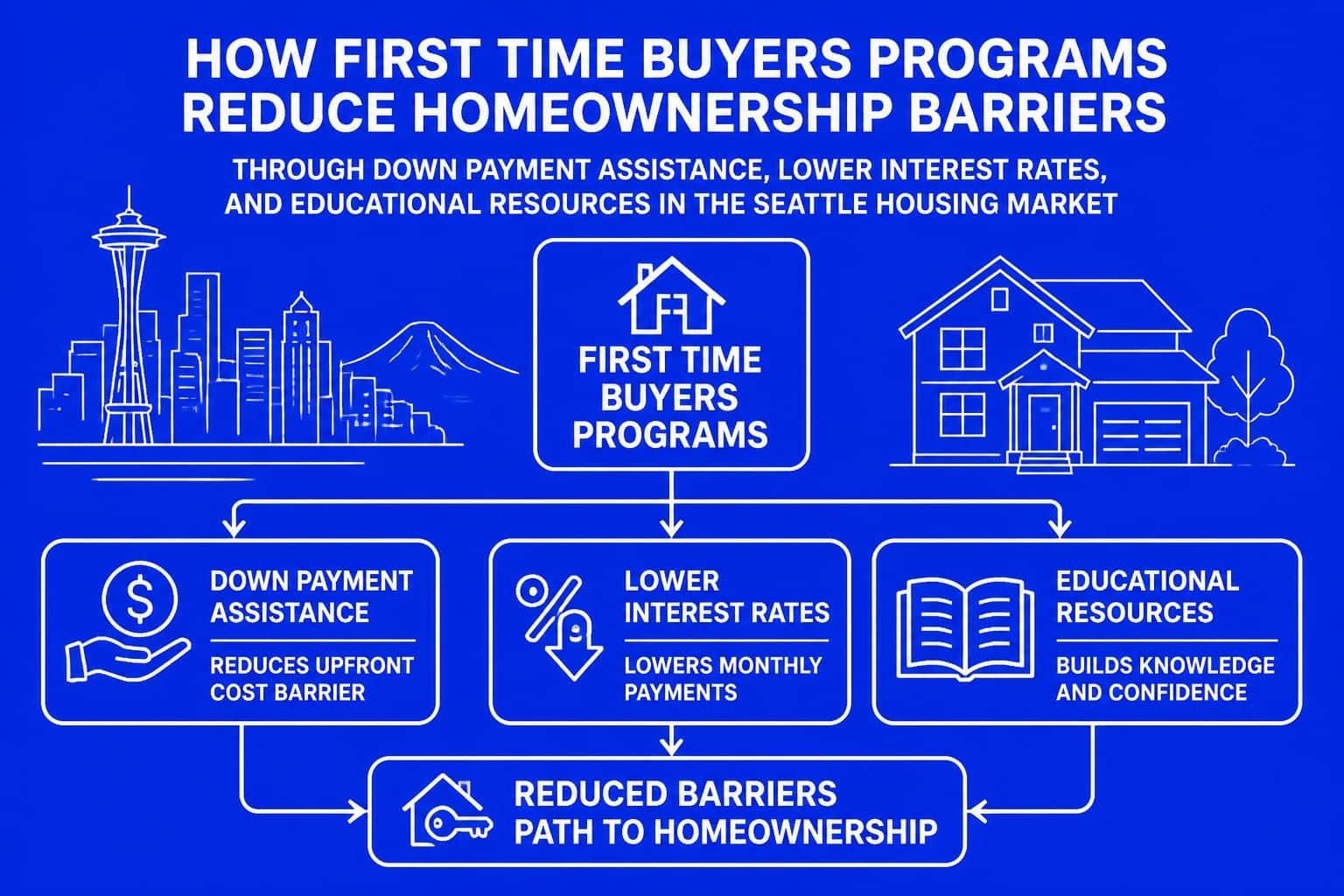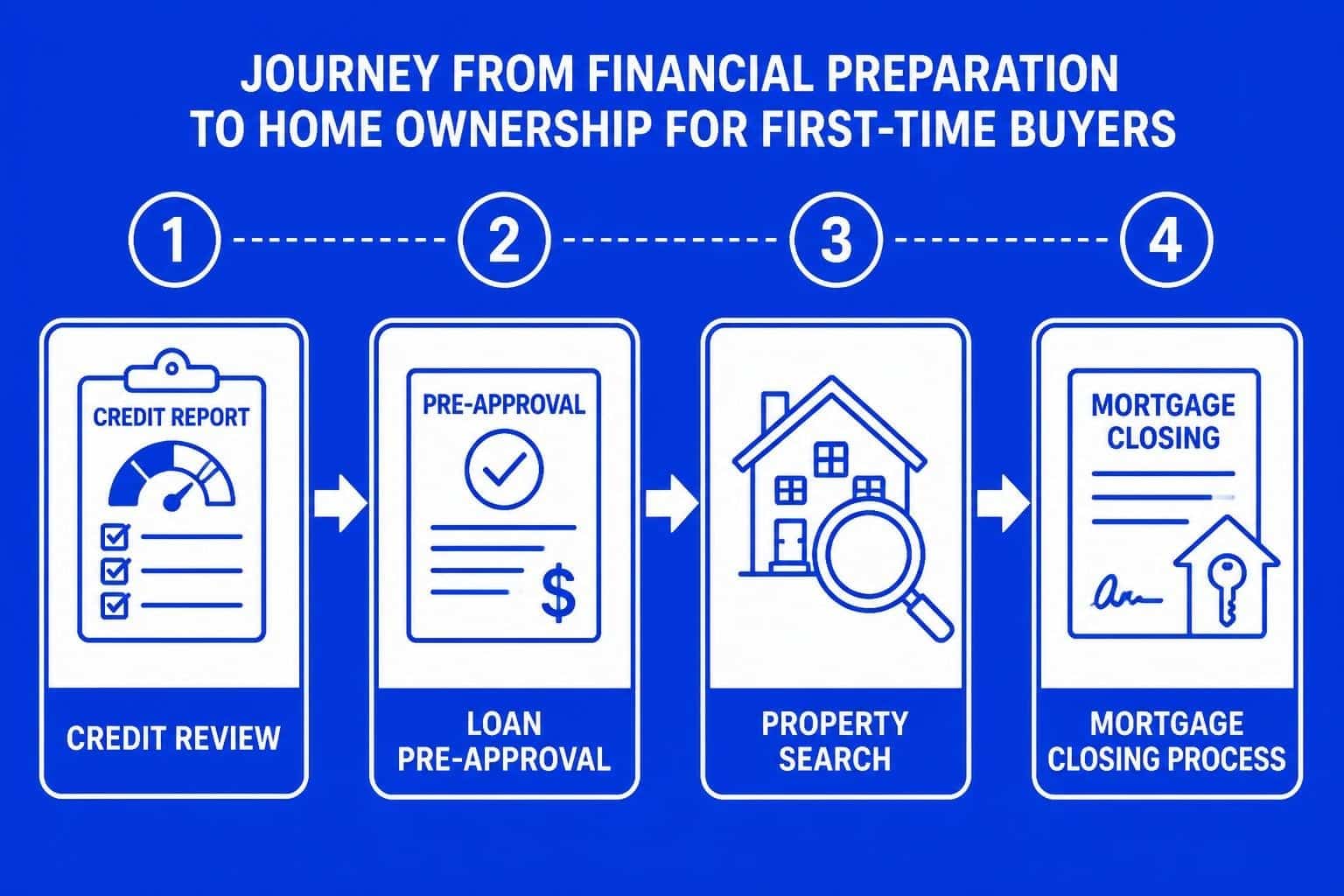
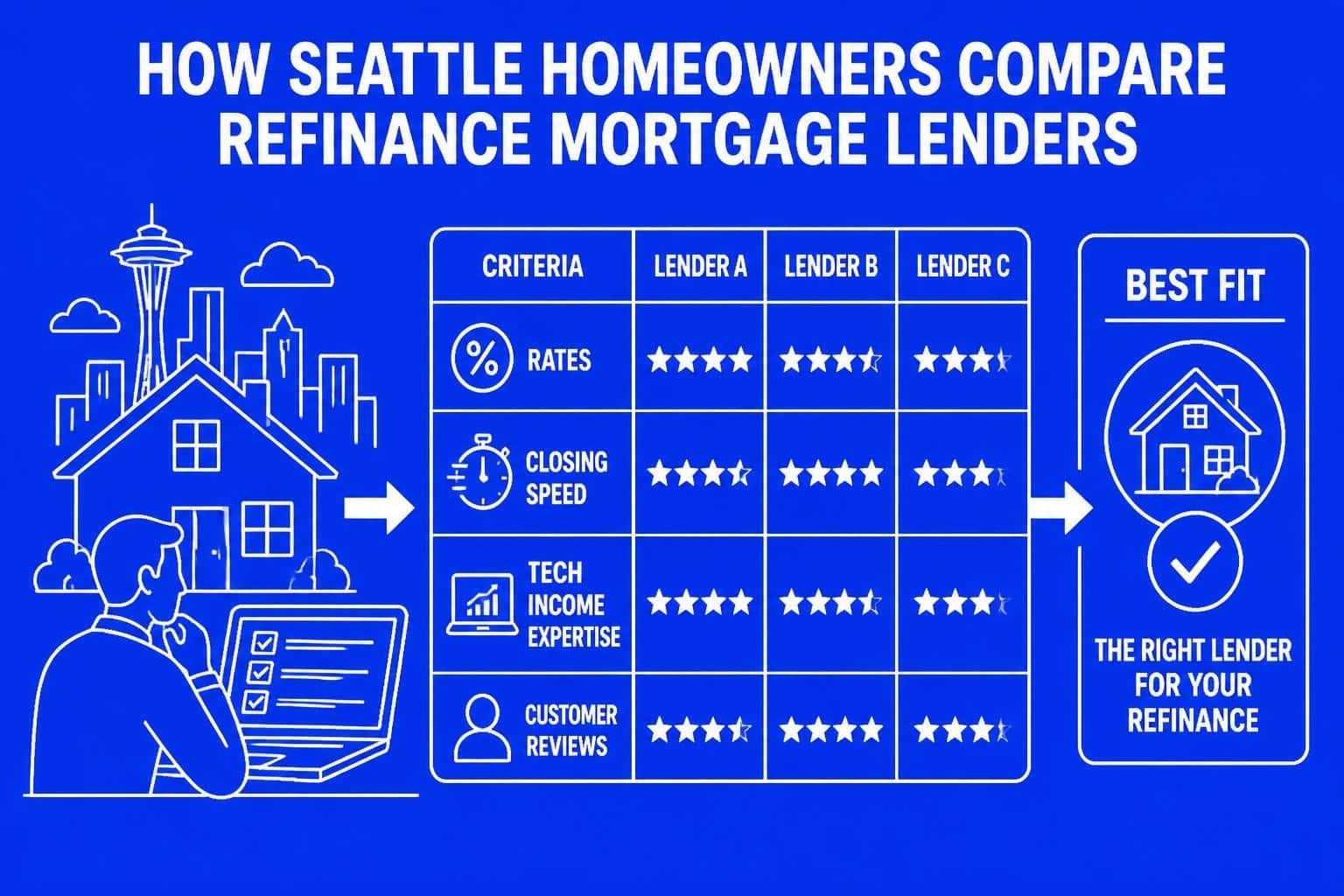
Finding the right refinance mortgage lenders can dramatically impact your financial trajectory, especially in competitive Seattle-area markets where home values, interest rates, and tech-sector compensation create unique opportunities. Whether you're seeking to lower your monthly payment, tap into home equity, or consolidate debt, understanding how different lenders operate helps you make confident refinancing decisions. For homeowners in Seattle, Bellevue, Redmond, Kirkland, Shoreline, and surrounding communities, choosing a lender who understands local market dynamics and specialized income scenarios sets the foundation for a successful refinance.
Why Homeowners Choose Refinance Mortgage Lenders
Refinancing your mortgage involves replacing your existing home loan with a new one, typically to achieve better terms or access equity. Homeowners across Seattle and Lake Forest Park pursue refinancing for several strategic reasons that align with changing financial circumstances and market conditions.
Rate reduction remains the most common motivation. When interest rates drop below your current mortgage rate by even 0.75% to 1%, refinancing can yield substantial savings over the loan's lifetime. A homeowner in Lynnwood with a $600,000 mortgage at 6.5% could potentially save over $200,000 in total interest by refinancing to 5.5% on a 30-year term.
Common Refinance Goals
- Lowering monthly mortgage payments through reduced interest rates
- Shortening loan terms from 30 years to 15 or 20 years
- Converting adjustable-rate mortgages (ARMs) to fixed-rate stability
- Accessing home equity for renovations, investments, or debt consolidation
- Removing private mortgage insurance (PMI) after building sufficient equity
- Consolidating first and second mortgages into a single payment
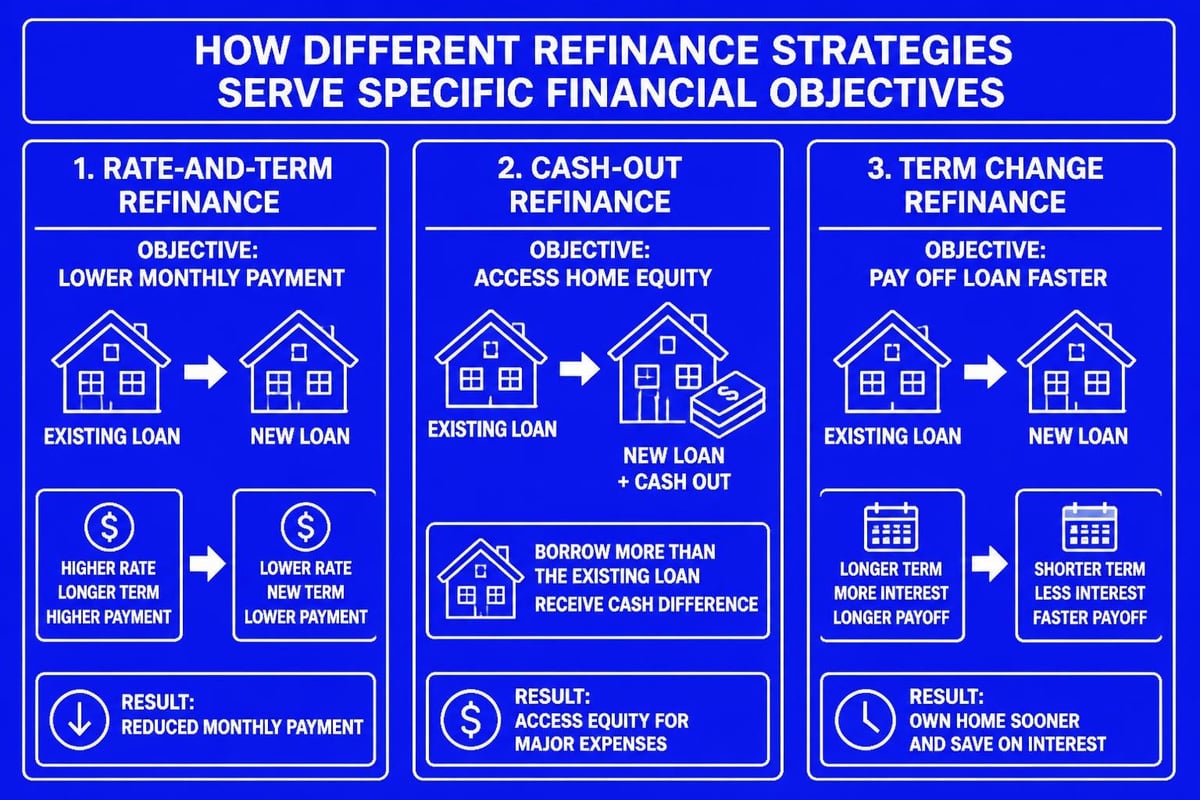
Cash-out refinancing has gained popularity among Mill Creek and Everett homeowners who've built substantial equity. This option allows you to borrow more than you currently owe and receive the difference in cash, which many use for home improvements or major expenses. Tech professionals often leverage this strategy to diversify investments or fund business ventures while maintaining low borrowing costs.
Understanding what to watch for when refinancing ensures you avoid common pitfalls and maximize the benefits. Many homeowners focus solely on interest rates without calculating total costs, break-even points, or long-term implications.
Evaluating Refinance Mortgage Lenders: Key Factors
Not all refinance mortgage lenders offer the same value proposition. Seattle-area homeowners benefit from comparing lenders across multiple dimensions rather than focusing exclusively on advertised rates, which often don't reflect your actual qualification scenario.
Underwriting expertise for complex income structures proves critical for tech professionals at Amazon, Microsoft, Google, and other Seattle employers. Standard lenders may struggle to properly qualify restricted stock units (RSUs), stock options, or performance bonuses, potentially limiting your borrowing capacity. Specialized lenders understand how to document and verify equity compensation, maximizing your refinancing options.
| Comparison Factor | Why It Matters | Questions to Ask |
|---|---|---|
| Interest Rates | Determines monthly payment and total cost | What rate do I qualify for based on my credit and income? |
| Closing Costs | Affects break-even calculation | Can you provide an itemized estimate? |
| Processing Speed | Important for rate locks and timing | What's your average closing timeline? |
| Income Qualification | Critical for tech compensation | How do you document RSUs and stock grants? |
Speed and Execution Standards
Closing timelines vary significantly among refinance mortgage lenders. While traditional banks may require 30 to 45 days, advanced lenders with streamlined underwriting can close refinances in as few as 9 business days when documentation is complete. This speed advantage matters when securing favorable mortgage rates during market volatility.
Customer service quality separates exceptional lenders from adequate ones. Refinancing involves extensive documentation, appraisal coordination, title work, and precise timing. Lenders who provide dedicated loan officers, proactive communication, and transparent timelines reduce stress and prevent delays. Reviews across Google, Zillow, and Redfin offer valuable insights into lender responsiveness and reliability.
Essential Refinance Requirements and Qualification Standards
Understanding qualification criteria helps you prepare effectively and choose refinance mortgage lenders aligned with your financial profile. While specific requirements vary by lender and loan program, several core standards apply across most refinance scenarios.
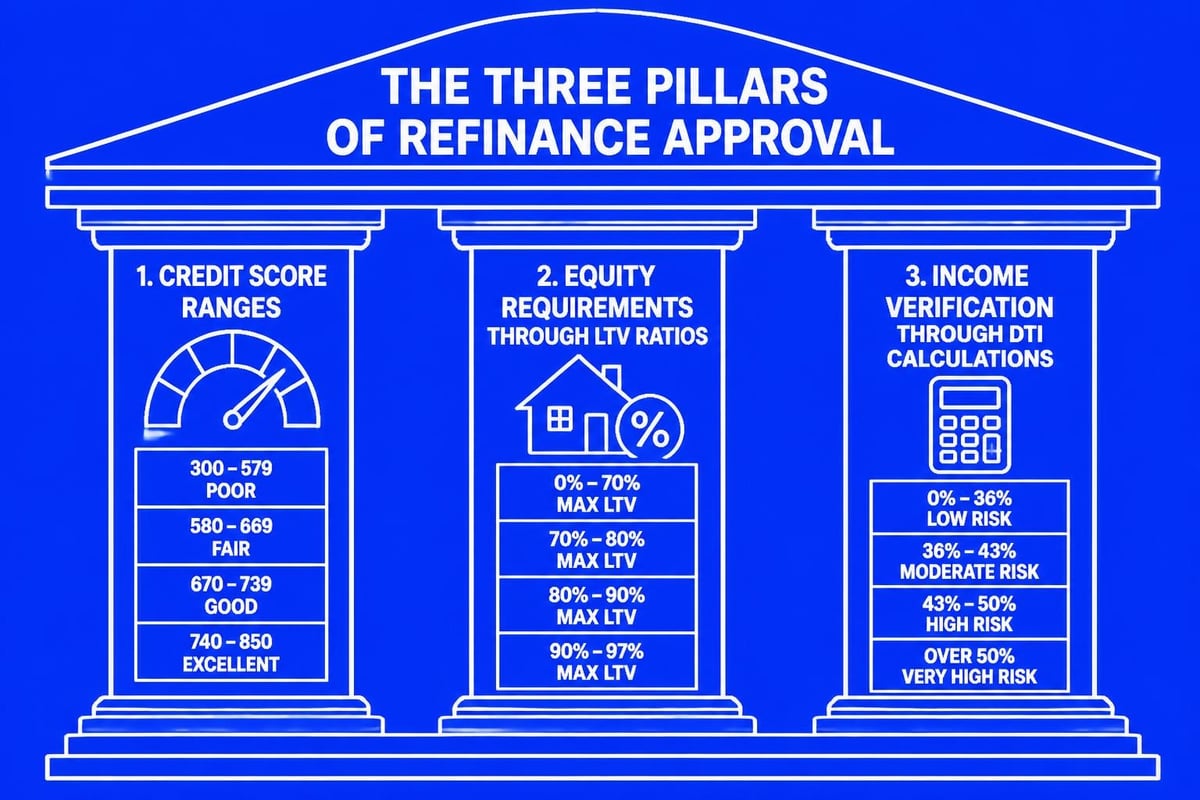
Credit score thresholds typically start at 620 for conventional refinances, though better rates require scores of 740 or higher. Seattle homeowners with credit scores between 680 and 739 may still qualify but should expect moderately higher interest rates. Borrowers in Shoreline or Kirkland with scores below 620 face limited options and should consider credit improvement strategies before applying.
Documentation Checklist
- Two years of personal and business tax returns (if self-employed)
- Recent pay stubs covering 30 days of income
- Two months of bank and investment account statements
- Current mortgage statement and homeowner's insurance declaration
- Stock compensation agreements and vesting schedules for tech employees
- HOA documents if refinancing a condominium
Loan-to-value (LTV) ratios determine how much equity you need to refinance successfully. Most conventional refinances require LTV ratios of 80% or less to avoid PMI, meaning you need at least 20% equity in your home. Basic refinance requirements include sufficient equity, stable income, and acceptable credit history.
Debt-to-income ratios measure your monthly debt obligations against gross monthly income. Conventional refinances typically require DTI ratios below 43%, though some programs accept ratios up to 50% with compensating factors like excellent credit or substantial reserves. Tech professionals with high incomes but also significant stock-based compensation may need lenders experienced in calculating complex DTI scenarios.
Types of Refinance Programs and Strategic Applications
Refinance mortgage lenders offer several distinct program types, each serving specific financial objectives. Understanding these options helps you select the strategy that best aligns with your circumstances and goals.
Rate-and-term refinancing represents the most straightforward approach. You're replacing your existing mortgage with a new loan featuring different interest rates, terms, or both, without changing the principal balance significantly beyond closing costs. Homeowners in Bellevue and Redmond frequently use this option to capitalize on rate decreases or convert ARMs to fixed-rate stability.
Refinance Program Comparison
| Program Type | Best For | Typical Scenario |
|---|---|---|
| Rate-and-Term | Lowering rates or changing terms | Seattle homeowner reducing rate from 6.25% to 5.0% |
| Cash-Out | Accessing equity for specific needs | Mill Creek owner extracting $80,000 for remodel |
| Streamline | Quick, low-documentation refinance | FHA or VA loan holder with good payment history |
| Jumbo Refinance | High-value properties above conforming limits | Kirkland home valued at $1.8M requiring specialized underwriting |
Streamline refinancing programs exist for FHA and VA loans, offering simplified documentation and faster processing. These programs reduce paperwork requirements and sometimes eliminate appraisal needs, making them attractive for qualified borrowers. However, they limit your ability to access equity or dramatically change loan terms.
For Seattle-area homeowners with properties exceeding conforming loan limits ($806,500 in 2026 for King County), jumbo refinancing requires specialized lenders who understand high-value property markets. Jumbo refinances often demand higher credit scores (typically 700+), lower DTI ratios, and more substantial cash reserves, but they enable refinancing on properties that standard programs won't cover.
Timing Your Refinance Decision Strategically
When you refinance matters nearly as much as which lender you choose. Several timing considerations influence whether refinancing delivers meaningful financial benefits or costs more than it saves.
Break-even analysis calculates how long you need to remain in your home to recoup refinancing costs through monthly savings. If closing costs total $4,000 and your monthly payment drops by $200, your break-even point is 20 months. Homeowners planning to sell within two years should carefully evaluate whether refinancing makes financial sense.
Interest rate environments shift constantly based on Federal Reserve policy, inflation data, and economic indicators. Monitoring when rates favor refinancing helps you time applications strategically. Generally, refinancing becomes attractive when current rates fall at least 0.75% below your existing rate, though individual circumstances vary.
- Seasoning requirements typically mandate waiting at least 6 months after purchase before refinancing conventional loans
- Appraisal contingencies depend on recent market appreciation or depreciation in your neighborhood
- Rate lock periods usually span 30 to 60 days, requiring coordination with closing timelines
- Employment stability concerns arise during job transitions, which can complicate income verification
For homeowners in Lynnwood and Lake Forest Park experiencing rapid property appreciation, building equity quickly may create refinancing opportunities sooner than expected. Conversely, those in stable or declining markets should focus on rate differentials rather than equity extraction strategies.
Working With Seattle-Area Refinance Specialists
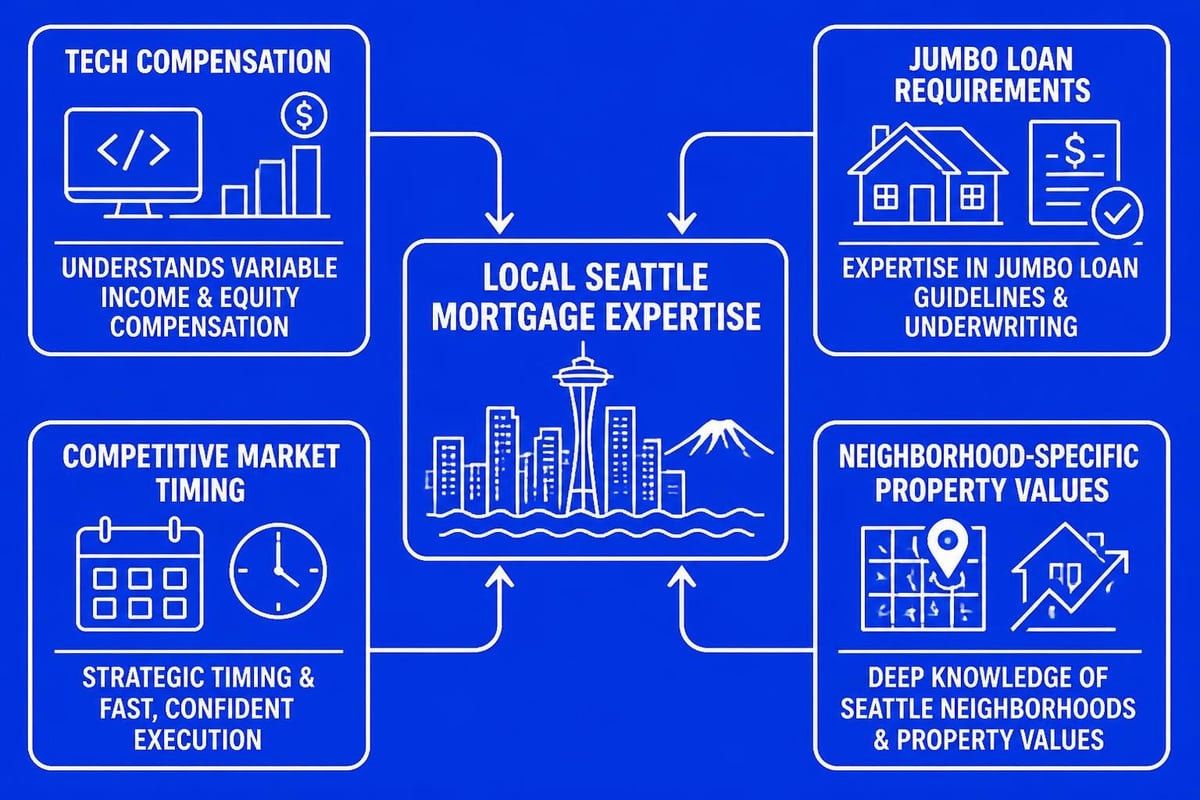
Local market expertise significantly impacts refinancing outcomes, particularly in dynamic Seattle-area neighborhoods where property values, income profiles, and competitive conditions create unique scenarios. Refinance mortgage lenders familiar with regional characteristics provide advantages that national online-only lenders cannot match.
Tech income specialization proves essential for many Seattle refinance applications. Amazon, Microsoft, and Google employees often receive 40% to 60% of total compensation through RSUs, stock options, and bonuses. Standard underwriting may discount this income or fail to document it properly, reducing your qualifying power. Lenders experienced with equity compensation understand vesting schedules, grant agreements, and documentation requirements that maximize borrowing capacity.
Advantages of Local Refinance Expertise
Working with experienced Seattle mortgage brokers provides several practical benefits that improve your refinancing experience and outcomes. Local professionals maintain relationships with appraisers familiar with your neighborhood, understand title company efficiency variations, and recognize which underwriters move quickly on complex income scenarios.
Competitive market knowledge helps time refinance applications around local rate trends. Seattle markets often experience rate fluctuations influenced by regional economic factors beyond national trends. Brokers monitoring local conditions can advise whether waiting two weeks or acting immediately serves your interests better.
Customer service standards vary dramatically among refinance mortgage lenders. Some assign you to processing teams with rotating contacts, while others provide dedicated loan officers who manage your file from application through closing. Homeowners in Everett and Mill Creek consistently report higher satisfaction with personalized service models that offer direct access to decision-makers.
Comparing Refinance Costs and Fee Structures
Understanding the complete cost picture prevents surprises and enables accurate comparison between refinance mortgage lenders. Beyond interest rates, multiple fees and charges impact your total refinancing expense and break-even calculation.
Origination charges compensate lenders for processing your loan and typically range from 0% to 1% of the loan amount. Some lenders advertise "no-cost refinancing," which actually means they're covering upfront fees by charging a slightly higher interest rate. This approach makes sense if you plan to refinance again within a few years or sell relatively soon.
| Fee Category | Typical Range | Notes |
|---|---|---|
| Origination/Processing | $0 – $3,000 | Varies by lender and loan size |
| Appraisal | $500 – $800 | Required for most refinances |
| Title Insurance | $800 – $1,500 | Depends on property value |
| Credit Report | $30 – $100 | Usually minimal impact |
| Recording Fees | $150 – $300 | County-specific charges |
Third-party costs include appraisal fees, title insurance, escrow charges, and recording fees. These expenses remain relatively consistent regardless of which lender you choose, though some lenders negotiate better rates with service providers. Seattle-area title and escrow costs tend to run higher than national averages due to local market conditions.
Comparing refinance offers requires examining both interest rates and annual percentage rates (APR), which incorporate fees into the effective cost calculation. A lender offering 5.25% with $2,000 in fees may actually cost less over three years than a competitor at 5.125% with $5,000 in fees, depending on your timeline.
Maximizing Refinance Benefits for Tech Professionals
Seattle's concentration of technology employment creates specialized refinancing scenarios that standard lenders often struggle to accommodate. Understanding how to leverage tech compensation in refinance applications unlocks significantly better terms and borrowing capacity.
Stock-based compensation requires careful documentation to satisfy underwriting requirements. Most lenders need two years of RSU history to establish income stability, though some accept one year with favorable vesting schedules. Providing grant agreements, vesting schedules, and evidence of consistent equity compensation helps underwriters confidently include this income in qualification calculations.
Bonus income follows similar documentation standards. Underwriters typically average two years of bonuses to establish reliable income, though patterns of increasing bonuses strengthen your case. Tech professionals in Redmond and Bellevue with performance-based compensation should gather comprehensive documentation showing consistency and reliability.
Strategies for Tech Employee Refinancing
- Request stock compensation letters from HR documenting vesting schedules and grant values
- Provide brokerage statements showing actual RSU deposits and stock sale proceeds
- Calculate average monthly equity compensation over 24 months for underwriting
- Work with lenders experienced in qualifying Amazon, Microsoft, and Google compensation structures
- Consider timing refinances after major stock grants vest to show higher income
Jumbo loan refinancing becomes common for Seattle tech professionals whose property values exceed conforming limits. Understanding conventional loan alternatives helps you navigate options when standard programs don't fit your situation. Jumbo refinances demand stronger qualifications but offer competitive rates for well-qualified borrowers.
Many refinance lenders specialize in different market segments, making lender selection critical for tech professionals with complex income profiles. Online lenders may offer attractive rates but lack underwriting flexibility for non-traditional income, while specialized brokers understand how to structure applications for optimal approval odds.
Navigating the Refinance Application Process
Once you've selected refinance mortgage lenders to pursue, understanding the application workflow helps you prepare effectively and avoid delays. The process typically spans several distinct phases, each requiring specific actions and documentation.
Initial consultation and rate shopping establishes baseline expectations. Most lenders provide preliminary rate quotes based on credit scores, loan amounts, and basic property information. However, these initial quotes often change once complete documentation reveals your actual qualification profile. Requesting detailed fee estimates alongside rate quotes enables meaningful comparison.
Application submission triggers formal processing. You'll complete extensive financial disclosures, authorize credit checks, and provide initial documentation. Lenders typically issue loan estimates within three business days, outlining proposed terms, estimated costs, and projected closing timeline.
Application Phase Timeline
- Days 1-3: Submit application, receive loan estimate, provide initial documentation
- Days 4-10: Order appraisal, complete income and asset verification, address underwriter questions
- Days 11-15: Receive appraisal results, finalize underwriting conditions, review closing disclosure
- Days 16-20: Schedule closing, coordinate with title company, prepare funding requirements
- Day 21+: Attend closing, sign documents, receive final payoff of previous mortgage
Underwriting review represents the most critical phase. Underwriters verify every aspect of your application, from employment and income to assets and credit history. They may request additional documentation, explanations for large deposits, or clarification on employment arrangements. Responding quickly to underwriter requests prevents delays and keeps your closing on schedule.
Educational resources about the refinancing process help first-time refinancers understand what to expect and how to prepare. Knowing standard timelines, documentation requirements, and common delay causes reduces stress and improves outcomes.
Special Considerations for Seattle Market Conditions
Seattle's unique housing market dynamics create specific refinancing considerations that homeowners in other markets don't typically face. Understanding these local factors helps you make better timing and lender selection decisions.
Property value volatility in Seattle neighborhoods affects appraisal outcomes and refinancing feasibility. Areas experiencing rapid appreciation may provide unexpected equity opportunities for cash-out refinancing or PMI removal. Conversely, markets showing recent softness may complicate refinances if your home value has declined below expected levels.
Condominium financing in Seattle high-rises carries additional complexity. Lenders scrutinize HOA financial health, owner-occupancy ratios, and commercial space percentages before approving condo refinances. Some buildings fall off approved lender lists due to litigation, deferred maintenance, or ownership concentration issues. Working with lenders familiar with Seattle condo markets prevents application denials based on building-specific concerns.
Competitive rate environments in Seattle sometimes create temporary opportunities when local lenders compete aggressively for market share. Monitoring rate trends specific to the Puget Sound region rather than relying solely on national rate data helps you identify optimal refinancing windows.
For homeowners purchasing investment properties or second homes in Seattle-area markets, refinancing these properties requires different underwriting standards than primary residences. Investment property refinances typically demand higher credit scores, larger down payments, and more substantial cash reserves.
Choosing the right refinance mortgage lenders requires careful evaluation of rates, costs, expertise, and service quality tailored to your specific financial situation and property characteristics. Seattle-area homeowners benefit from working with lenders who understand tech compensation, jumbo loan requirements, and local market dynamics that impact refinancing outcomes. Whether you're seeking to lower your monthly payment, access home equity, or optimize your loan structure, Mortgage Reel brings over 25 years of Seattle mortgage expertise to help you navigate refinancing decisions with confidence and achieve your financial goals efficiently.