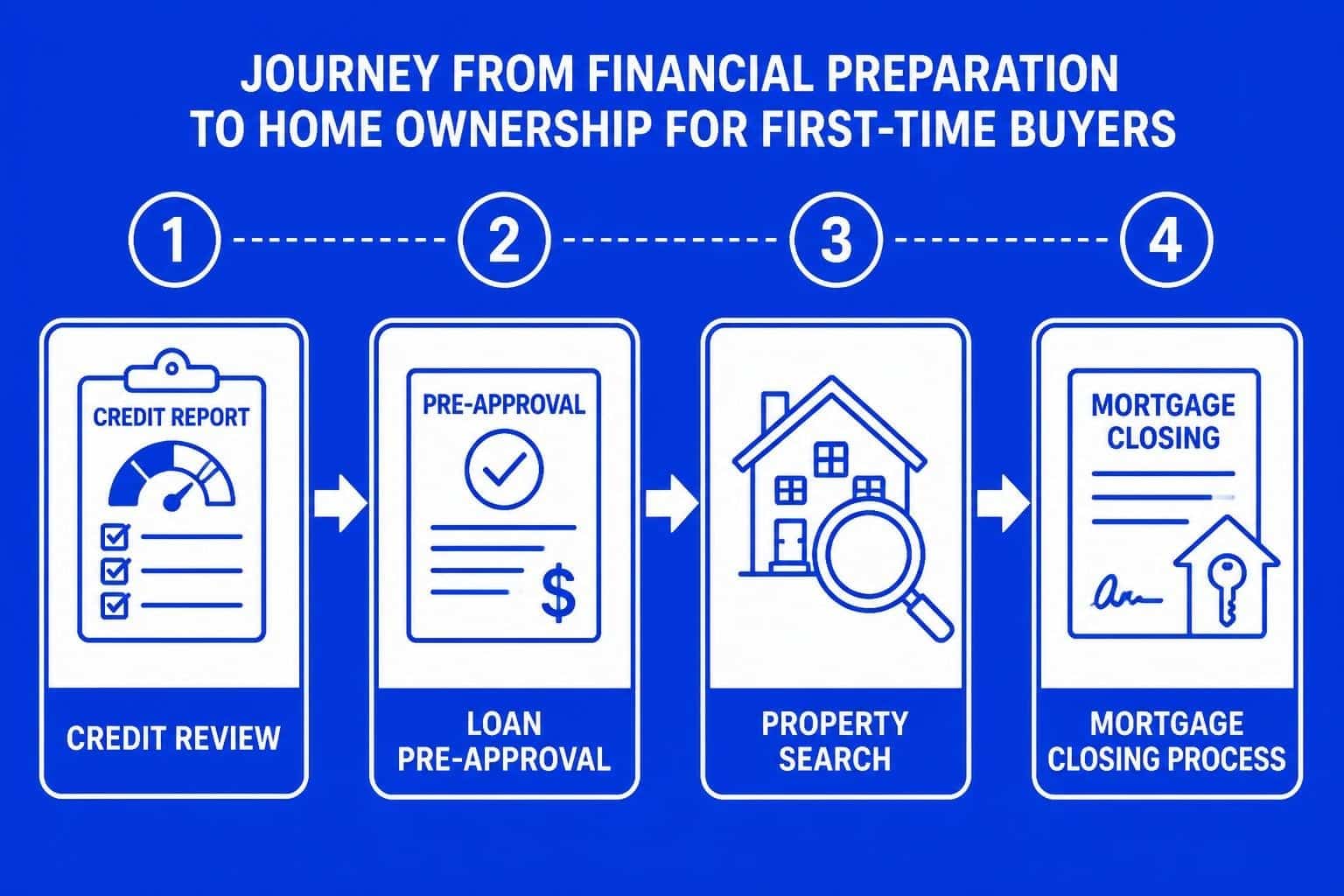
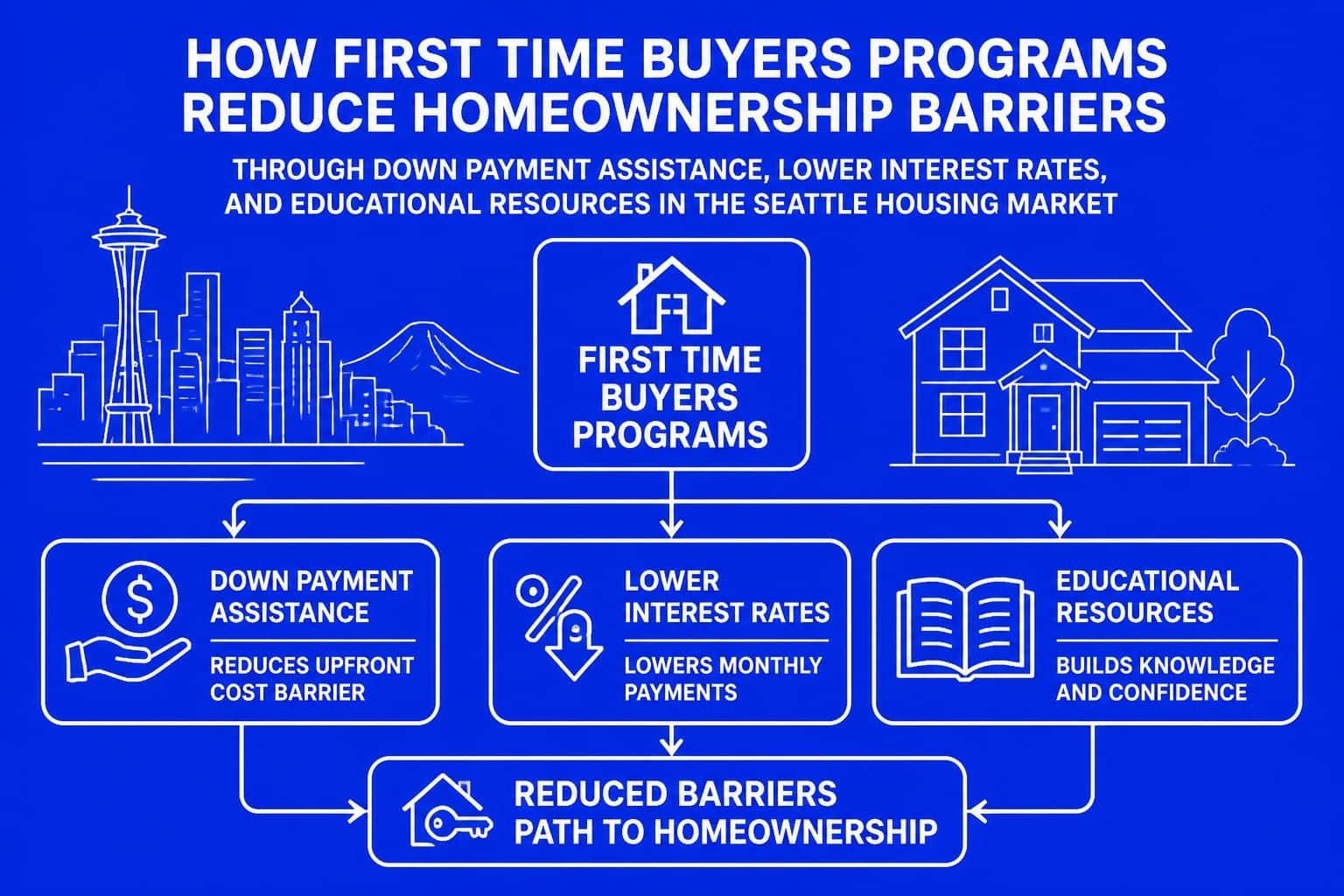
Navigating the Seattle housing market as a first-time buyer presents unique challenges, particularly when median home prices continue to reflect the region's strong tech-driven economy. Fortunately, first time buyers programs offer substantial financial assistance and strategic advantages that can transform homeownership from an aspirational goal into an achievable reality. These programs encompass federal loan products, state-specific grants, down payment assistance, and specialized mortgage options designed to reduce upfront costs and lower monthly payments. Understanding which programs align with your financial profile, employment situation, and long-term goals requires expertise and strategic planning, especially in competitive markets like Seattle, Bellevue, Redmond, and Kirkland.
Understanding First Time Buyers Programs
First time buyers programs represent a comprehensive ecosystem of financial tools specifically designed to help individuals and families overcome the most common barriers to homeownership. These barriers typically include insufficient funds for down payments, limited credit history, and uncertainty about qualifying for competitive interest rates.
The federal government, state agencies, and local municipalities all contribute to this support network. Each program serves distinct purposes, from reducing down payment requirements to offering forgivable grants that never require repayment.
Federal Program Options
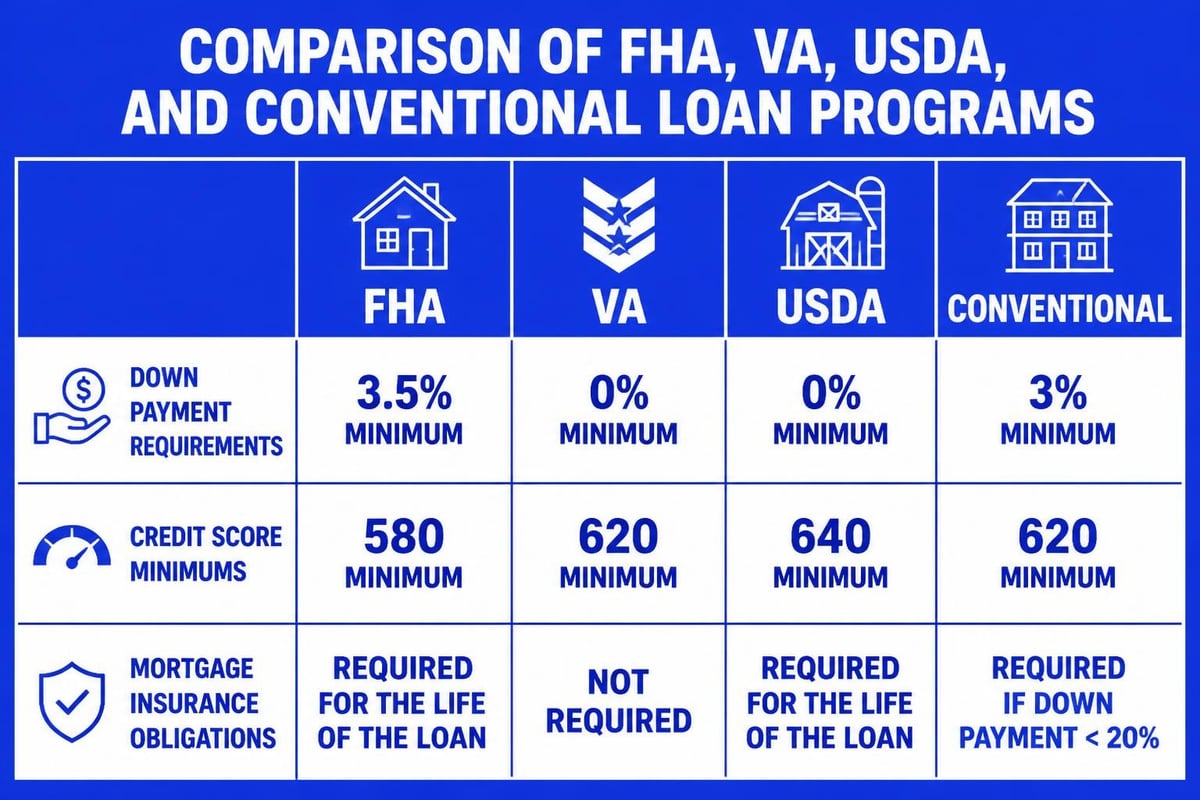
FHA loans remain the most widely utilized option among first time buyers programs nationwide. These government-backed mortgages allow down payments as low as 3.5% for borrowers with credit scores of 580 or higher. For tech professionals in Seattle working at Amazon, Microsoft, or Google, FHA loans provide flexibility when stock compensation hasn't yet vested or when preserving cash reserves takes priority.
VA loans serve eligible veterans, active-duty service members, and qualifying spouses with zero down payment requirements and no mortgage insurance. For those who qualify, VA loans often represent the most cost-effective path to homeownership.
USDA loans target rural and suburban areas, offering 100% financing for properties in eligible locations. While Seattle proper doesn't qualify, surrounding communities in Snohomish County may meet USDA criteria, making this option relevant for buyers considering Mill Creek or Everett.
Conventional loans with as little as 3% down through programs like HomeReady and Home Possible also fall under the umbrella of first time buyers programs. These products specifically target low-to-moderate income borrowers and provide competitive rates without the higher mortgage insurance costs associated with FHA loans.
Washington State Down Payment Assistance
Washington State offers robust first time buyers programs through the Washington State Housing Finance Commission. These initiatives directly address the challenge of accumulating sufficient down payment funds in expensive markets like the Greater Seattle area.
House Key Programs
The House Key Opportunity Loan provides down payment and closing cost assistance up to 4% of the loan amount. This forgivable second mortgage requires no monthly payments and is forgiven after three years of occupancy. For a $600,000 home in Shoreline, this represents $24,000 in direct assistance.
The House Key Plus program combines a first mortgage with down payment assistance for households earning up to the area median income. Income limits for 2026 in King County stand at $116,900 for a two-person household, though these thresholds adjust annually.
| Program Name | Assistance Amount | Repayment Terms | Income Limits |
|---|---|---|---|
| House Key Opportunity | Up to 4% of loan | Forgiven after 3 years | Varies by county |
| House Key Plus | Combined first/second mortgage | Deferred second lien | Up to area median income |
| Home Advantage | Competitive rates | Standard mortgage | None |
Home Advantage loans don't provide down payment assistance but offer reduced interest rates for first-time buyers. The savings compound significantly over a 30-year mortgage term, often totaling tens of thousands of dollars.
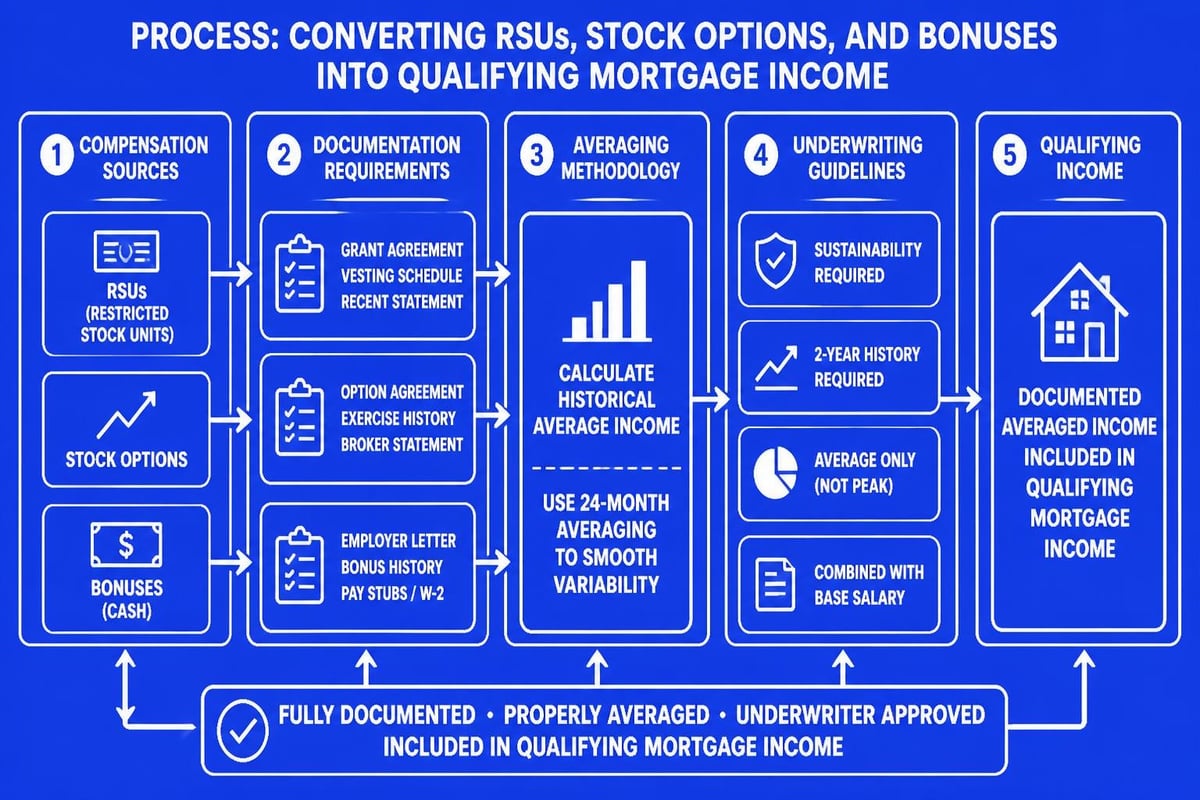
Tech professionals should note that RSUs, stock options, and annual bonuses can all be utilized for down payments when properly documented. Working with experienced mortgage professionals who understand equity compensation structures ensures these assets receive full consideration during underwriting.
City and County Programs in the Seattle Area
Beyond state-level initiatives, several municipalities offer localized first time buyers programs tailored to regional housing challenges and workforce needs.
Seattle Office of Housing
Seattle's Homebuyer Assistance Program provides down payment loans up to $70,000 for households earning up to 100% of area median income. This assistance takes the form of a second mortgage with no monthly payments, due only upon sale, refinance, or transfer of the property.
Priority consideration goes to buyers purchasing in designated areas or those who work in Seattle as educators, healthcare workers, or public servants. The program requires completion of a homebuyer education course, which also satisfies requirements for many other first time buyers programs.
King County Programs
King County administers its own down payment assistance reaching up to $110,000 for households earning between 80% and 120% of area median income. These programs specifically target middle-income buyers who earn too much to qualify for traditional assistance but struggle with Seattle's high home prices.
For buyers considering properties in Lake Forest Park or other King County locations outside Seattle city limits, county programs may offer more flexible income thresholds and larger assistance amounts than municipal options.
Maximizing Program Benefits for Tech Professionals
Seattle's concentration of technology employers creates unique opportunities within first time buyers programs. Understanding how to position equity compensation, maximize buying power, and strategically time purchases can substantially improve outcomes.
Qualifying Stock-Based Income
Most first time buyers programs accept RSUs, stock options, and bonuses as qualifying income once you establish a two-year history. However, underwriting guidelines vary significantly between loan products.
FHA loans typically require a two-year history of stock compensation with verification of continued vesting. Underwriters calculate average income over 24 months, which can disadvantage buyers whose equity packages have recently increased.
Conventional loans offer more flexibility, particularly when documenting ongoing vesting schedules. A well-structured submission to underwriting can qualify projected stock compensation, substantially increasing buying power.
For jumbo loan scenarios common in Bellevue and Redmond, documenting total compensation accurately becomes even more critical. Properties exceeding conforming loan limits require comprehensive income documentation, but the payoff includes competitive rates on loans above $766,550.
- Request detailed compensation statements from your employer's equity administration team
- Maintain organized records of vesting schedules and historical stock sales
- Calculate average monthly income using conservative stock valuations
- Document company stability and continued employment through offer letters or promotion confirmations
Homebuyer Education Requirements
Nearly all first time buyers programs mandate completion of homebuyer education courses. These requirements serve dual purposes: ensuring buyers understand their obligations and reducing default rates through informed decision-making.
Course Options and Benefits
HUD-approved counseling agencies offer both online and in-person education courses. Topics typically include budgeting, understanding mortgage products, evaluating neighborhoods, home maintenance responsibilities, and avoiding predatory lending.
Beyond satisfying program requirements, education courses provide valuable knowledge for navigating competitive markets. Understanding escalation clauses, inspection contingencies, and appraisal gaps proves essential in Seattle's fast-paced real estate environment.
Many first-time mortgage options offer reduced fees or rate discounts for buyers who complete education courses, even when not explicitly required. This incentive structure recognizes that educated buyers make better long-term homeowners.
Recommended providers for Seattle-area buyers:
- NeighborWorks America
- Framework Homeownership
- Homestead Community Land Trust
- Local housing counseling agencies
Courses typically require 6-8 hours of instruction and cost between $50-$125. Certificates remain valid for one to three years, depending on the specific program requirements.
Credit and Income Requirements
While first time buyers programs offer more lenient qualification standards than conventional mortgages, understanding minimum requirements helps set realistic expectations and timelines.
Credit Score Considerations
Different programs maintain varying credit score thresholds. FHA loans accept scores as low as 580 for 3.5% down payments, while scores between 500-579 require 10% down. Conventional programs like HomeReady typically require minimum scores of 620.
Washington State down payment assistance programs generally align with underlying loan requirements, though some add their own overlays. The House Key Opportunity program, for instance, requires minimum credit scores of 640 when combined with conventional financing.
For buyers with limited credit history rather than negative marks, alternative credit documentation can demonstrate payment reliability. Rent payments, utility bills, insurance premiums, and phone service all establish creditworthiness when traditional credit reports show insufficient data.
Debt-to-Income Ratios
Most first time buyers programs accept debt-to-income ratios up to 43%, though FHA allows ratios up to 50% with compensating factors like significant cash reserves or minimal debt outside the mortgage.
Tech professionals with substantial equity compensation often show higher gross incomes, allowing larger monthly housing payments while maintaining acceptable ratios. A $15,000 monthly gross income permits $6,450 in total monthly debts at a 43% ratio, accommodating Seattle's higher price points.
| Loan Type | Minimum Credit Score | Maximum DTI Ratio | Down Payment Minimum |
|---|---|---|---|
| FHA | 580 | 50% with factors | 3.5% |
| Conventional 97 | 620 | 43% | 3% |
| VA | No minimum | 41% (flexible) | 0% |
| HomeReady/Home Possible | 620 | 43% | 3% |
Combining Multiple Programs
Strategic buyers often layer multiple first time buyers programs to minimize out-of-pocket costs and maximize long-term savings. This approach requires careful coordination but can dramatically improve affordability.
Stacking Down Payment Assistance
Many state and local programs allow combining their assistance with federal loan products. A buyer might utilize an FHA loan with 3.5% down while receiving 4% down payment assistance through House Key Opportunity, effectively achieving homeownership with minimal personal funds required.
Some programs prohibit stacking, particularly when both provide similar benefits. Careful review of program guidelines and consultation with knowledgeable mortgage brokers prevents application delays and disappointment.
Employer Assistance Programs
Amazon, Microsoft, Google, and other major Seattle employers occasionally offer homebuyer assistance as recruitment or retention tools. These benefits might include forgivable loans, matching contributions, or preferential mortgage rates through banking partnerships.
Employer programs typically complement rather than replace traditional first time buyers programs. The combined effect can substantially reduce the capital required at closing while maintaining favorable loan terms.
Property Eligibility and Restrictions
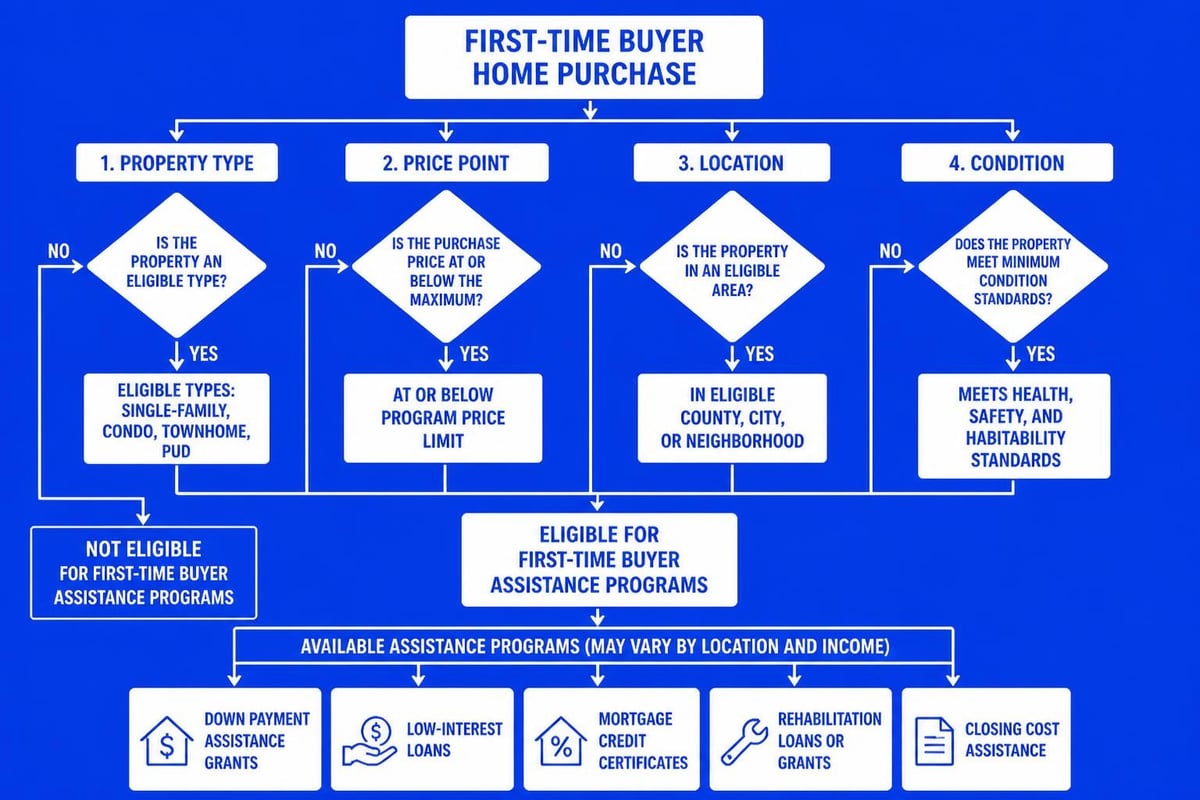
First time buyers programs impose specific property requirements affecting both the type of dwelling and its location. Understanding these limitations shapes search parameters and prevents wasted effort on ineligible properties.
Property Type Restrictions
Most programs require purchasing a primary residence rather than investment property or vacation home. Occupancy requirements typically mandate living in the home as your principal residence for at least one year, with some programs extending this to three years.
Single-family homes, townhomes, and condominiums generally qualify across all programs, though condos must meet specific certification requirements. FHA and VA loans require condo projects to appear on approved lists, which can limit options in some Seattle neighborhoods.
Manufactured homes qualify under certain programs when permanently affixed to owned land and meeting HUD construction standards. This provision expands affordable options in areas like Lynnwood where manufactured housing communities exist.
Price Limits and Loan Caps
Washington State programs typically impose purchase price limits based on area median home prices. For 2026, these caps in King County reach $1,104,750 for single-family homes, aligning with conforming loan limits.
Down payment assistance programs often maintain separate, lower price limits. House Key Opportunity restricts assistance to homes under $750,000 in most King County markets, reflecting the program's focus on moderate-income buyers.
Understanding conventional loan options becomes essential when property prices exceed program limits but buyers still seek competitive terms and minimal down payments.
Tax Benefits and Long-Term Savings
Beyond upfront assistance, first time buyers programs deliver ongoing financial advantages through tax benefits and equity accumulation strategies.
Mortgage Interest Deduction
Homeowners can deduct mortgage interest paid on loans up to $750,000 when itemizing tax deductions. For Seattle buyers in higher tax brackets, this deduction provides substantial annual savings, particularly in early mortgage years when interest comprises the majority of monthly payments.
Tech professionals should consult tax advisors about optimizing deductions when equity compensation creates complex tax situations. Balancing RSU tax withholding, mortgage interest deductions, and state tax obligations requires strategic planning.
Mortgage Credit Certificates
Washington State offers Mortgage Credit Certificates (MCC) through the House Key program, converting a portion of mortgage interest into a dollar-for-dollar tax credit. This benefit provides up to $2,000 annually in federal tax credits, effectively reducing the cost of homeownership every year.
MCCs require using approved lenders and cannot combine with all down payment assistance programs. The trade-off involves reducing available mortgage interest deductions, making professional tax guidance valuable when evaluating this option.
Common Mistakes to Avoid
Even well-qualified buyers encounter obstacles when navigating first time buyers programs. Awareness of common pitfalls improves application success rates and timeline predictability.
Application Timing Errors
Many assistance programs operate on funding cycles, accepting applications during specific periods or until allocated funds are exhausted. Seattle's competitive market means popular programs can reach capacity within weeks of opening.
Starting the qualification process 4-6 months before desired purchase timing allows adequate preparation. This timeline accommodates credit improvement, documentation gathering, and education course completion without rushing critical decisions.
Documentation Gaps
First time buyers programs require extensive documentation verifying income, assets, employment, and property details. Incomplete submissions trigger delays, potentially causing missed purchase opportunities in fast-moving markets.
Creating organized files with 2-3 years of tax returns, recent pay stubs, bank statements, and employer verification letters streamlines the process. Tech professionals should also compile RSU vesting schedules, stock sale confirmations, and equity compensation agreements.
- Don't change jobs during the application process without consulting your loan officer
- Avoid opening new credit accounts or making large purchases before closing
- Never make undocumented deposits to bank accounts during underwriting
- Don't skip the home inspection to strengthen an offer in competitive situations
Preparing Your Application Strategy
Success with first time buyers programs requires methodical preparation and strategic positioning. A structured approach maximizes approval likelihood and optimizes terms.
Financial Preparation Timeline
6-12 months before purchase:
- Review credit reports and address any errors or negative items
- Begin saving consistently for down payment and closing costs
- Research programs and identify best fits for your situation
- Complete homebuyer education course
3-6 months before purchase:
- Get pre-approved with complete documentation review
- Establish relationships with real estate agents familiar with program requirements
- Identify target neighborhoods and property types
- Begin property search with clear budget parameters
1-3 months before purchase:
- Finalize program applications and secure assistance commitments
- Coordinate inspection, appraisal, and closing timelines
- Maintain financial stability and avoid credit changes
- Review all closing documents and program obligations
Working with Experienced Professionals
The complexity of first time buyers programs makes professional guidance invaluable. Mortgage financing specialists who regularly work with these programs understand nuanced guidelines, documentation requirements, and strategic positioning that improve outcomes.
For buyers in Seattle's competitive market, selecting professionals with local expertise ensures awareness of municipal programs, neighborhood-specific opportunities, and market timing considerations. This knowledge proves particularly valuable when coordinating multiple assistance programs or navigating complex compensation structures.
Market Considerations for Seattle Buyers
Understanding current market dynamics helps first-time buyers using assistance programs make informed decisions about timing, location, and offer strategies.
Neighborhood Affordability Analysis
While central Seattle neighborhoods like Queen Anne and Capitol Hill command premium prices, surrounding communities offer strong value propositions for first-time buyers. Shoreline provides excellent schools and transit access at more moderate price points, while Lynnwood offers newer construction and continuing development.
Mill Creek attracts families seeking planned communities with amenities, though HOA fees require consideration when calculating total housing costs. Lake Forest Park delivers small-town character with proximity to Seattle employment centers, creating appeal for buyers prioritizing lifestyle balance.
Understanding home loan approval timelines becomes essential in competitive neighborhoods where sellers expect quick closes and minimal contingencies.
Interest Rate Impact
First time buyers programs often provide access to below-market interest rates through state bond programs or lender incentives. A 0.25% rate reduction on a $500,000 loan saves approximately $30,000 over 30 years, demonstrating the value of thoroughly researching all available options.
Rate locks typically extend 30-60 days, requiring coordination between program approval, property search, and closing timelines. Extended locks may incur fees but protect against rising rates during longer purchase processes.
Resources and Next Steps
Navigating first time buyers programs successfully requires accessing reliable information sources and building a qualified support team.
Essential Information Sources
The comprehensive state-by-state guide from NerdWallet provides detailed program overviews and qualification criteria. Redfin offers an extensive resource covering all 50 states and major metropolitan areas.
For grant opportunities and assistance programs, specialized platforms track available funding and application deadlines. These resources help identify programs aligned with your specific financial situation and location preferences.
Building Your Team
Successful home purchases require coordination between loan officers, real estate agents, home inspectors, and closing attorneys. Each professional contributes specialized expertise while working toward your successful homeownership.
Real estate agents familiar with first time buyers programs understand property eligibility requirements, timeline coordination, and offer structuring that accommodates program conditions. This knowledge prevents complications during contract negotiations and escrow periods.
Home loans designed for first-time buyers require lenders who maintain current knowledge of program guidelines, documentation requirements, and underwriting standards. This expertise ensures smooth processing and minimizes delays that could jeopardize purchase contracts.
Program-Specific Scenarios
Different buyer profiles benefit from different program combinations. Understanding which options align with your situation improves outcomes and reduces frustration.
Tech Professional with Strong Income, Limited Savings
Profile: Software engineer earning $180,000 annually with $35,000 in RSUs, but only $25,000 saved for down payment.
Optimal strategy: Conventional 3% down loan combined with seller concessions for closing costs. This approach preserves cash reserves while avoiding FHA mortgage insurance. Alternative includes House Key Opportunity for additional down payment assistance if income limits permit.
Mid-Career Professional with Credit Challenges
Profile: Healthcare worker earning $85,000 with 640 credit score and $40,000 saved.
Optimal strategy: FHA loan with 3.5% down provides more lenient credit requirements. House Key programs accept 640 scores when combined with conventional financing, offering down payment assistance that improves cash position post-closing.
Veteran or Active Military
Profile: Former service member with qualifying service, $50,000 annual income, minimal savings.
Optimal strategy: VA loan with zero down and no mortgage insurance maximizes affordability. This scenario requires no additional assistance programs, though Washington State offers property tax exemptions for qualifying veterans that reduce ongoing costs.
First time buyers programs transform homeownership from an overwhelming challenge into an achievable goal through strategic use of available resources and expert guidance. Whether you're a tech professional at Amazon or Microsoft looking to maximize stock compensation, a first-time buyer in Shoreline or Mill Creek seeking down payment assistance, or anyone navigating Seattle's competitive market, understanding and accessing these programs makes the difference between renting and owning. Keith Akada at Mortgage Reel brings 25+ years of experience helping Seattle-area buyers successfully utilize first time buyers programs, specializing in equity compensation qualification, fast closings, and transparent education throughout the mortgage process.