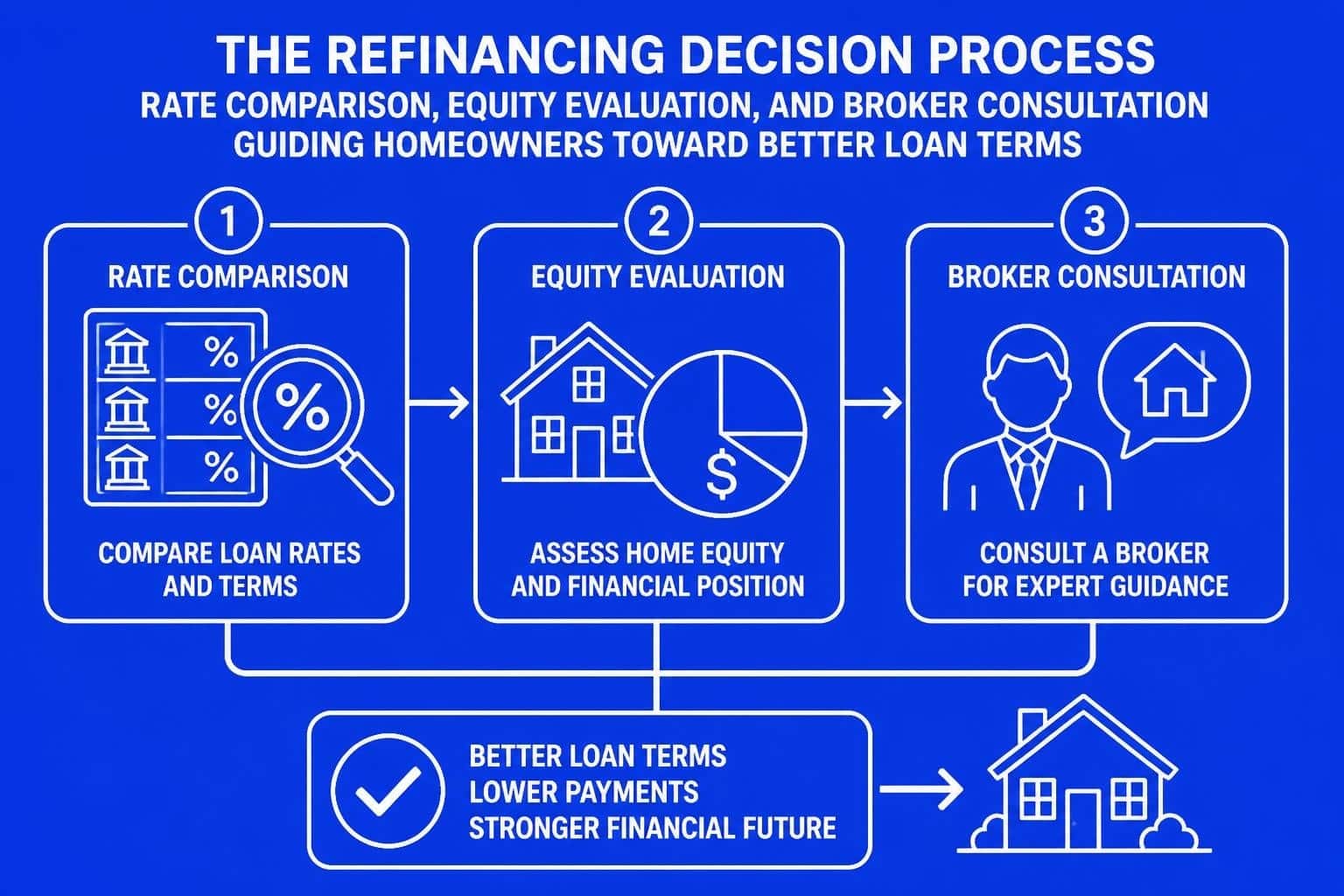
Homeowners across Seattle, Bellevue, and surrounding King County communities are exploring refinancing options in 2026 as market conditions evolve and personal financial situations change. Working with a refinance home loan broker provides access to multiple lenders, competitive rates, and expert guidance through what can be a complex decision-making process. Unlike going directly to a single bank, a broker acts as your advocate, comparing programs across dozens of lending institutions to identify the best fit for your unique circumstances. For tech professionals in Seattle with stock compensation, seasoned homeowners looking to eliminate PMI, or families seeking to consolidate debt, understanding how brokers operate and the value they deliver makes the difference between an average outcome and an optimal refinancing strategy.
What a Refinance Home Loan Broker Does for Seattle Homeowners
A refinance home loan broker serves as an intermediary between you and multiple wholesale lenders, creating competition for your business while providing expert navigation through the application process. The Consumer Financial Protection Bureau explains that brokers work with numerous lending institutions rather than offering products from just one company.
Access to Multiple Wholesale Lenders
Brokers maintain relationships with 20 to 50+ wholesale lenders, each with different rate sheets, program guidelines, and specialty niches. This network access means:
- Competitive pricing through lender competition for your loan
- Specialized programs for jumbo loans, investment properties, and non-traditional income
- Flexibility when unique situations require creative underwriting solutions
- Rate shopping efficiency without submitting multiple applications yourself
The wholesale lending channel typically offers lower rates than retail banks because brokers generate volume across multiple institutions. Seattle homeowners refinancing properties valued above $1.5 million particularly benefit from broker access to jumbo loan programs with competitive terms.
Expert Guidance Through Complex Decisions
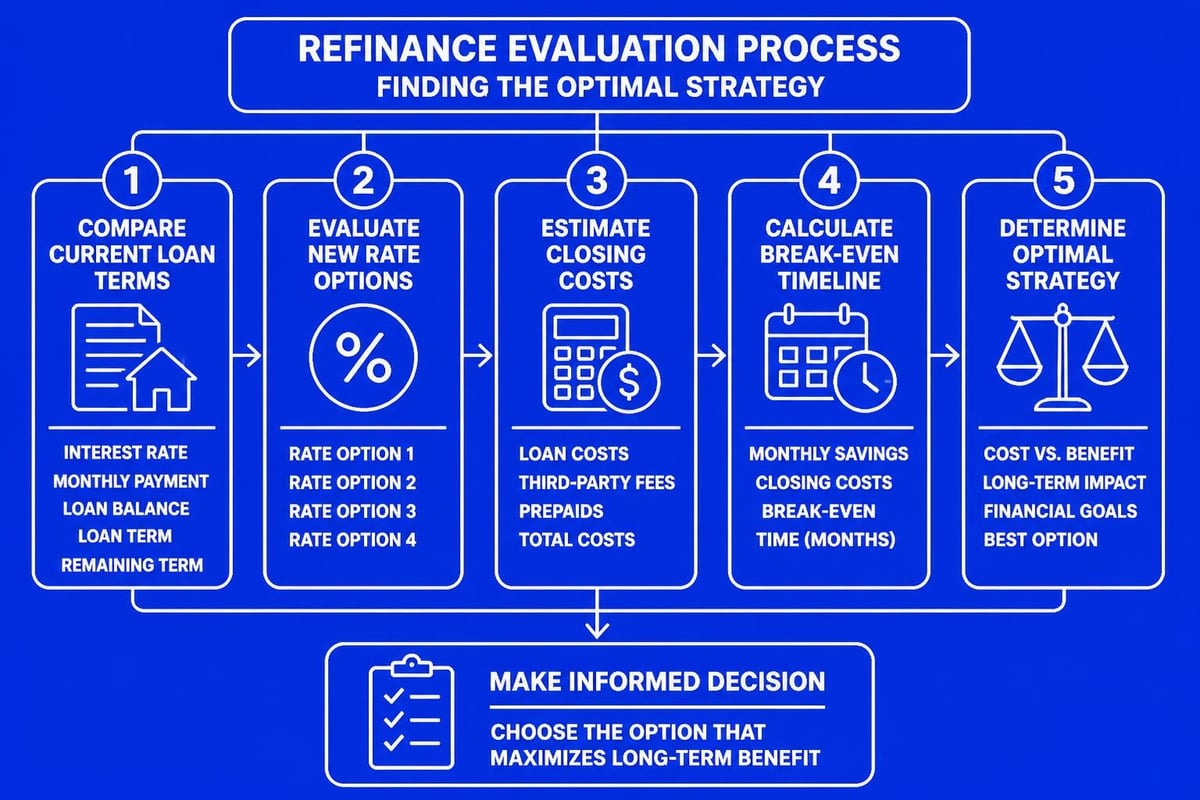
Refinancing involves strategic timing, cost-benefit analysis, and understanding how new loan terms affect your long-term financial picture. A refinance home loan broker helps evaluate whether refinancing makes sense given closing costs, rate differential, remaining loan term, and your goals.
Key analysis areas include:
- Break-even calculation – How many months until savings exceed costs
- Total interest comparison – Lifetime cost of current vs. new loan
- Cash-out implications – Tax considerations and investment opportunities
- Rate-term optimization – Balancing monthly payment with total interest paid
For homeowners in Shoreline or Lynnwood considering cash-out refinancing to fund home improvements, brokers provide honest assessments about whether tapping equity makes financial sense compared to alternatives like HELOCs or personal loans.
When Working With a Refinance Home Loan Broker Makes Sense
Certain situations particularly benefit from broker expertise and lender access. Understanding these scenarios helps Seattle-area homeowners decide whether to work with a broker or pursue direct lending relationships.
Complex Income Documentation Situations
Tech professionals at Amazon, Microsoft, and Google frequently have compensation structures that require specialized underwriting knowledge. Stock-based compensation including RSUs, ESPP shares, and performance bonuses don't follow traditional W-2 income verification.
A refinance home loan broker experienced with tech sector clients knows which lenders accept:
- Unvested RSUs for qualifying income
- Variable bonus history with appropriate averaging
- Stock sale proceeds for cash reserves
- Equity compensation across multiple grant schedules
This expertise proves invaluable when refinancing properties in Redmond or Bellevue where home values often require jumbo financing and tech compensation represents the primary income source.
Rate Shopping Across Multiple Product Types
NerdWallet’s refinancing guide emphasizes comparing multiple lenders to find optimal terms. Brokers streamline this process by simultaneously accessing rate sheets from numerous institutions.
| Loan Scenario | Why Brokers Add Value |
|---|---|
| Jumbo refinancing | Access to portfolio lenders with flexible guidelines |
| Investment property | Lenders specializing in rental property programs |
| Cash-out refinance | Institutions with higher LTV allowances |
| FHA streamline | Finding lowest overlays on credit and DTI requirements |
This becomes especially relevant when refinancing in competitive Seattle neighborhoods where property values fluctuate and loan amounts frequently exceed conforming limits.
Time-Sensitive Refinancing Goals
Some homeowners need to close refinancing quickly to lock rates before market shifts or meet specific deadlines. Experienced brokers have established lender relationships that facilitate faster processing.
Speed advantages include:
- Pre-existing underwriter relationships reducing review times
- Knowledge of which lenders process specific loan types fastest
- Ability to pivot quickly if initial lender encounters delays
- Direct communication channels bypassing general customer service queues
For Seattle homeowners monitoring rate movements and wanting to capitalize on favorable windows, broker responsiveness and processing knowledge creates significant timing advantages.
How Refinance Home Loan Brokers Are Compensated
Understanding compensation models helps homeowners evaluate broker recommendations objectively and ensure alignment of interests. Transparency in how brokers get paid builds trust and informed decision-making.
Lender-Paid Compensation Structure
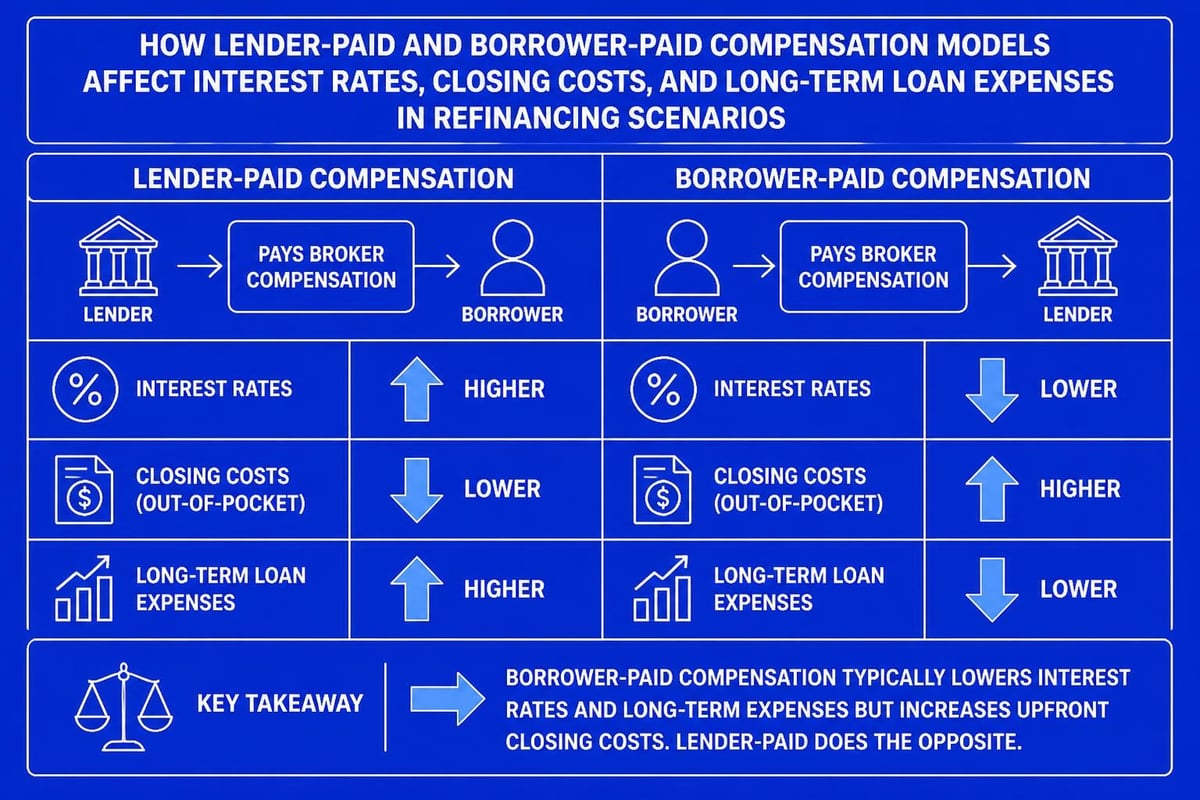
Most refinance transactions in 2026 use lender-paid compensation where the wholesale lender pays the broker a percentage of the loan amount. This fee is built into the interest rate rather than charged separately to the borrower.
How it works:
- Lender offers rate sheets with different compensation levels
- Higher broker compensation correlates with slightly higher borrower rate
- Borrower sees final rate and closing costs, not broker commission directly
- Disclosure forms show compensation amount for transparency
This model aligns broker incentives with finding competitive rates since borrowers comparison shop and choose brokers offering the best overall value.
Borrower-Paid Origination Options
Some refinancing scenarios use borrower-paid origination fees, particularly when seeking absolute lowest rates or working with specialized programs. The Federal Reserve's overview of mortgage refinancing notes that understanding all costs helps homeowners make informed decisions.
Borrower-paid structures offer more rate flexibility, allowing you to buy down rates through points or choose higher rates with lender credits covering closing costs. A refinance home loan broker can present multiple scenarios showing the tradeoff between upfront costs and long-term interest savings.
Comparing Total Cost of Refinancing
Critical comparison factors:
- APR (includes fees amortized over loan life)
- Total closing costs itemized on loan estimate
- Rate differential from current mortgage
- Prepayment penalties on existing or new loan (rare but worth verifying)
Working with brokers who provide detailed Loan Estimate comparisons across multiple lenders gives Seattle homeowners in Mill Creek or Lake Forest Park clear visibility into total refinancing costs before committing.
Questions to Ask When Choosing a Refinance Home Loan Broker
Selecting the right broker partnership significantly impacts your refinancing experience and outcome. These targeted questions help evaluate expertise, transparency, and service quality.
Experience and Specialization Questions
Ask potential brokers:
- How many years have you worked in mortgage refinancing specifically?
- What percentage of your business comes from refinancing vs. purchase loans?
- Do you have experience with [my specific situation: jumbo loans, tech compensation, investment properties]?
- How many Seattle-area refinance transactions have you closed in the past year?
Brokers specializing in the Greater Seattle market understand local property value trends, common appraisal issues, and which lenders work efficiently with Washington state title companies and closing processes.
Lender Access and Product Range
Understanding a broker's lender network reveals the true scope of options available to you. A refinance home loan broker with limited lender relationships provides less value than one with extensive institutional access.
Key inquiries include:
- How many wholesale lenders do you actively work with?
- Which lenders specialize in jumbo refinancing for Seattle-area properties?
- Can you access portfolio lenders for unique situations?
- Do you have relationships with credit unions offering competitive refinance rates?
The best brokers maintain active relationships with diverse lenders including national institutions, regional banks, credit unions, and specialized portfolio lenders. This breadth ensures access to competitive mortgage financing options regardless of your situation.
Communication and Process Transparency
Clear communication throughout refinancing prevents surprises and reduces stress. Understanding a broker's process upfront sets appropriate expectations.
| Question Area | What to Ask |
|---|---|
| Rate locking | When should I lock my rate, and how long are locks available? |
| Timeline | What's realistic timeline from application to closing? |
| Updates | How frequently will you communicate progress? |
| Problems | How do you handle underwriting issues or delays? |
| Documentation | What documents should I prepare in advance? |
Brokers with strong reputations for service excellence typically have systems ensuring regular updates, proactive problem-solving, and clear milestone communication.
The Refinancing Process With a Professional Broker
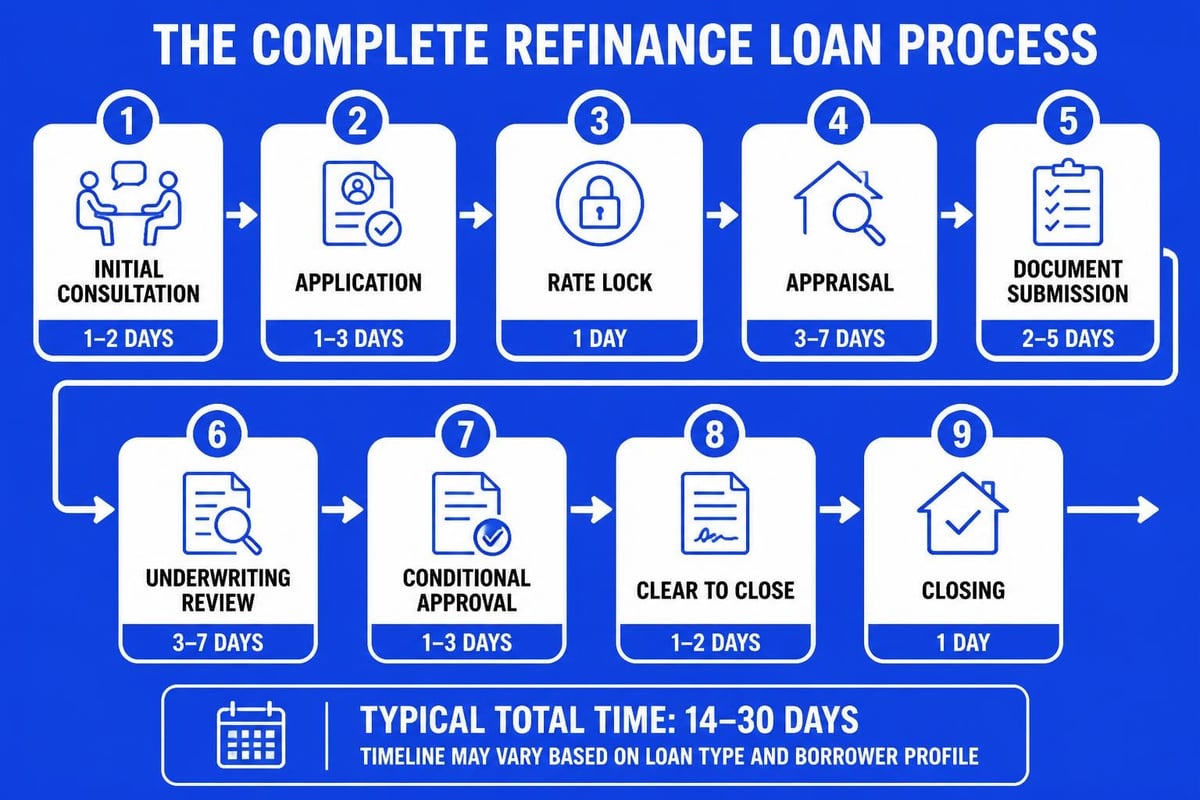
Understanding the step-by-step workflow helps Seattle homeowners prepare appropriately and recognize what to expect at each stage.
Initial Consultation and Scenario Analysis
The refinancing journey begins with a comprehensive consultation where your broker evaluates your current loan, financial goals, and property situation. This analysis determines whether refinancing makes strategic sense.
Initial discussion covers:
- Current mortgage terms (rate, balance, remaining term)
- Refinancing objectives (lower payment, shorter term, cash-out)
- Property value estimate and remaining equity
- Credit profile and recent changes
- Income stability and documentation availability
For Everett homeowners who purchased several years ago, this conversation might reveal significant equity accumulation that enables eliminating PMI through refinancing, even if rate reduction is modest.
Application and Documentation Gathering
Once you decide to proceed, the formal application initiates the underwriting process. Kiplinger’s mortgage refinancing guide emphasizes the importance of thorough preparation and understanding requirements.
Standard documentation includes:
- Recent pay stubs (last 30 days)
- W-2 forms (previous two years)
- Tax returns (two years for self-employed or complex income)
- Bank statements (two months for all accounts)
- Homeowners insurance declaration page
- Current mortgage statement
Tech professionals with stock compensation should prepare additional documentation showing vesting schedules, grant agreements, and historical trading activity demonstrating liquidity.
Appraisal, Underwriting, and Clear to Close
After application submission, three critical milestones determine loan approval and final terms.
The progression:
- Appraisal ordered – Property valuation confirms sufficient equity and loan-to-value ratios
- Underwriting review – Lender analyzes income, credit, assets, and appraisal
- Conditional approval – Underwriter requests clarifications or additional documentation
- Clear to close – All conditions satisfied, final approval granted
A skilled refinance home loan broker anticipates common underwriting requests and proactively gathers documentation, reducing the time between conditional approval and clear to close. This efficiency particularly benefits Seattle homeowners in competitive neighborhoods where timing matters.
Refinancing Strategies Brokers Recommend for Seattle Homeowners
Professional brokers develop customized strategies based on market conditions, individual circumstances, and long-term financial objectives. These tactical approaches optimize refinancing outcomes.
Rate-and-Term Refinancing for Interest Savings
The most common refinancing strategy focuses purely on improving loan terms without changing the loan balance. This works exceptionally well when market rates drop significantly below your current mortgage rate.
Ideal scenarios include:
- Current rate is 0.75% or more above available refinance rates
- Sufficient equity exists (typically 20%+ to avoid PMI)
- Planning to stay in the property beyond break-even period
- No need for cash-out proceeds
Seattle homeowners who purchased or last refinanced when rates were higher can potentially save hundreds monthly through rate-and-term refinancing, though calculating the break-even point against closing costs remains critical.
Cash-Out Refinancing for Strategic Purposes
Accessing home equity through refinancing provides capital for various purposes, from home improvements to investment opportunities. A refinance home loan broker helps evaluate whether this strategy aligns with your financial goals.
Common cash-out purposes for Seattle-area homeowners:
- Home renovations that increase property value
- Consolidating high-interest debt
- Funding investment property down payments
- Education expenses for children
- Emergency cash reserves
The key consideration involves whether the after-refinance mortgage rate justifies using home equity versus alternative funding sources. With Seattle home values appreciating substantially in recent years, many homeowners have significant accessible equity.
Term Modification Strategies
Changing loan duration while refinancing affects both monthly payments and total interest paid over the loan's life. Brokers help model different term options showing long-term implications.
| Current Situation | Recommended Strategy | Benefit |
|---|---|---|
| 30-year mortgage, 8 years paid | Refinance to new 30-year | Lower monthly payment |
| 30-year mortgage, 10 years paid | Refinance to 20-year | Pay off faster, save interest |
| 30-year mortgage, 15 years paid | Refinance to 15-year | Accelerate payoff, lower rate |
| 15-year mortgage, 5 years paid | Refinance to 10-year | Maintain aggressive payoff timeline |
Homeowners in Bellevue or Kirkland approaching retirement might prioritize becoming mortgage-free, making shorter-term refinancing attractive despite higher monthly payments.
Common Refinancing Mistakes Brokers Help You Avoid
Experienced brokers prevent costly errors that undermine refinancing benefits. Awareness of these pitfalls protects your financial interests.
Refinancing Too Frequently Without Break-Even Analysis
Some homeowners chase minor rate improvements without calculating whether closing costs justify refinancing. Learning about home lending guidelines helps understand when refinancing makes mathematical sense.
Break-even analysis questions:
- What are total closing costs?
- What's the monthly payment reduction?
- How many months until savings exceed costs?
- Do I plan to stay in the home beyond break-even?
A refinance home loan broker provides honest guidance about whether pursuing refinancing makes sense or if waiting for more significant rate differential serves you better.
Extending Loan Terms Unnecessarily
Resetting to a new 30-year mortgage when you've already paid down significant principal extends your debt obligation and increases total interest paid, even with lower rates.
Consider this example:
You have 22 years remaining on your current mortgage. Refinancing to a new 30-year loan reduces monthly payment but adds 8 years of payments. A 20-year or 22-year refinance term might better balance payment reduction with reasonable payoff timeline.
Brokers model multiple scenarios showing how term selection impacts both monthly cash flow and long-term interest expense, helping you make informed decisions aligned with retirement planning and financial goals.
Overlooking Total Refinancing Costs
Focusing exclusively on interest rate while ignoring closing costs, prepaid items, and escrow adjustments creates inaccurate refinancing analysis. Comprehensive cost evaluation ensures true comparison.
Total costs to consider:
- Lender origination and underwriting fees
- Third-party costs (appraisal, title, escrow)
- Prepaid interest and property taxes
- Homeowners insurance premiums
- Escrow account adjustments and analysis fees
Quality brokers provide detailed Loan Estimates showing all costs upfront, enabling accurate comparison between staying with your current mortgage and refinancing. This transparency builds trust and supports confident decision-making.
Technology and Speed Advantages Modern Brokers Offer
The mortgage industry has evolved significantly with digital tools streamlining traditionally paper-intensive processes. Leading refinance home loan brokers leverage technology for faster, more convenient experiences.
Digital Application and Document Upload
Modern platforms enable complete refinancing applications from your phone or computer, with secure document upload replacing fax machines and physical mail. This convenience particularly benefits busy tech professionals in Seattle who value efficiency.
Digital process benefits:
- Complete applications outside business hours
- Upload documents immediately when received
- Track application status in real-time
- Receive and review disclosures electronically
- Sign closing documents digitally when permitted
Brokers using advanced platforms can often close refinance transactions in 2-3 weeks compared to 4-6 weeks with traditional paper processes.
Automated Valuation and Appraisal Waivers
Many refinancing transactions now qualify for appraisal waivers through automated valuation models, eliminating appraisal costs and reducing closing timelines by 7-10 days.
Waiver qualification factors:
- Sufficient equity in the property (typically 20%+ remaining after refinancing)
- Recent purchase or refinance establishing value
- Reliable comparable sales data in your neighborhood
- Loan amount within conforming or specific program limits
Seattle-area properties with clear valuation history often qualify for waivers, though brokers maintain appraiser relationships for situations requiring traditional appraisals.
Rate Lock Technology and Monitoring
Sophisticated brokers use rate monitoring tools alerting them to favorable market movements, enabling proactive outreach when refinancing opportunities emerge for existing clients.
This technology-enabled service means you don't need to constantly watch mortgage rates yourself. Your broker monitors markets and contacts you when rate improvements justify refinancing discussion, providing genuine advisory value beyond transaction execution.
Choosing Between National Lenders and Local Seattle Brokers
Location and market expertise significantly impact refinancing experience and outcomes. Understanding differences between national direct lenders and local brokers helps guide your selection.
Local Market Knowledge Advantages
Seattle-area brokers understand regional property value trends, neighborhood-specific appraisal challenges, and local economic factors affecting lending decisions. This knowledge proves valuable when refinancing properties in markets with unique characteristics.
Local expertise includes:
- Familiarity with Seattle, Shoreline, and Everett property value patterns
- Relationships with local appraisers producing realistic valuations
- Understanding of tech sector employment stability affecting underwriting
- Knowledge of Washington state-specific lending regulations and requirements
When working with experienced mortgage brokers, you benefit from accumulated wisdom about navigating Greater Seattle real estate markets.
Personalized Service vs. Call Center Experience
Local brokers typically provide direct access to the loan officer managing your file, while national lenders often route calls through customer service representatives with limited authority or file knowledge.
Service comparison:
| Aspect | Local Broker | National Lender |
|---|---|---|
| Primary contact | Direct loan officer access | Call center rotation |
| Decision authority | Broker can advocate with underwriters | Limited representative authority |
| Local knowledge | Deep Seattle market expertise | Generalized national perspective |
| Relationship | Ongoing advisory relationship | Transaction-focused interaction |
For homeowners valuing relationship-based service and expert guidance, local refinance home loan brokers deliver superior experiences compared to impersonal national platforms.
Why Seattle Tech Professionals Choose Specialized Brokers
The unique compensation structures common among Seattle's technology sector require specialized underwriting knowledge that many lenders lack. Brokers experienced with tech industry clients provide significant value.
RSU and Stock Compensation Qualification
Amazon, Microsoft, Google, and other tech employers compensate employees heavily through restricted stock units, which require specific treatment for mortgage qualification purposes.
Qualification considerations include:
- Vesting schedules – Only vested portions typically count for income
- Historical volatility – Some lenders average stock value conservatively
- Diversification requirements – Concentration in employer stock affects some guidelines
- Tax treatment – Gross vs. net income calculations vary by lender
A refinance home loan broker specializing in tech sector refinancing knows which lenders offer favorable RSU treatment, maximizing your qualifying income and enabling optimal loan terms on Redmond or Bellevue properties.
Jumbo Loan Expertise for High-Value Properties
Seattle-area home values frequently exceed conforming loan limits ($806,500 in 2026 for most of Washington), requiring jumbo financing with different guidelines and rate structures.
Jumbo refinancing complexities:
- Higher credit score requirements (typically 700+ minimum)
- Lower maximum debt-to-income ratios
- Larger reserve requirements (6-12 months payments)
- Portfolio lender variations in guidelines
Experienced brokers maintain relationships with multiple jumbo lenders, ensuring competitive rates and favorable terms even for properties valued well above $2 million. This expertise proves invaluable when refinancing high-value properties in neighborhoods like Madison Park or Laurelhurst.
Fast Closing Timelines for Rate-Sensitive Situations
When refinancing during volatile rate environments, speed matters. Brokers with streamlined processes and strong lender relationships can close refinancing transactions in as few as 9-12 business days when situations require urgency.
This capability benefits homeowners wanting to lock favorable rates before potential market shifts or those coordinating refinancing with other financial transactions requiring specific timing.
Refinancing your home represents a significant financial decision requiring careful analysis of rates, costs, timing, and long-term implications. Working with a refinance home loan broker provides access to multiple lending options, expert guidance through complex decisions, and advocacy throughout the process. Whether you're seeking rate reduction, term modification, or accessing equity, professional broker support helps optimize outcomes while avoiding common mistakes. Keith Akada at Mortgage Reel brings over 25 years of experience serving Seattle, Bellevue, Redmond, and Kirkland homeowners with transparent guidance, competitive rates, and specialized expertise in tech sector compensation and jumbo refinancing. With 750+ five-star reviews and the ability to close in as few as 9 business days, Keith delivers the professional refinancing support you need to make confident decisions for your financial future.