Purchasing your first home represents one of the most significant financial decisions you'll make in your lifetime. For buyers in Seattle, Bellevue, Redmond, and Kirkland, the competitive real estate market demands strategic planning, proper financing, and expert guidance. Understanding the mortgage process, available programs, and unique considerations for Seattle-area tech professionals can transform what seems overwhelming into an achievable milestone. Whether you're a Microsoft engineer evaluating stock compensation or a young professional saving for down payment assistance, entering homeownership requires both knowledge and the right lending partner.
Understanding First Home Financing Fundamentals
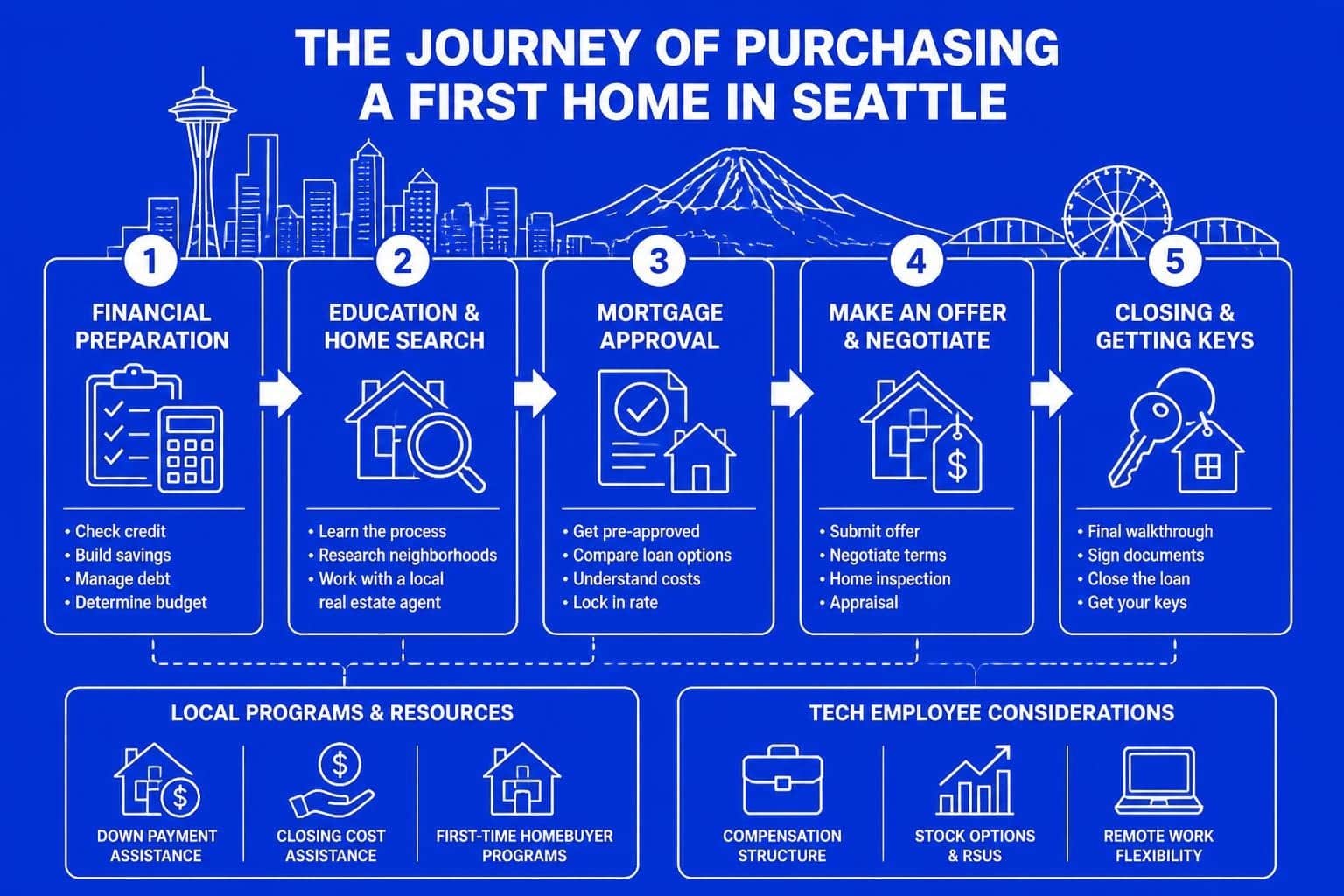
The financial foundation for your first home begins months before you start touring properties. Most lenders evaluate three core components: credit score, debt-to-income ratio, and available funds for down payment and closing costs.
Your credit score directly impacts your mortgage rate and loan approval. Conventional loans typically require a minimum score of 620, though first-time mortgage programs may accept lower scores with compensating factors. Before applying, review your credit reports for errors and address any outstanding collections or late payments.
Debt-to-income (DTI) ratio measures your monthly debt obligations against gross income. Most conventional mortgages allow up to 43% DTI, though some programs extend to 50% with strong credit and reserves.
Down Payment Requirements and Options
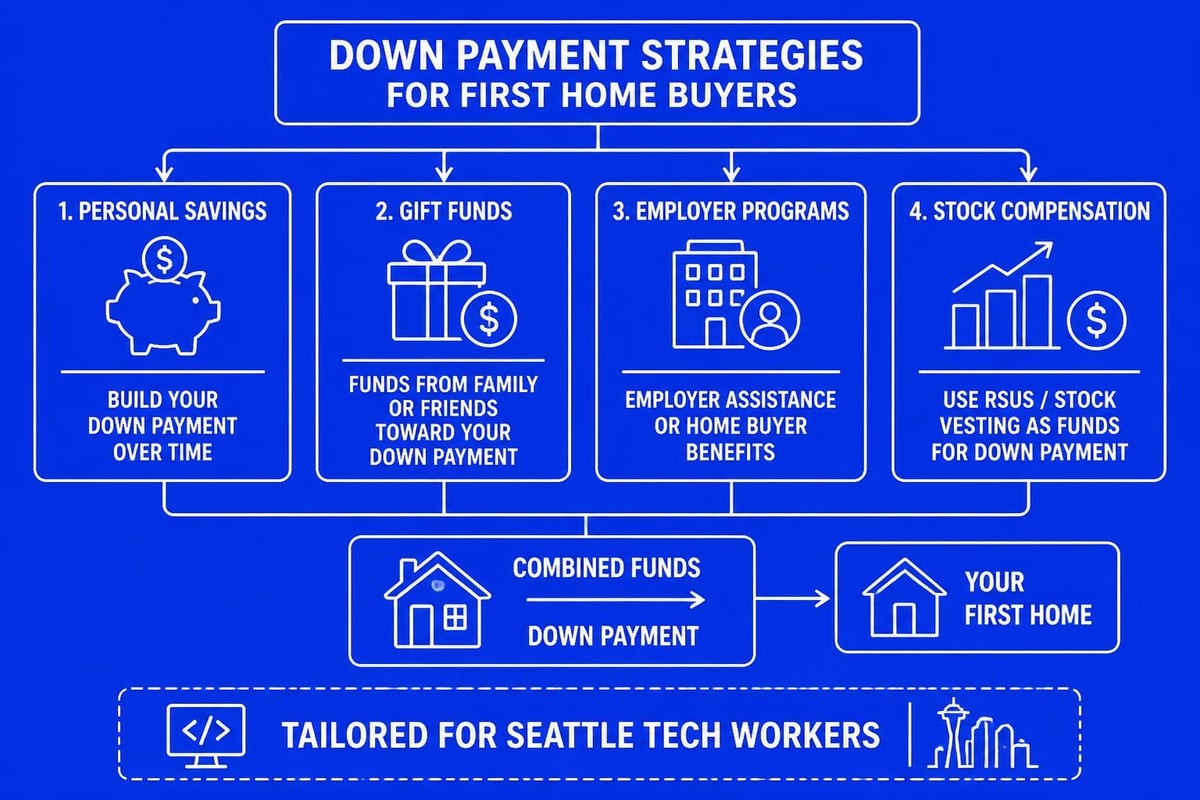
Contrary to common belief, you don't need 20% down to purchase your first home. Several programs serve buyers with limited savings:
- Conventional 97: 3% down for qualified first-time buyers
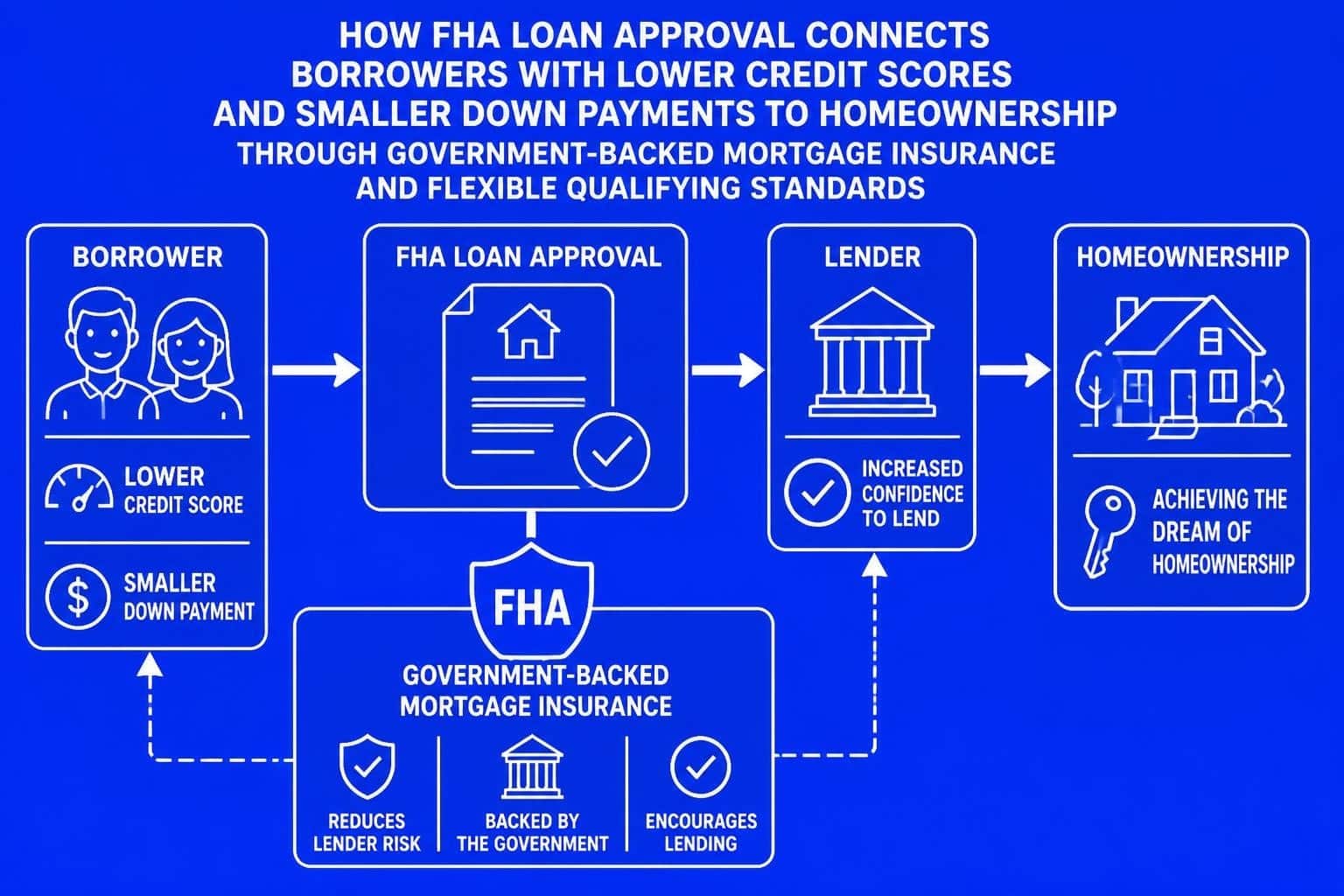
- FHA loans: 3.5% down with credit scores as low as 580
- VA loans: 0% down for eligible veterans and service members
- USDA loans: 0% down for properties in eligible rural areas
For Seattle tech professionals, stock compensation and RSUs can significantly boost buying power. Amazon, Microsoft, and Google employees often qualify for larger loan amounts when lenders properly document and underwrite equity compensation. This expertise becomes particularly valuable when pursuing jumbo home loans for properties exceeding conventional conforming limits.
Navigating Seattle-Area First Home Buyer Programs
Washington State and local municipalities offer substantial assistance to qualified first home purchasers. The Washington State Housing Finance Commission provides down payment assistance and competitive interest rates through their Home Advantage and House Key programs.
House Key Opportunity Program combines low down payment requirements with deferred payment assistance loans. Eligible buyers in Seattle, Shoreline, and Lynnwood can access up to 4% of the purchase price for down payment or closing costs, with no monthly payment required on the assistance loan.
| Program | Down Payment | Income Limits | Property Limits |
|---|---|---|---|
| House Key Opportunity | As low as 3% | Varies by county | Conforming limits |
| Home Advantage | 3% minimum | None | Conforming limits |
| FHA 203(b) | 3.5% | None | $1,209,750 (2026) |
| Conventional 97 | 3% | None | $806,500 (2026) |
King County also administers local programs targeting moderate-income buyers in communities including Mill Creek and Everett. These initiatives often provide forgivable loans or grants that reduce the cash required at closing.
Tax Benefits and Long-Term Savings
First home ownership delivers meaningful tax advantages. Mortgage interest deduction allows you to deduct interest paid on loans up to $750,000 for married couples filing jointly. Property tax deductions further reduce your taxable income, though Washington's lack of state income tax means federal benefits matter most.
Beyond tax savings, building equity creates forced savings through principal reduction. Each monthly payment increases your ownership stake, while property appreciation in competitive Seattle-area markets historically adds substantial value over time.
The Pre-Approval Process: Your Competitive Advantage
In Seattle's fast-paced real estate market, a comprehensive pre-approval separates serious buyers from window shoppers. Getting proper mortgage pre-approval involves full documentation review, credit analysis, and underwriter verification.
Pre-qualification provides a rough estimate based on self-reported information. Pre-approval requires documentation verification and credit approval, giving sellers confidence in your ability to close.
For your first home purchase, gather these documents before meeting with a lender:
- Two years of W-2s and tax returns
- Recent pay stubs covering 30 days
- Two months of bank statements for all accounts
- Documentation of additional income sources
- Explanation letters for credit inquiries or derogatory items
Tech professionals should also provide equity compensation documentation including RSU vesting schedules, stock option agreements, and historical grant information. Experienced lenders can calculate qualifying income from these sources, substantially increasing your budget for properties in Bellevue or Redmond.
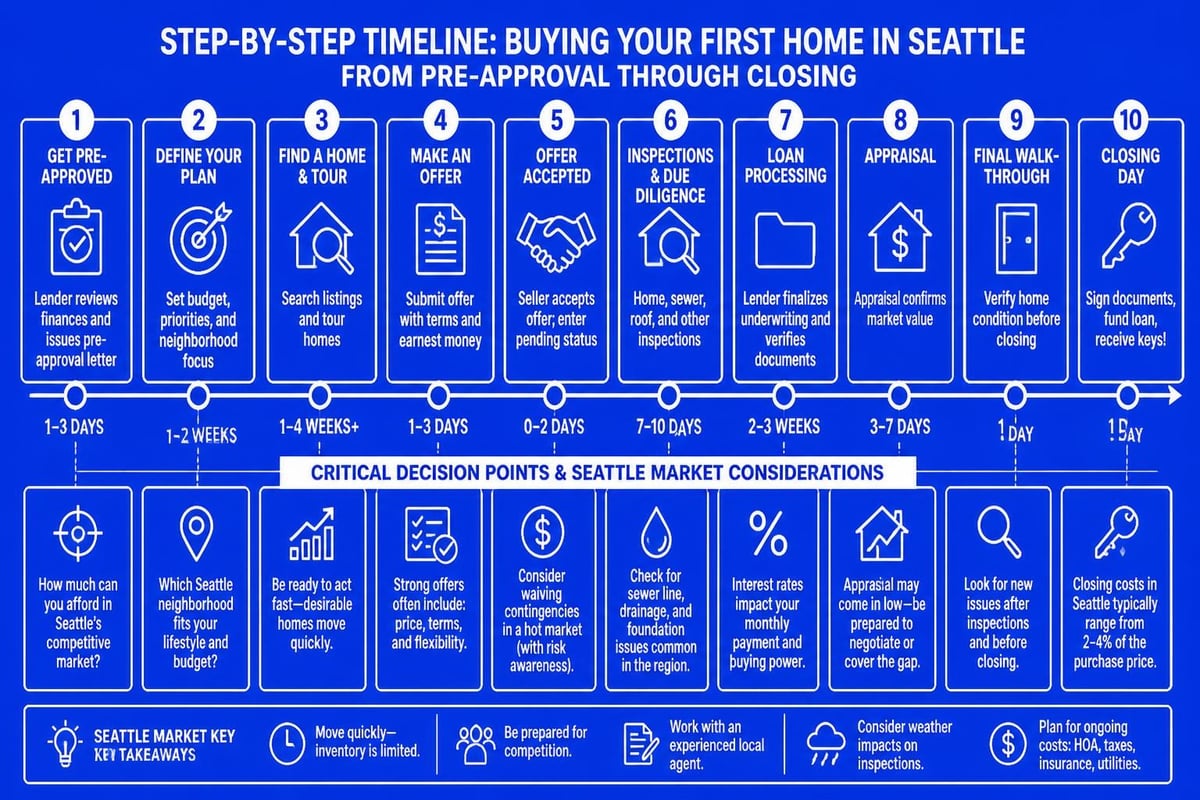
Timeline Expectations for First Home Buyers
Understanding realistic timelines prevents frustration and missed opportunities. Home loan approval timeframes vary based on documentation completeness and loan complexity.
Pre-approval: 24-48 hours with complete documentation
Offer to acceptance: 1-7 days (competitive markets move quickly)
Inspection period: 10-14 days typically
Appraisal completion: 7-10 days
Final underwriting: 3-5 business days
Closing: As fast as 9 business days with streamlined processing
Choosing Between Loan Types for Your First Home
Selecting the right mortgage product depends on your financial profile, property type, and long-term plans. Each option carries distinct advantages for first home purchasers.
Conventional Loans
Conventional loan lenders offer the most flexible terms for buyers with strong credit and stable income. These loans aren't government-backed, allowing faster processing and fewer restrictions.
Advantages for first home buyers:
- Competitive rates for borrowers with 740+ credit scores
- Lower mortgage insurance costs compared to FHA
- Ability to cancel PMI once reaching 20% equity
- 5% down options available with slightly higher rates
Conventional loans work exceptionally well for Seattle tech employees whose compensation packages include significant equity components. Lenders can often qualify 100% of vested RSUs as income, dramatically expanding purchasing power.
FHA Loans
Federal Housing Administration loans provide accessible financing for buyers with limited down payment funds or credit challenges. While requiring mortgage insurance for the loan's life, FHA loans open doors for many first home buyers.
Key FHA benefits:
- 3.5% minimum down payment
- Credit scores as low as 580 accepted
- Gift funds allowed for entire down payment
- Higher DTI ratios permitted
Properties in Lake Forest Park, Shoreline, and Lynnwood often fall within FHA lending limits, making this option viable for first home buyers throughout the Seattle metro area.
Government-Backed Alternatives
Veterans and active military members should explore VA loans offering 0% down payment and no monthly mortgage insurance. USDA loans serve buyers purchasing in designated rural areas, though limited qualifying zones exist within the greater Seattle region.
Strategic Considerations for Seattle Market Success
Seattle's competitive housing market demands strategic thinking beyond basic qualification. Understanding local dynamics helps first home buyers make informed decisions.
Tech Compensation Optimization
Amazon, Microsoft, and Google employees possess unique advantages when properly leveraging total compensation. Many first home buyers underestimate their borrowing capacity by overlooking stock-based income.
Qualifying strategies include:
- Using two-year average of vested RSU income
- Documenting consistent grant patterns
- Including annual bonuses with two-year history
- Combining base salary with equity for maximum qualification
Working with experienced mortgage brokers familiar with tech compensation ensures proper income calculation and optimal loan structuring.
Location and Commute Analysis
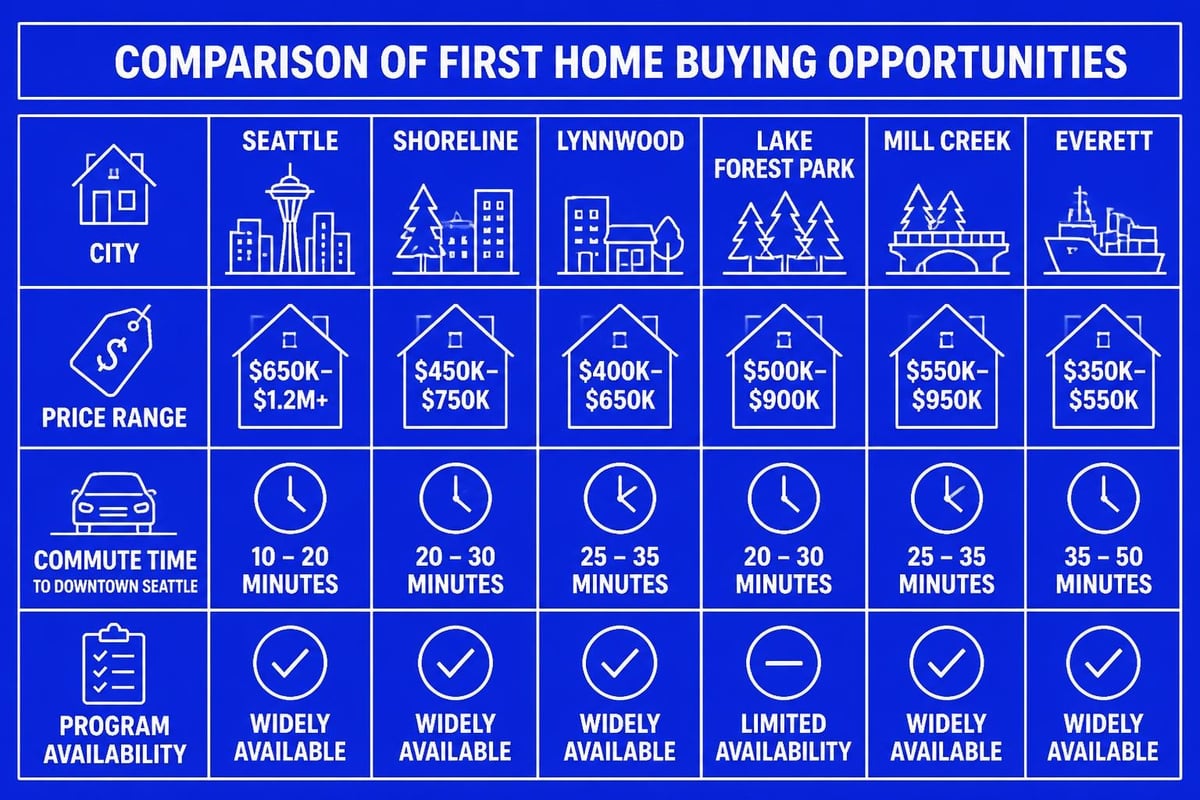
Your first home location impacts both immediate finances and long-term satisfaction. While Seattle proper commands premium prices, surrounding communities offer compelling value.
Mill Creek provides excellent schools and newer construction at moderate price points. Everett delivers the most affordable entry point while maintaining reasonable commute access to Seattle employers. Shoreline combines proximity to Seattle with diverse housing stock suitable for various budgets.
Working with Real Estate and Lending Professionals
Assembling the right professional team dramatically improves your first home buying experience. Your lender and real estate agent should work collaboratively to navigate challenges and capitalize on opportunities.
Essential team members include:
- Mortgage broker or loan officer with local market expertise
- Real estate agent specializing in buyer representation
- Home inspector familiar with Pacific Northwest construction
- Real estate attorney (optional in Washington but valuable for complex transactions)
- Insurance agent for homeowners coverage quotes
Choosing between local lenders and big banks significantly impacts your experience. Local Seattle mortgage brokers often provide more personalized service, faster communication, and greater flexibility for unique situations like equity compensation qualification.
Questions to Ask Potential Lenders
Not all mortgage providers deliver equivalent value for first home buyers. Evaluate lenders using these critical questions:
- What is your average time to close?
- How do you handle RSU and stock compensation income?
- Which first-time buyer programs do you offer?
- What happens if rates drop during my lock period?
- How do you communicate throughout the process?
- What percentage of your loans close on time?
Highly reviewed loan officers with hundreds of verified customer testimonials demonstrate consistent execution and client satisfaction-critical factors when making the largest purchase of your life.
Common Mistakes First Home Buyers Should Avoid
Even well-prepared buyers make costly errors during their first home purchase. Awareness of common pitfalls helps you navigate successfully.
Financial missteps:
- Making large purchases or opening new credit accounts during the mortgage process
- Changing jobs before closing without discussing with your lender
- Depleting all savings for down payment without reserves
- Skipping home inspection to save a few hundred dollars
- Overlooking closing costs and underestimating cash needed
According to comprehensive first-time homebuyer guides, emotional decision-making represents another frequent challenge. Setting clear criteria before touring homes prevents falling in love with properties beyond your budget.
Documentation and Process Errors
Incomplete or delayed documentation extends closing timelines and may jeopardize your purchase. Respond immediately to lender requests and maintain organized records throughout the process.
Common documentation issues:
- Providing partial bank statements instead of complete months
- Missing signature pages on tax returns
- Outdated pay stubs (lenders require documents within 30 days)
- Unclear sourcing for large deposits
- Incomplete employment verification
Your lender should provide a comprehensive checklist for required documents at pre-approval, eliminating surprises later in the process.
Closing Preparation and Final Steps
As you approach closing on your first home, several final tasks require attention. Understanding what happens during the last two weeks prevents last-minute stress.
Your lender will order a final verification of employment 1-3 days before closing. Avoid any job changes during this period. You'll receive a Closing Disclosure at least three business days before closing, detailing all final costs and loan terms.
Pre-closing checklist:
| Task | Timing | Importance |
|---|---|---|
| Review Closing Disclosure | 3+ days before | Critical – verify all terms |
| Final walkthrough | Day before closing | Confirm property condition |
| Wire funds verification | 1-2 days before | Prevent fraud |
| Homeowners insurance binding | Before closing | Required for funding |
| Utility transfer arrangements | Week before | Ensure services on day one |
Many resources outline the complete homebuying journey, but your specific closing may include unique elements based on property type, location, or loan program.
Understanding Closing Costs
Budget 2-5% of purchase price for closing costs on your first home. These expenses include lender fees, title insurance, escrow charges, prepaid property taxes, and homeowners insurance.
Typical closing cost breakdown:
- Origination and underwriting fees: $1,500-$3,000
- Appraisal: $500-$800
- Title insurance and escrow: $1,500-$3,500
- Prepaid taxes and insurance: Varies by purchase date
- Recording fees: $200-$400
Some first-time buyer programs offer closing cost assistance, reducing the cash required at closing. Washington State programs frequently provide this benefit to qualified participants.
Long-Term Success as a First Home Owner
Purchasing your first home represents the beginning of your homeownership journey, not the conclusion. Successful owners approach their property as both a home and a financial asset requiring ongoing attention.
Maintenance budget planning:
Set aside 1-2% of your home's value annually for maintenance and repairs. Pacific Northwest properties require particular attention to moisture control, gutter maintenance, and exterior preservation.
Building Equity and Future Planning
Your first home may not be your forever home, but it builds financial foundation for future moves. Understanding how to maximize equity growth positions you for success.
Principal reduction occurs automatically with each payment. On a $500,000 loan at 6.5%, you'll build approximately $7,200 in equity through principal reduction in year one. Market appreciation in Seattle-area markets has historically added 3-5% annually, though past performance doesn't guarantee future results.
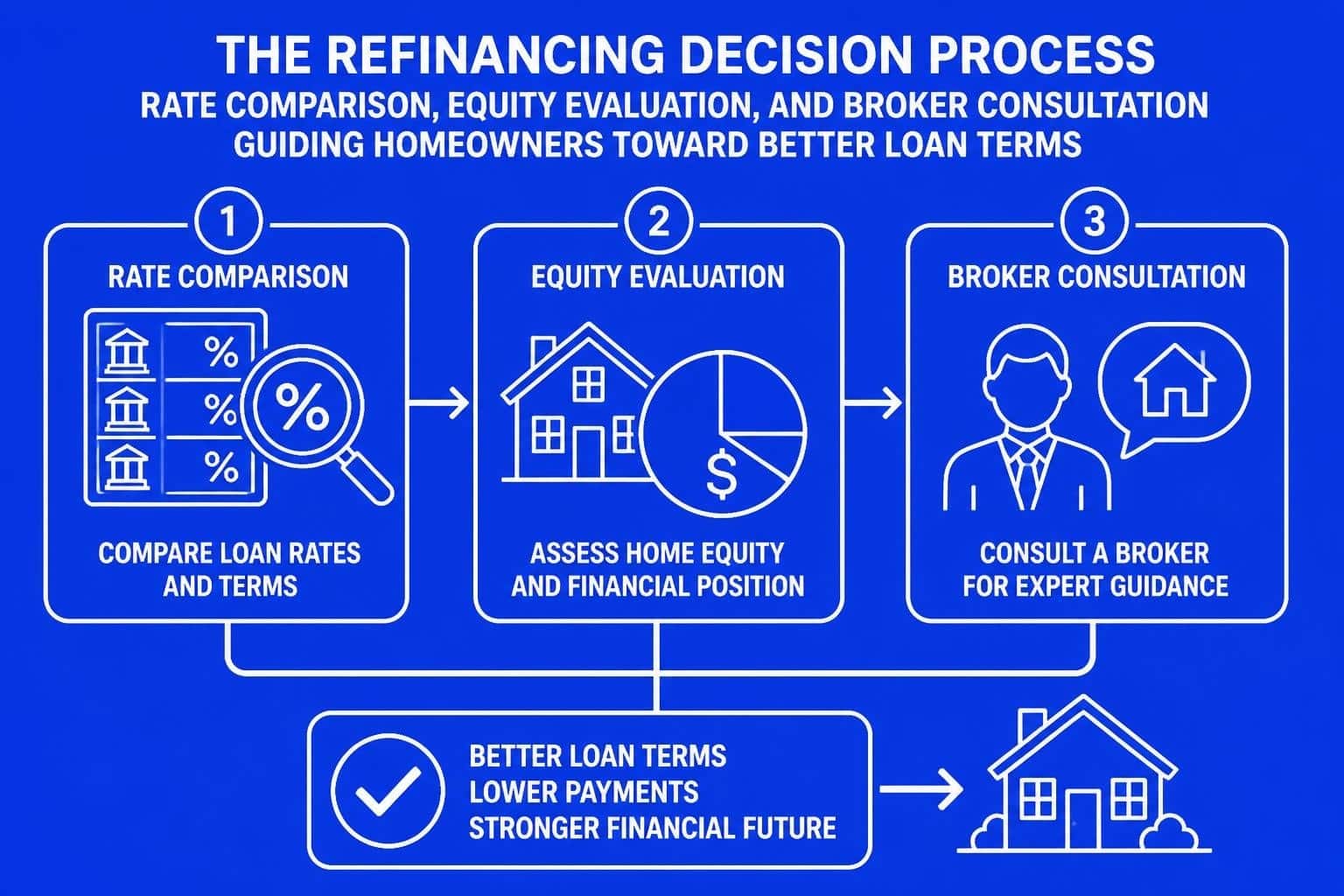
Consider refinancing opportunities when rates drop significantly or when reaching 20% equity to eliminate mortgage insurance. Your initial mortgage financing decisions should account for likely refinancing opportunities within 3-5 years.
Leveraging Professional Guidance Throughout Your Journey
The complexity of purchasing your first home in Seattle's competitive market makes professional guidance invaluable. Experienced mortgage professionals familiar with local programs, tech compensation, and current market conditions deliver better outcomes than self-directed research alone.
Understanding how mortgage brokers work helps you evaluate potential lending partners. Quality brokers provide access to multiple loan products, negotiate competitive rates, and guide you through obstacles that arise during underwriting.
For Seattle-area buyers, particularly those with complex compensation structures or targeting properties above conforming limits, specialized expertise in jumbo mortgages becomes essential. These loans require more stringent qualification and documentation but enable purchases in high-value neighborhoods throughout Bellevue, Redmond, and Seattle proper.
Comprehensive lender services include:
- Pre-approval with full underwriter review
- Multiple loan option comparison
- Rate lock strategies and timing
- Coordination with real estate agents and title companies
- Proactive communication throughout the process
- Problem-solving when complications arise
Seeking guidance from highly reviewed professionals with extensive local experience provides peace of mind during one of life's most significant transactions. The right lending partner transforms the first home buying process from overwhelming to manageable, positioning you for long-term success as a homeowner in the Seattle area.
Buying your first home requires careful financial planning, strategic decision-making, and expert guidance to navigate Seattle's competitive market successfully. Understanding available programs, optimizing your unique compensation structure, and working with experienced professionals ensures you make confident decisions throughout the journey. Keith Akada at Mortgage Reel brings 25+ years of experience helping Seattle-area buyers achieve homeownership, with specialized expertise in tech compensation and the ability to close in as few as 9 business days. Whether you're searching in Seattle, Bellevue, Shoreline, or surrounding communities, expert guidance transforms the complex first home buying process into a successful milestone.