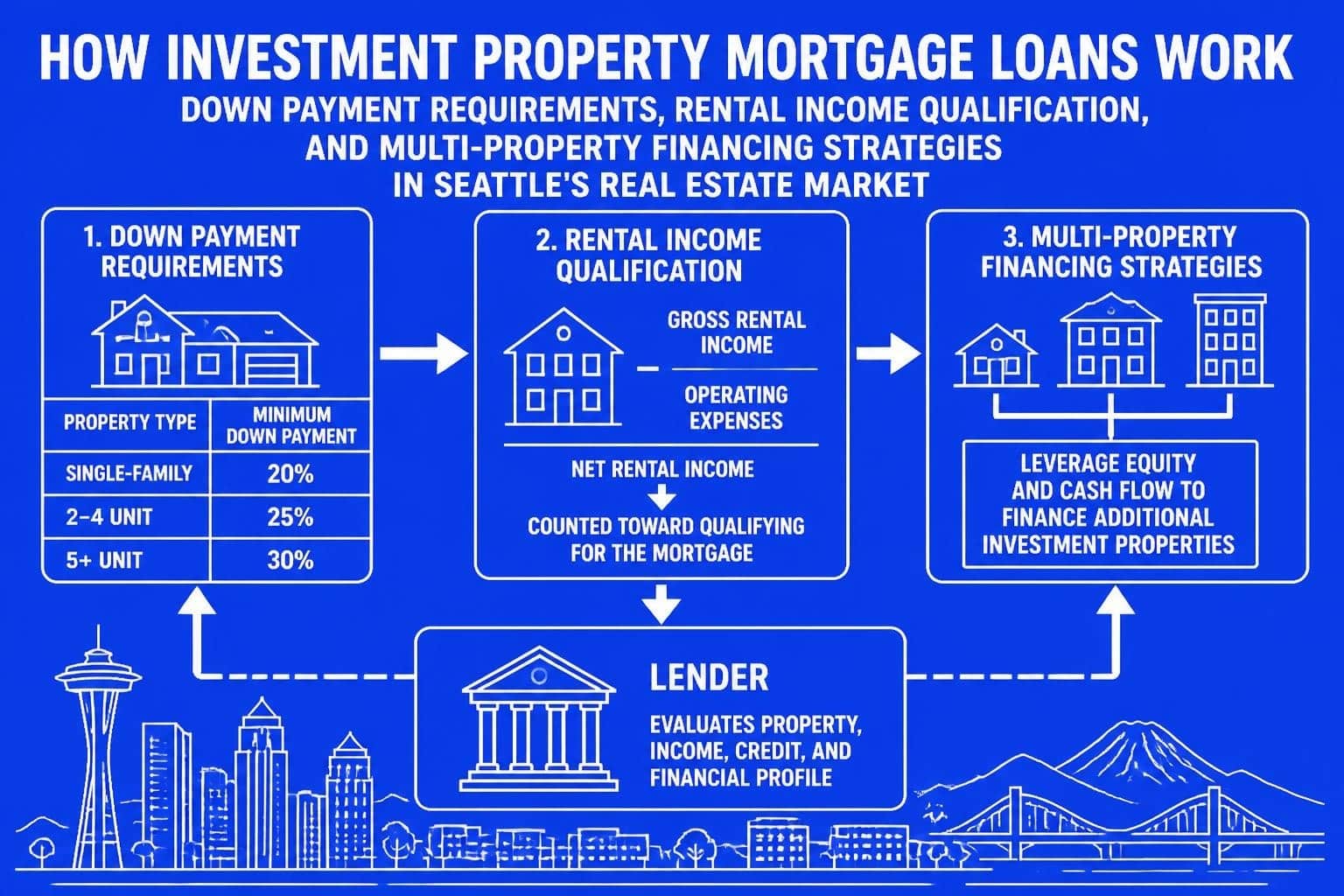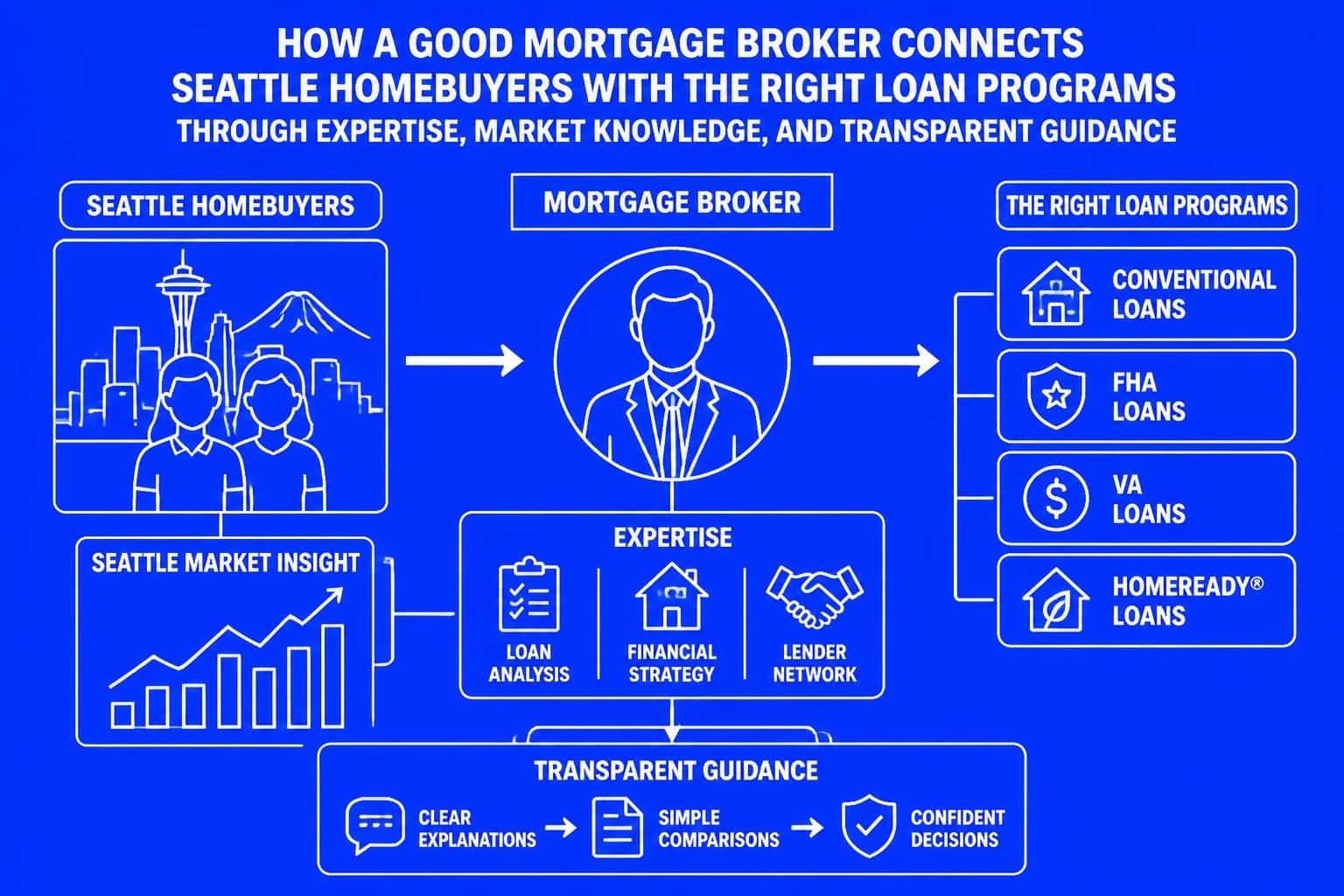
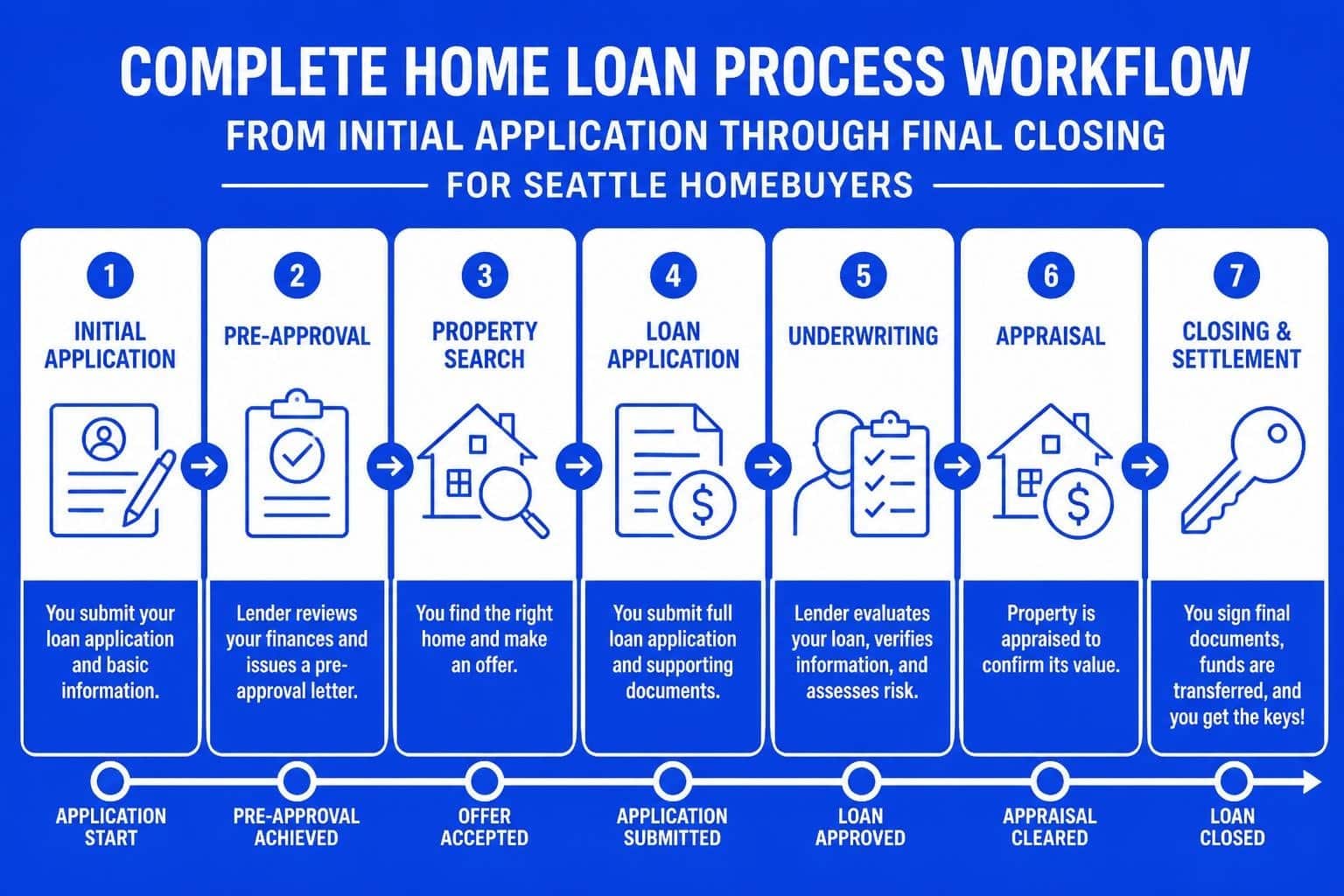
Understanding the home loan process is essential for anyone looking to purchase property in the Seattle area's competitive housing market. Whether you're a first-time buyer searching in Lake Forest Park or a tech professional considering a jumbo loan in Bellevue, knowing what to expect at each stage helps you move confidently from application to closing. The home loan process involves multiple steps, strict timelines, and coordination between lenders, underwriters, appraisers, and title companies. With proper guidance and preparation, you can navigate these requirements efficiently and secure favorable financing terms that align with your financial goals.
Preparing Your Finances Before Starting the Home Loan Process
Financial preparation forms the foundation of a successful mortgage application. Before you begin the formal home loan process, review your credit reports from all three bureaus and address any errors or outstanding issues that could impact your approval.
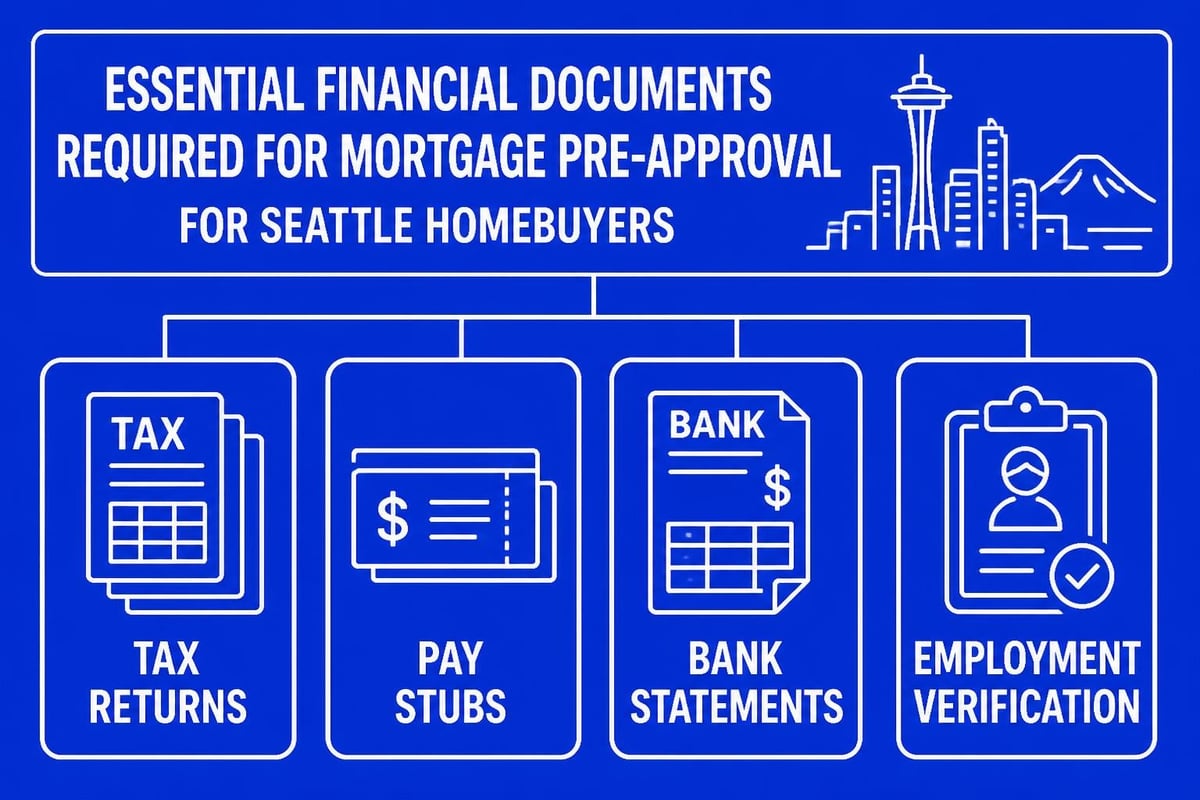
Key financial documents you'll need include:
- Two years of W-2 forms and tax returns
- Recent pay stubs covering the last 30 days
- Two months of bank statements for all accounts
- Documentation of additional income sources (bonuses, RSUs, rental income)
- Explanations for any recent large deposits or withdrawals
For Seattle-area tech professionals working at Amazon, Microsoft, or Google, qualifying stock compensation and RSUs requires specific documentation showing vesting schedules and historical stability. A qualified mortgage broker can help structure this income to maximize your purchasing power, particularly for properties in higher-price markets like Bellevue or Redmond.
Understanding Your Budget and Down Payment Options
Calculate your comfortable monthly payment before shopping for homes. The Consumer Financial Protection Bureau offers tools to help prospective buyers align housing choices with financial readiness and determine realistic price ranges.
Down payment requirements vary by loan type:
| Loan Type | Minimum Down Payment | Best For |
|---|---|---|
| Conventional | 3% – 20% | Strong credit, stable income |
| FHA | 3.5% | First-time buyers, lower credit scores |
| VA | 0% | Eligible veterans and service members |
| Jumbo | 10% – 20% | High-value properties above conforming limits |
Getting Pre-Approved: Your First Official Step
Pre-approval represents your first formal entry into the home loan process. Unlike pre-qualification, which provides an estimate based on self-reported information, pre-approval involves a thorough credit check and income verification by an actual underwriter.
During pre-approval, your lender will:
- Pull your credit report and calculate your debt-to-income ratio
- Review and verify your income documentation
- Assess your assets and down payment funds
- Issue a pre-approval letter stating your approved loan amount
In competitive Seattle neighborhoods like Shoreline or Mill Creek, a strong pre-approval letter makes your offer significantly more attractive to sellers. Many listing agents won't even present offers without proof of financing, particularly in multiple-offer situations.
Choosing the Right Loan Program
The home loan process differs depending on which mortgage product best fits your situation. Understanding various loan types helps you make informed decisions about terms, rates, and long-term costs.
Conventional loans offer the most flexibility for borrowers with strong credit and stable employment. FHA mortgages provide accessible financing for first-time buyers in Lynnwood or Everett with lower credit scores or smaller down payments. Veterans should explore VA loan benefits, which eliminate down payment requirements and mortgage insurance costs entirely.
The Home Shopping and Offer Phase
Once pre-approved, you can shop confidently within your budget. The home loan process temporarily pauses while you search for the right property, but your pre-approval maintains your readiness to act quickly when you find your ideal home.
Work with a real estate agent familiar with your target neighborhoods-whether that's Lake Forest Park's waterfront properties, Mill Creek's family-friendly communities, or Seattle's urban condominiums. Your agent coordinates with your lender to ensure offer timelines align with financing contingencies and closing deadlines.
Structuring Your Purchase Agreement
Your purchase agreement includes critical financing contingencies that protect you during the home loan process:
- Appraisal contingency: Protects you if the property appraises below purchase price
- Financing contingency: Allows you to withdraw if you cannot secure approved financing
- Inspection contingency: Provides opportunity to negotiate repairs or walk away based on inspection findings
These contingencies must be satisfied within specific timeframes, typically 10-21 days in Washington State. Your mortgage broker coordinates with your real estate agent to ensure all deadlines are met without jeopardizing your earnest money deposit.
Formal Application and Initial Processing
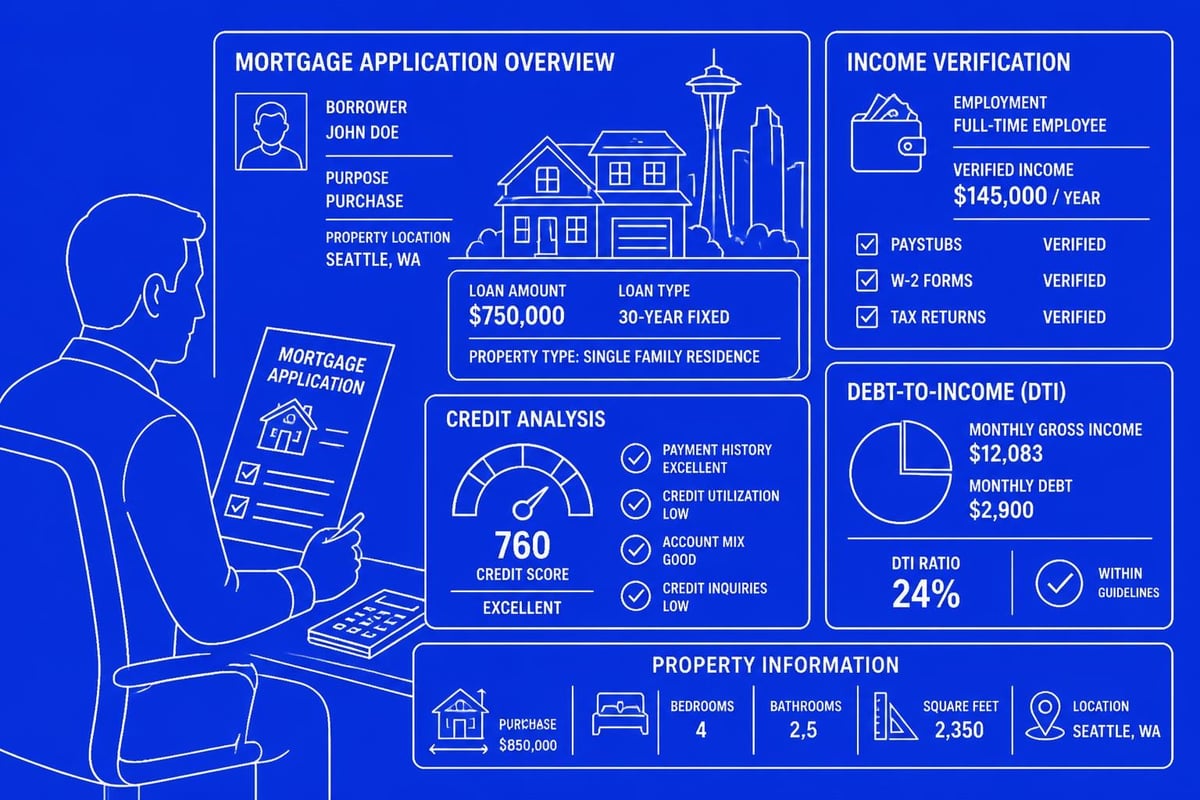
After your offer is accepted, the home loan process accelerates into formal underwriting. You'll complete a comprehensive loan application-the Uniform Residential Loan Application (Form 1003)-providing detailed information about your employment, income, assets, debts, and the property you're purchasing.
Within three business days of application, you'll receive:
- Loan Estimate detailing all costs, terms, and monthly payments
- List of conditions required for full underwriting approval
- Timeline for appraisal, title work, and closing
Comparing loan offers helps you understand how different lenders structure fees, interest rates, and closing costs. Even small differences in interest rates create substantial savings over a 30-year term, making this comparison critical for long-term financial planning.
The Appraisal Process
Lenders require an independent appraisal to verify the property's value supports the loan amount. The appraiser inspects the property, photographs key features, and compares it to recent sales of similar homes in Seattle, Shoreline, or your specific neighborhood.
Appraisal timelines typically run 7-10 business days from order to delivery. In competitive markets with rapidly appreciating values, appraisals occasionally come in below purchase price, requiring renegotiation or additional cash from the buyer to close the gap.
Underwriting: The Core of the Home Loan Process
Underwriting represents the most detailed phase of the home loan process, where a licensed underwriter reviews every aspect of your financial profile and the property to determine final approval. This stage typically takes 3-7 business days but can extend if additional documentation is required.
The underwriter evaluates:
- Credit history: Payment patterns, outstanding debts, recent inquiries
- Income stability: Employment verification, income consistency, future earning potential
- Asset verification: Sourcing of down payment and reserves
- Property valuation: Appraisal review and property condition assessment
- Compliance: Adherence to all federal, state, and investor guidelines
For tech professionals with complex compensation structures including RSUs, stock options, and bonuses, underwriters apply specific guidelines to calculate qualifying income. Experienced mortgage brokers familiar with these guidelines can structure your application to maximize approved amounts for jumbo purchases in Bellevue or Kirkland.
Addressing Underwriting Conditions
Underwriters typically issue conditional approval with specific items required before final clearance:
| Common Condition | What's Required | Typical Timeline |
|---|---|---|
| Proof of Insurance | Homeowners policy declaration page | 1-2 days |
| Title Clearance | Clear title report with no liens | 3-5 days |
| Employment Verification | Verbal VOE completed 10 days before closing | Same day |
| Large Deposit Explanation | Paper trail showing source of funds | 1-3 days |
| HOA Documents | Condo questionnaire and budget review | 5-7 days |
Respond to conditions immediately to maintain your closing timeline. Delays in providing documentation create cascading effects that can push your closing date and jeopardize your purchase agreement.
Title, Insurance, and Final Preparations
As underwriting nears completion, several parallel processes converge to prepare for closing. Title companies conduct thorough searches to ensure the property has clear ownership with no outstanding liens, easements, or legal issues that could affect your ownership rights.
Required insurance and title components include:
- Homeowners insurance policy with lender named as loss payee
- Title insurance protecting both you and your lender
- Flood insurance if property is in designated flood zone
- HOA insurance verification for condominiums
The Consumer Financial Protection Bureau’s toolkit provides comprehensive checklists to ensure you understand all insurance requirements and coverage options before finalizing your home loan process.
Receiving Your Closing Disclosure
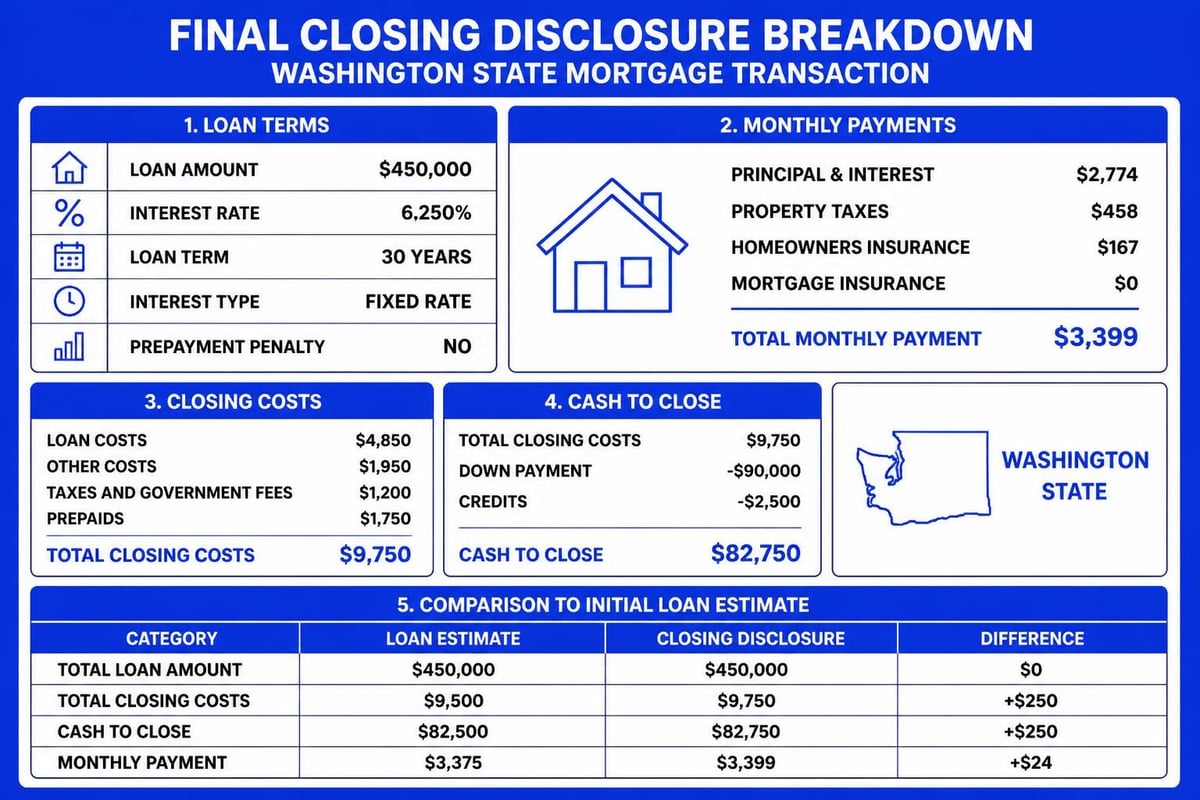
At least three business days before closing, you'll receive your Closing Disclosure-a detailed accounting of your final loan terms, closing costs, and cash required to close. This document must be identical to your Loan Estimate except for items that are permitted to change, such as:
- Per-diem interest based on actual closing date
- Homeowners insurance premium you selected
- Title fees based on actual title company charges
- Transfer taxes and recording fees set by county
Review every line of your Closing Disclosure carefully. Verify that your interest rate, loan amount, and monthly payment match your expectations. Question any fees that seem excessive or weren't disclosed on your initial Loan Estimate.
The Closing Appointment
The final step in the home loan process occurs at the closing table, typically held at a title company office in Seattle, Everett, or your local area. This appointment usually takes 45-90 minutes, during which you'll sign all loan documents, deed transfers, and disclosures required to complete your purchase.
Documents you'll sign include:
- Promissory Note (your legal promise to repay the loan)
- Deed of Trust (secures the property as collateral)
- Closing Disclosure (final acknowledgment of costs)
- Initial Escrow Disclosure (breakdown of property tax and insurance impounds)
- Various federal and state disclosures
Bring a government-issued photo ID and your cashier's check or arrange wire transfer for your down payment and closing costs. Personal checks are not accepted for amounts over $500 in most closing scenarios.
Understanding Your Closing Costs
Bankrate’s explanation of the origination process details typical fees and timelines you'll encounter. Total closing costs in the Seattle area typically range from 2-5% of the purchase price, varying based on loan type, property value, and lender fees.
| Cost Category | Typical Range | Who Pays |
|---|---|---|
| Lender Fees | 0.5% – 1% | Buyer |
| Title Insurance | $500 – $1,500 | Negotiable |
| Escrow/Settlement | $300 – $600 | Buyer |
| Appraisal | $500 – $800 | Buyer |
| Recording Fees | $200 – $400 | Buyer |
| Transfer Tax | 1.78% of price | Negotiable |
Washington State imposes both state and local transfer taxes, with Seattle adding municipal taxes that make transfer costs higher than in Shoreline, Lynnwood, or Lake Forest Park. Negotiate which party pays these fees during your purchase agreement discussions.
Special Considerations for Seattle-Area Buyers
The competitive nature of Seattle's housing market creates unique challenges during the home loan process. With median home prices significantly above national averages, many buyers require jumbo financing exceeding conforming loan limits of $806,500 in 2026.
Jumbo loan requirements typically include:
- Credit scores of 700 or higher
- Down payments of 10-20% depending on loan amount
- Debt-to-income ratios below 43%
- Significant cash reserves (typically 6-12 months of payments)
For tech employees with substantial equity compensation, understanding how to qualify RSUs and stock grants becomes critical for maximizing purchasing power. Lenders typically require two-year histories of stock compensation and may discount future grants based on vesting certainty.
Fast-Close Capabilities
In multiple-offer situations common throughout Seattle, Bellevue, and Redmond, the ability to close quickly provides significant competitive advantage. Experienced mortgage teams with strong underwriting relationships can complete the home loan process in as few as 9-12 business days when buyers provide documentation promptly and no unusual circumstances arise.
Accelerated closings require:
- Complete financial documentation submitted upfront
- Immediate appraisal ordering upon acceptance
- Daily communication between all parties
- Experienced loan officers anticipating potential issues
Sellers strongly prefer offers with shorter closing timelines, particularly in hot markets where they need to coordinate their own purchase or relocation schedules.
After Closing: First Month Expectations
The home loan process doesn't completely end at closing. Your first mortgage payment typically isn't due for 30-45 days after closing, giving you time to settle into your new Seattle-area home. However, several post-closing items require attention:
Expect to receive:
- Welcome package from your loan servicer (may differ from your originating lender)
- Property tax assessment from King or Snohomish County
- Homeowners insurance policy documents
- Final settlement statement for tax filing purposes
Set up automatic payments through your servicer's website to ensure you never miss a payment. Your mortgage payment history becomes the cornerstone of your credit profile, and consistent on-time payments build equity while strengthening your financial standing for future refinancing or property purchases.
When to Consider Refinancing
Market conditions change, and refinancing becomes advantageous when interest rates drop significantly below your current rate or when your financial situation improves enough to eliminate mortgage insurance. Most homeowners should evaluate refinancing when rates fall at least 0.75% below their current rate, though the calculation depends on closing costs and how long you plan to keep the property.
Seattle's appreciating property values mean many homeowners build equity quickly, creating opportunities to eliminate PMI, access cash for renovations, or consolidate higher-interest debt into mortgage refinancing.
Common Mistakes to Avoid During the Home Loan Process
Even experienced buyers sometimes make errors that complicate or derail their financing. Avoid these common pitfalls:
- Changing jobs during the process: Employment verification occurs multiple times, and job changes raise red flags requiring extensive documentation
- Making large purchases: New car loans or furniture financing alter your debt-to-income ratio and can void your approval
- Opening new credit accounts: Each inquiry impacts your credit score and changes your credit profile
- Moving money between accounts: Unexplained transfers require extensive documentation and delay closing
- Skipping inspections: Discovering major issues after closing leaves you financially responsible for expensive repairs
Understanding what to know before taking out a mortgage helps you avoid these mistakes and maintain clear communication with your lender throughout the process.
The Importance of Responsive Communication
The home loan process requires coordination between multiple parties-your loan officer, processor, underwriter, appraiser, title company, real estate agent, and seller. Respond immediately to all requests for documentation or information, even if you don't have the answer.
Quick communication prevents delays that can push closing dates or cause you to miss rate locks. In competitive markets throughout Seattle, Shoreline, Mill Creek, and surrounding areas, missed deadlines can cost thousands in extended rate locks or lost earnest money if transactions fail to close on time.
Working with Experienced Mortgage Professionals
The complexity of the home loan process makes professional guidance invaluable, particularly for first-time buyers or those purchasing high-value properties in Seattle's competitive market. Experienced mortgage brokers provide several advantages over direct lenders or online options:
- Access to multiple loan programs: Brokers compare rates and terms from numerous lenders to find optimal financing
- Local market expertise: Understanding Seattle-area property values, common issues, and local requirements
- Complex income qualification: Expertise structuring applications for tech professionals with stock compensation
- Problem-solving capabilities: Experience navigating unusual situations that could derail approvals
- Personal advocacy: Direct access to decision-makers when issues arise
Look for mortgage professionals with strong review histories, transparent fee structures, and proven track records in your specific property type and price range. First-time homebuyers particularly benefit from patient, educational guidance that demystifies each stage of the process.
Questions to Ask Your Lender
Before committing to a lender, ask specific questions about their process, capabilities, and track record:
- What is your average time from application to closing?
- How do you handle appraisal gaps or title issues?
- Do you sell loans after closing or service them internally?
- What is your experience with [loan type specific to your needs]?
- Can you provide references from recent clients in similar situations?
Quality lenders welcome these questions and provide specific, detailed answers that demonstrate their expertise and commitment to your success throughout the home loan process.
Successfully navigating the home loan process requires preparation, documentation, and expert guidance to move efficiently from pre-approval through closing. Whether you're purchasing your first home in Lynnwood or securing jumbo financing for a tech professional relocation to Bellevue, understanding each stage helps you make confident decisions and avoid costly delays. Keith Akada brings over 25 years of mortgage expertise to Seattle-area homebuyers, with specialized knowledge in qualifying complex compensation structures and closing loans in as few as 9 business days. With deep connections throughout the Seattle, Shoreline, Mill Creek, and Everett markets, Keith provides the transparency, strategy, and execution you need for a smooth financing experience-connect with Mortgage Reel today to start your home loan process with confidence.